

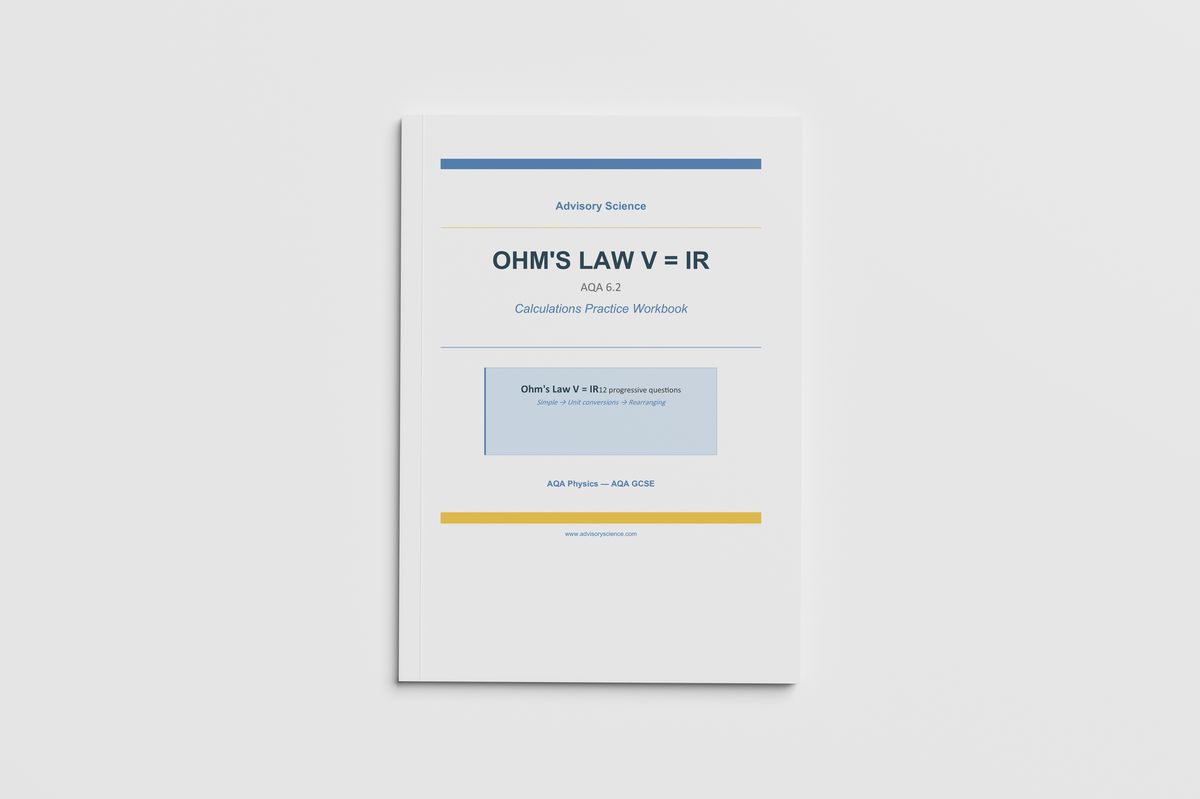


Ohm's Law V=IR Calculations - AQA GCSE Physics Calculation Practice Book
Ohm's Law V=IR Calculations Worksheet & Practice Workbook AQA GCSE Physics.
V = IR is the most commonly tested equation in GCSE Physics, and students need to rearrange it confidently for all three variables. This AQA GCSE Physics workbook builds that fluency with 12 scaffolded questions using the EVERY method framework.
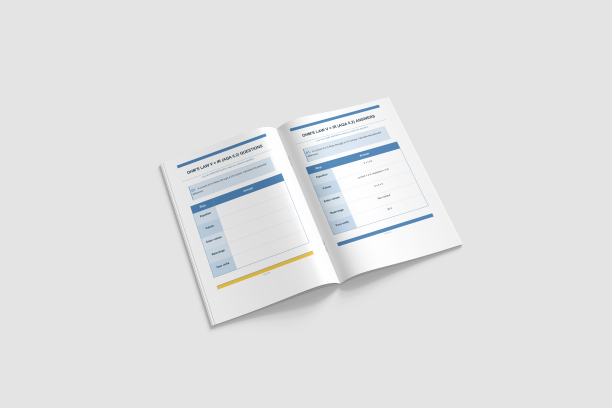
The EVERY method breaks each calculation into clear steps: Equation, Values, Enter values into the equation, Rearrange if needed, Your units. Every question has a structured EVERY table for students to complete, building a consistent problem-solving habit. Questions get progressively harder: Q1-3 are straightforward, Q4-6 introduce unit conversions, and Q7-12 require rearranging the formula.
What's inside:
- 12 progressive questions on Ohm's Law (V = I x R)
- Structured EVERY method table on every question page
- Progressive difficulty: simple substitution, then unit conversions, then rearranging
- Self-assessment tracker with "What made me stuck?" reflection checklist
- Full worked answers for all 12 questions using the EVERY method steps
AQA specification reference: 6.2 Electricity (Combined Science and Triple Physics)
Ohm's Law calculations require students to calculate voltage, current, or resistance from circuit data. Questions include simple series circuits, reading ammeter and voltmeter values from diagrams, and linking resistance to the required practical for investigating resistance.
Common student mistakes this workbook addresses: confusing voltage with current, using the wrong rearrangement (e.g. V/I when they need I/V), not reading circuit diagrams correctly (ammeters in series, voltmeters in parallel), and giving resistance in amps instead of ohms.
Suitable for AQA GCSE Combined Science and Physics (Triple). Works for both foundation and higher tier students.
Visit advisoryscience.com for more science teaching resources.