

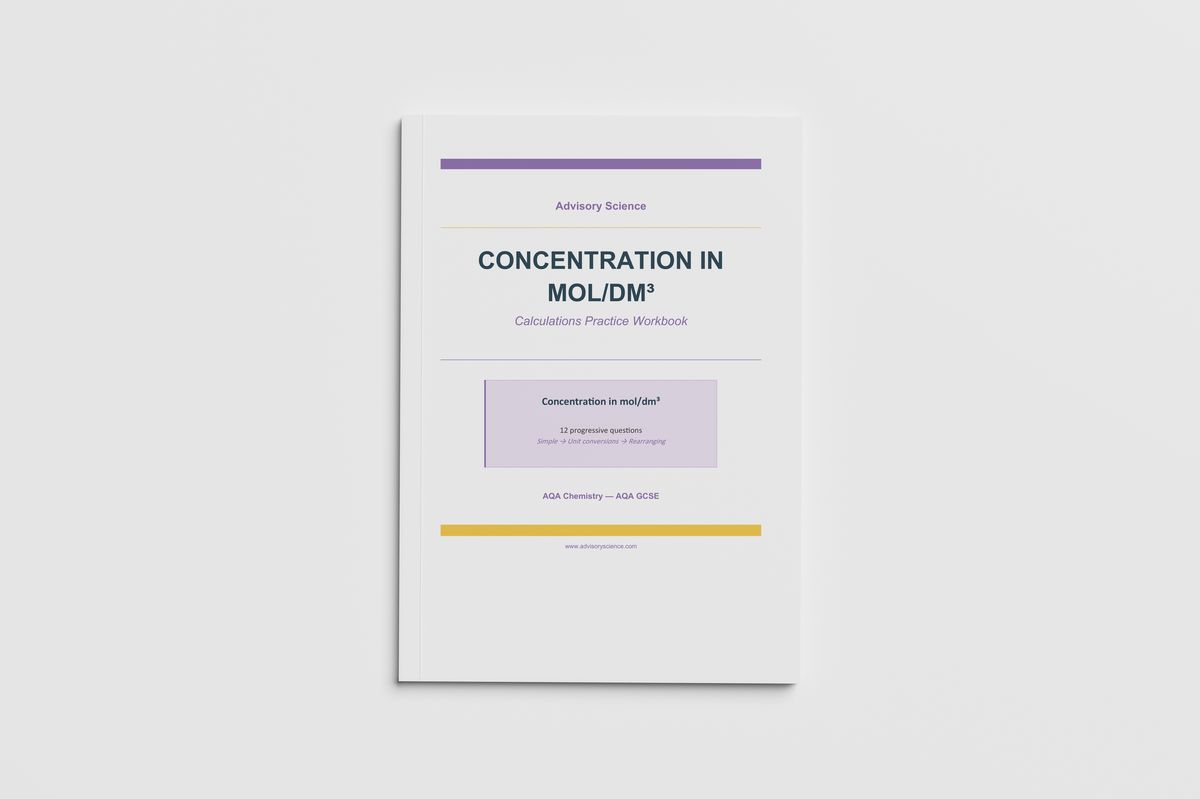

Concentration in mol/dm3 - AQA GCSE Chemistry Calculation Practice Book
Master molar concentration calculations with this comprehensive AQA GCSE Chemistry science worksheet pack. Molar concentration builds on basic concentration concepts, but transitioning from g/dm3 to mol/dm3 often challenges students. This dedicated calculation practice workbook uses the structured EVERY method framework across 12 scaffolded questions to build student fluency and confidence.
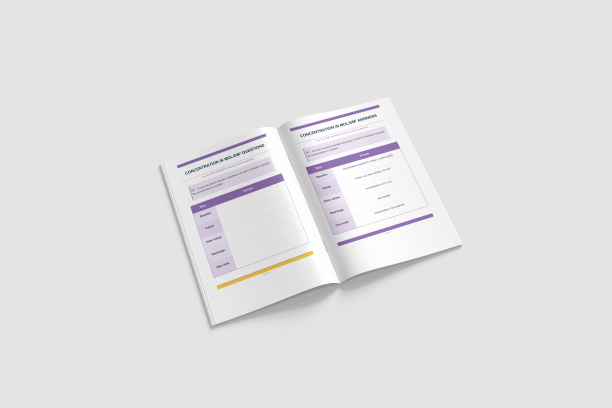
The EVERY framework breaks down each calculation into five clear steps: Equation, Values, Enter values into equation, Rearrange if needed, and Your units. Each question includes a dedicated table to help students build consistent problem-solving habits for exam success.
What is Included in This Science Worksheet Pack:
- 12 progressive calculation practice questions on molar concentration (concentration = moles / volume).
- Structured EVERY method table on every question page to guide step-by-step solutions.
- Clear progression: Questions 1-3 focus on simple substitution, Questions 4-6 introduce volume unit conversions (cm3 to dm3), and Questions 7-12 focus on rearranging the formula.
- A self-assessment tracker featuring a "What made me stuck?" reflection checklist.
- Full worked answers for all 12 questions showing complete step-by-step EVERY method solutions.
Specification and Misconceptions Addressed:
- AQA Specification Reference: 5.3 Quantitative Chemistry (AQA GCSE Triple Chemistry).
- Targeted Misconceptions: Directly helps students avoid common errors such as using volume in cm3 without converting to dm3, confusing g/dm3 with mol/dm3 formulas, forgetting to calculate moles before dividing, and miscalculating conversion factors using Mr.
- Tier Compatibility: Suitable for AQA GCSE Chemistry Triple Science students across both Foundation and Higher tiers.