

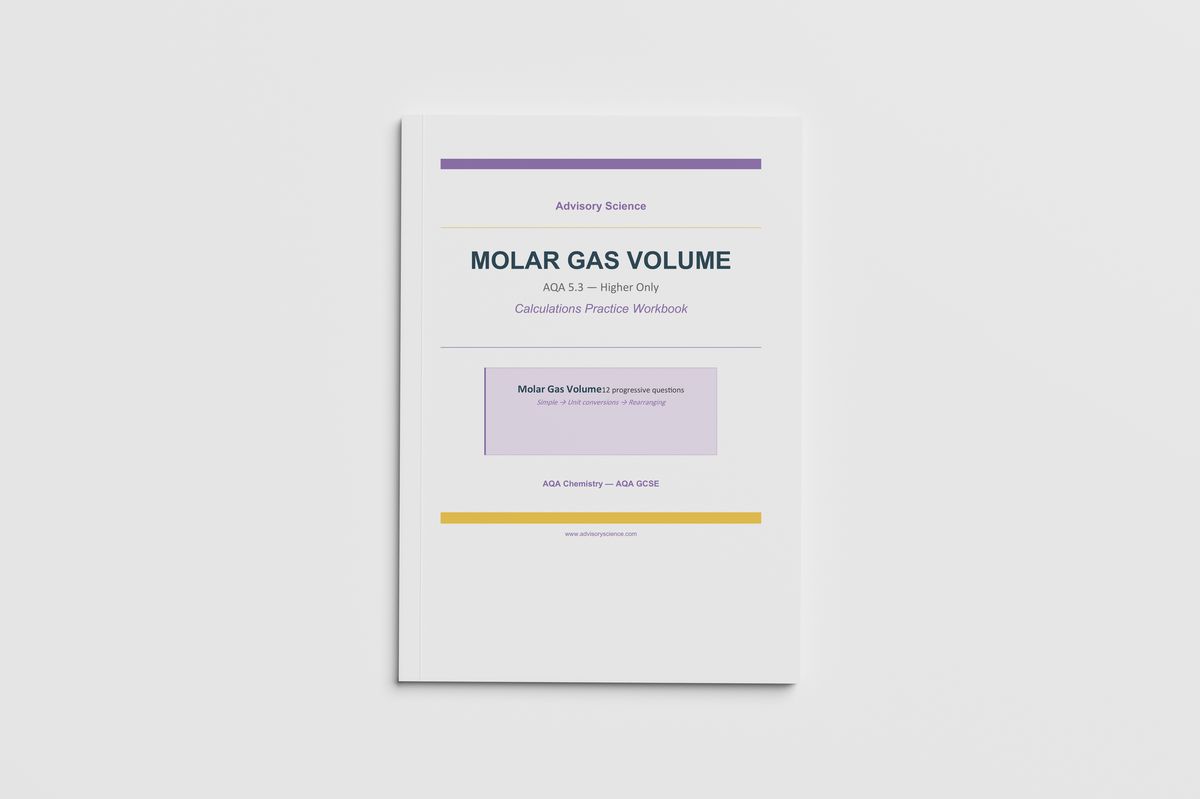

Molar Gas Volume - AQA GCSE Chemistry Practice Book
This AQA GCSE Triple Chemistry science worksheet and practice workbook helps students master molar gas volume calculations. The 24 dm3 rule is straightforward, but many students struggle when applying it to multi-step quantitative chemistry questions. This structured practice book builds speed, accuracy, and problem solving confidence using the step-by-step EVERY method framework.
What is included in this science worksheet pack:
- 12 progressive calculation practice questions on Molar Gas Volume (volume = moles x 24 dm3 at RTP).
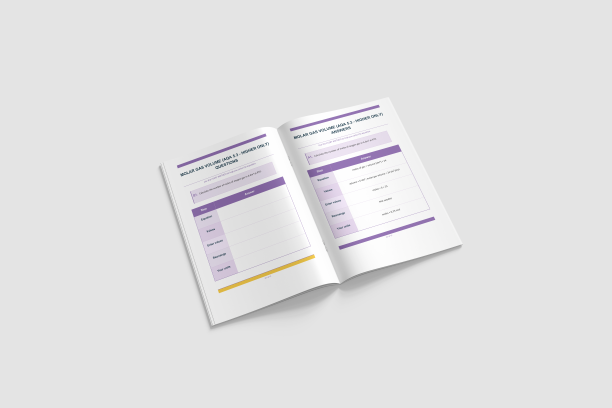
- Structured EVERY method tables on each page to guide student calculations: Equation, Values, Enter values, Rearrange, Your units.
- Scaffolding that builds confidence: Questions 1 to 3 focus on direct substitution, Questions 4 to 6 introduce unit conversions, and Questions 7 to 12 require formula rearrangement.
- A self assessment tracker featuring a reflection checklist to help students identify personal learning gaps.
- Full worked answer keys for all 12 questions using the complete EVERY method steps.
Why teachers and tutors choose this science worksheet: This resource directly targets common GCSE chemistry exam mistakes, including mixing up cm3 and dm3 conversions, applying the rule outside RTP conditions, forgetting to balance equations first, and confusing molar gas volume with molar mass.
Specification Reference: AQA GCSE Chemistry 5.3 Quantitative Chemistry (Triple Chemistry only, Higher Tier).
Visit advisoryscience.com for more science teaching resources.