

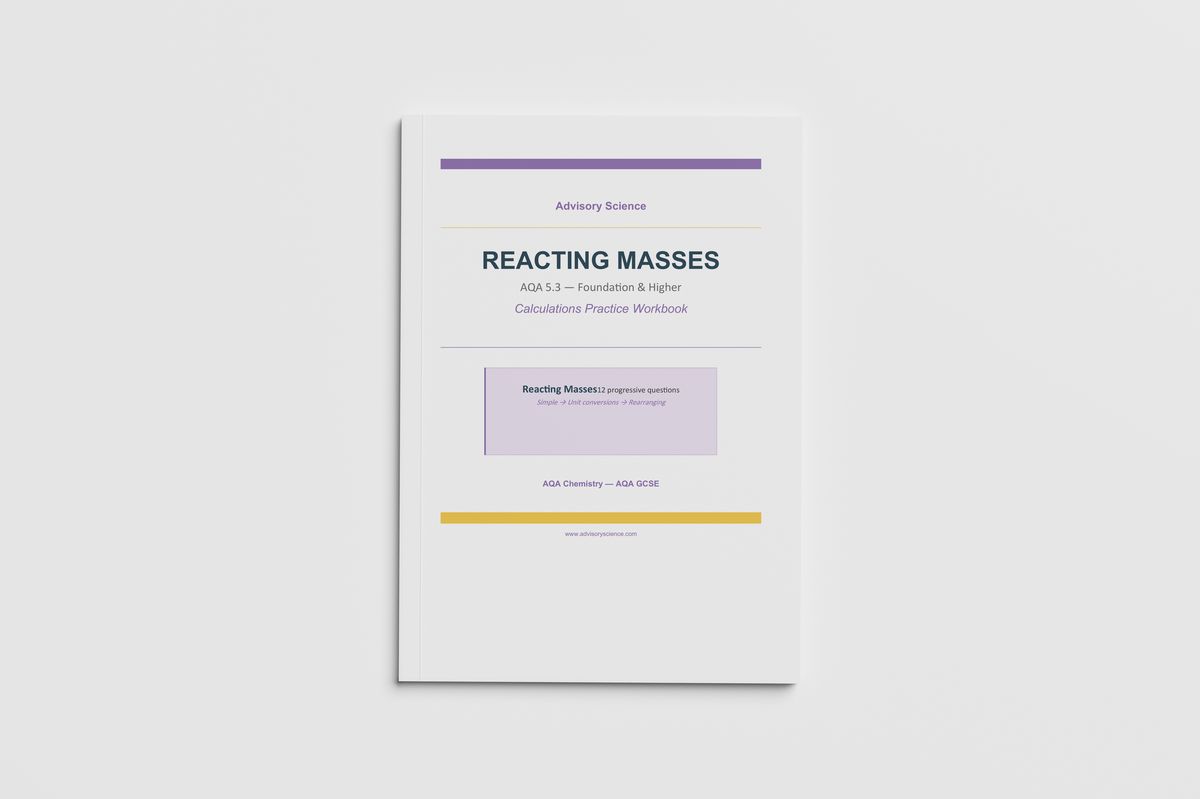
AQA GCSE Chemistry Reacting Masses Science Worksheet and Calculation Practice Workbook
On Sale
£2.49
£2.49
This AQA GCSE Chemistry reacting masses science worksheet and workbook provides complete, scaffolded calculation practice for students working through Quantitative Chemistry topic 5.3. Reacting mass questions carry high mark allocations in GCSE Chemistry exam papers, and students require structured practice beyond standard textbook examples to master the required three-step mole calculations.
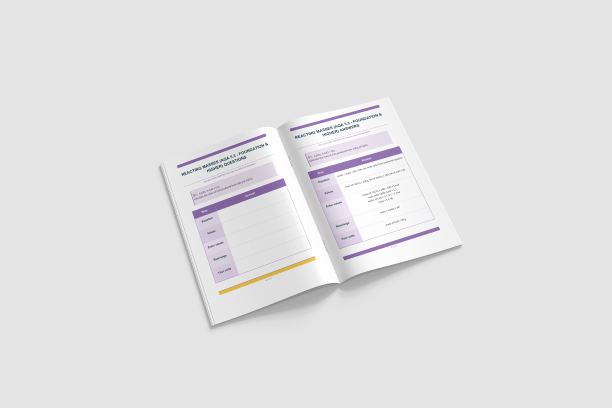
This revision workbook uses the structured EVERY method framework to build student confidence step by step:
- Equation: Identify and balance the chemical equation.
- Values: List all known and unknown values.
- Enter values: Substitute known data into the mole equation using molar ratios.
- Rearrange: Rearrange the formula to calculate the target value.
- Your units: State the correct final units.
Key Features and Content
- 12 progressive science worksheet questions covering reacting mass calculations using molar ratios from balanced equations.
- Structured EVERY method layout on every question page to form consistent problem-solving habits.
- Clear difficulty progression starting with direct substitution, moving to unit conversions, and advancing to formula rearrangement.
- Integrated self-assessment tracker featuring a "What made me stuck?" reflection checklist.
- Full step-by-step worked solutions for all 12 practice questions to support independent study and self-marking.
Suitable For
- AQA GCSE Chemistry Triple Science students in both Foundation Tier and Higher Tier.
- Chemistry teachers, tutors, and parents looking for high-quality science worksheet practice, homework sheets, or targeted intervention resources.
Visit advisoryscience.com for additional science teaching resources and printable worksheets.