

The 3-Step Method to Teaching Ecosystems So Students Actually Understand
The problem with many ecosystem lessons
In many classrooms, ecosystem lessons start with questions rather than understanding.
Pupils are asked to label food chains or answer comprehension questions before they have a clear picture of the habitat itself. Without context, vocabulary becomes something to guess rather than something to use.
Ecosystems need shared experience first.
Why video works so well for teaching ecosystems
Ecosystems are dynamic. They involve movement, interaction, and scale. Video allows pupils to see this immediately. In these ecosystem learning tasks,
Pupils:
- observe real environments
- notice patterns and interactions
- learn scientific vocabulary in context
Only after this do they move on to questions.
A consistent structure across ecosystems
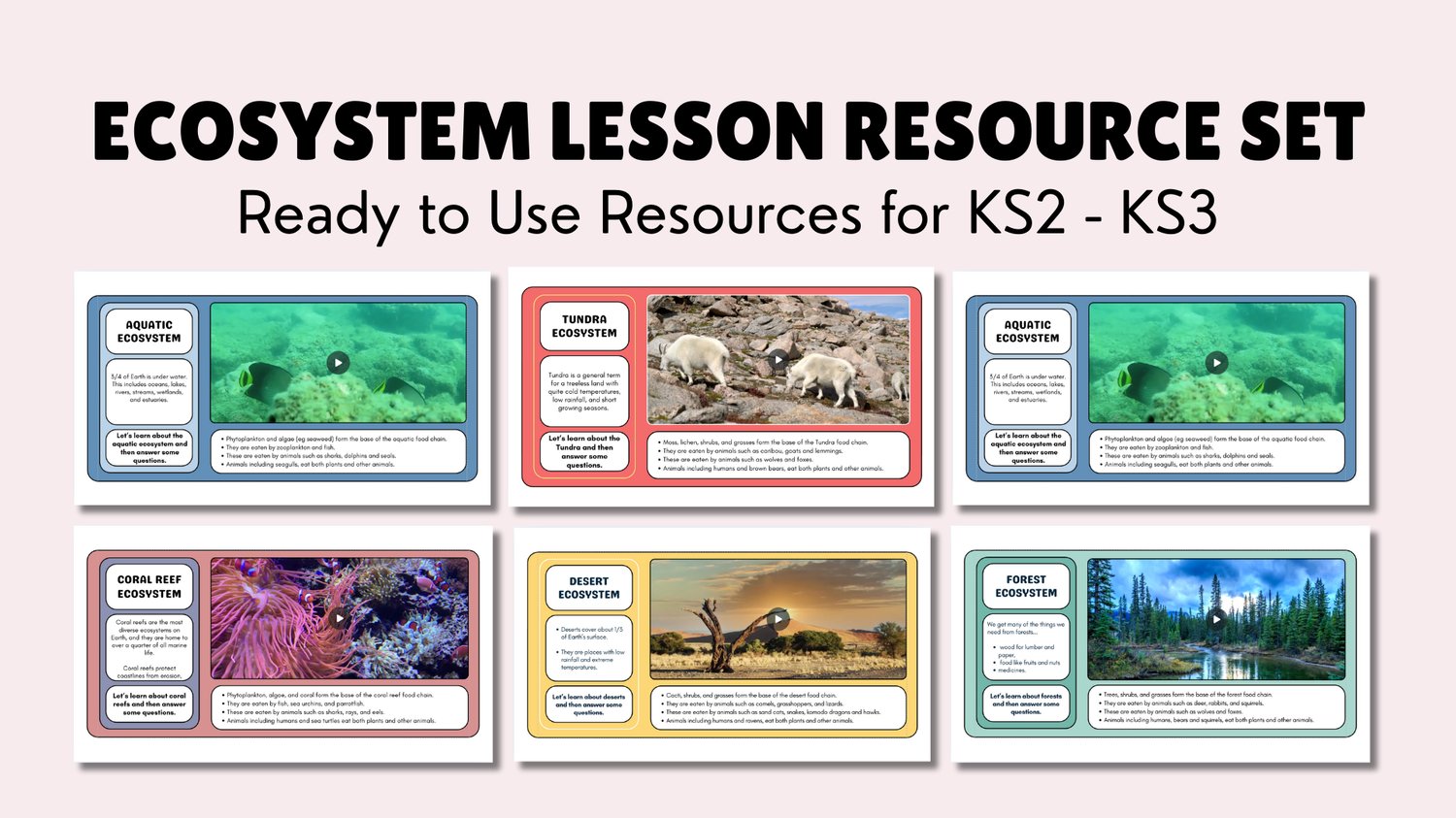
Each ecosystem resource follows the same structure:
1. Guided input
A short video and clear information introduce the ecosystem.
2. Vocabulary in context
Key terms such as producer, consumer, predator, prey, and food chain appear naturally in the explanation.
3. Structured questions
Questions check understanding and support explanation, not copying.
This structure is repeated across:
- Coral reef ecosystems
- Forest ecosystems
- Desert ecosystems
- Grassland ecosystems
- Aquatic ecosystems
Using the same structure helps pupils compare ecosystems and build confidence.
Where these fit in the curriculum
These resources support:
- Living things and their habitats
- How living things depend on each other
- Food chains and energy flow
- Environmental diversity
They work well in KS2 and transition into KS3, and they are editable in Canva to suit different classes.
Guided Learning System
These guided ecosystem learning tasks are designed to support explanation, discussion, and reasoning.
Pupils see first.
They understand next.
They explain last.
Download the ecosystem guide
A printable guide is available with direct links to each ecosystem Canva template:
- Coral reef
- Forest
- Desert
- Grassland
- Aquatic
- Tundra
Download the ecosystem guide here.
Comments ()