

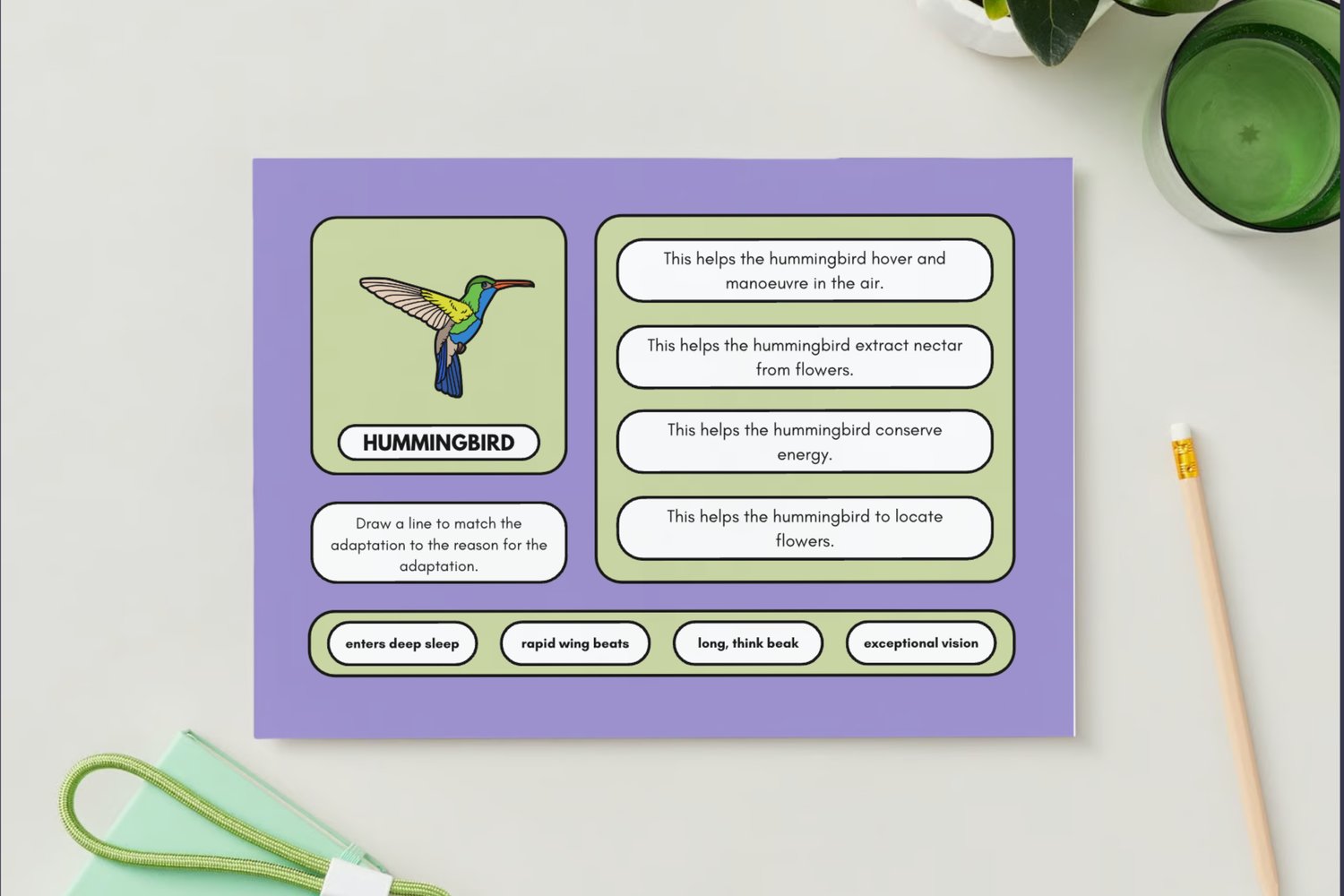
Teaching animal adaptations becomes much easier and more engaging when lessons are built around ready-made, editable resources that pupils can use straight away. These 5 ideas show how to save planning time while using the FREE Animal Adaptations resource pack from Advisory Science:
1. Drag-and-drop digital investigations
Use the digital drag-and-drop worksheets (e.g. deer and zebra adaptations) as quick, no-prep investigations on tablets or laptops.
- Set a 10–15 minute task where pupils match adaptations to functions (e.g. camouflage, insulation, protection) and then write one sentence explaining how each feature helps survival in that habitat.
- Use completed worksheets as instant formative assessment: screenshot or export responses to quickly check who can correctly link structure and function without marking a full written task.
2. Fast-print adaptation sorting activities
Print the adaptation cards and worksheets to create a simple sorting or matching activity that replaces time-consuming card design.
- Ask pupils to group animals by habitat (desert, Arctic, rainforest, ocean) or by adaptation type (behavioural, structural, physiological) and justify their choices orally instead of writing long answers.
- Rotate the same printed cards through multiple lessons (starter, plenary, intervention group) so preparation is done once but reused across the whole unit.
3. “Adapted to survive” display in one lesson
Use the editable posters and templates to build a working wall on adaptations without starting from a blank page.
- Choose a small set of animals from the pack, project the poster templates and let pupils quickly add labels for key adaptations and their functions, then print and pin them straight to the display board.
- Add sentence-stem cards (e.g. “This animal survives because…”) so pupils can orally rehearse explanations each time they visit the display, reinforcing vocabulary with no extra planning.
4. Quick-fire retrieval and vocabulary practice
Turn the adaptation cards into low-stakes quiz prompts to keep key terms fresh without designing new retrieval tasks every week.
- Use one card per day as a “science starter”: pupils have 2 minutes to write what habitat the animal lives in and which adaptation is most important for its survival.
- Mix in misconceptions to address common errors, such as the idea that animals choose to adapt in their lifetime rather than adaptations being inherited over many generations.
5. Research and presentation with structured scaffolds
Combine the templates with short clips (e.g. BBC, Smithsonian, zoo education videos) to support a simple research-and-present task that runs itself.
- Pupils select an animal, watch a short video or read a fact sheet, then use the ready-made Canva layout to create one polished “adaptation profile” slide or poster instead of designing from scratch.
- Print or present these as a mini “Adaptations Gallery Walk”, where pupils circulate, leave sticky-note questions or compliments, and you assess understanding through the completed templates rather than extra written worksheets.
BONUS: Check out the Advisory Science Animal Adaptations Youtube Playlist
Comments ()