

Valentine's Science: Which Chocolate Has the Most Energy?
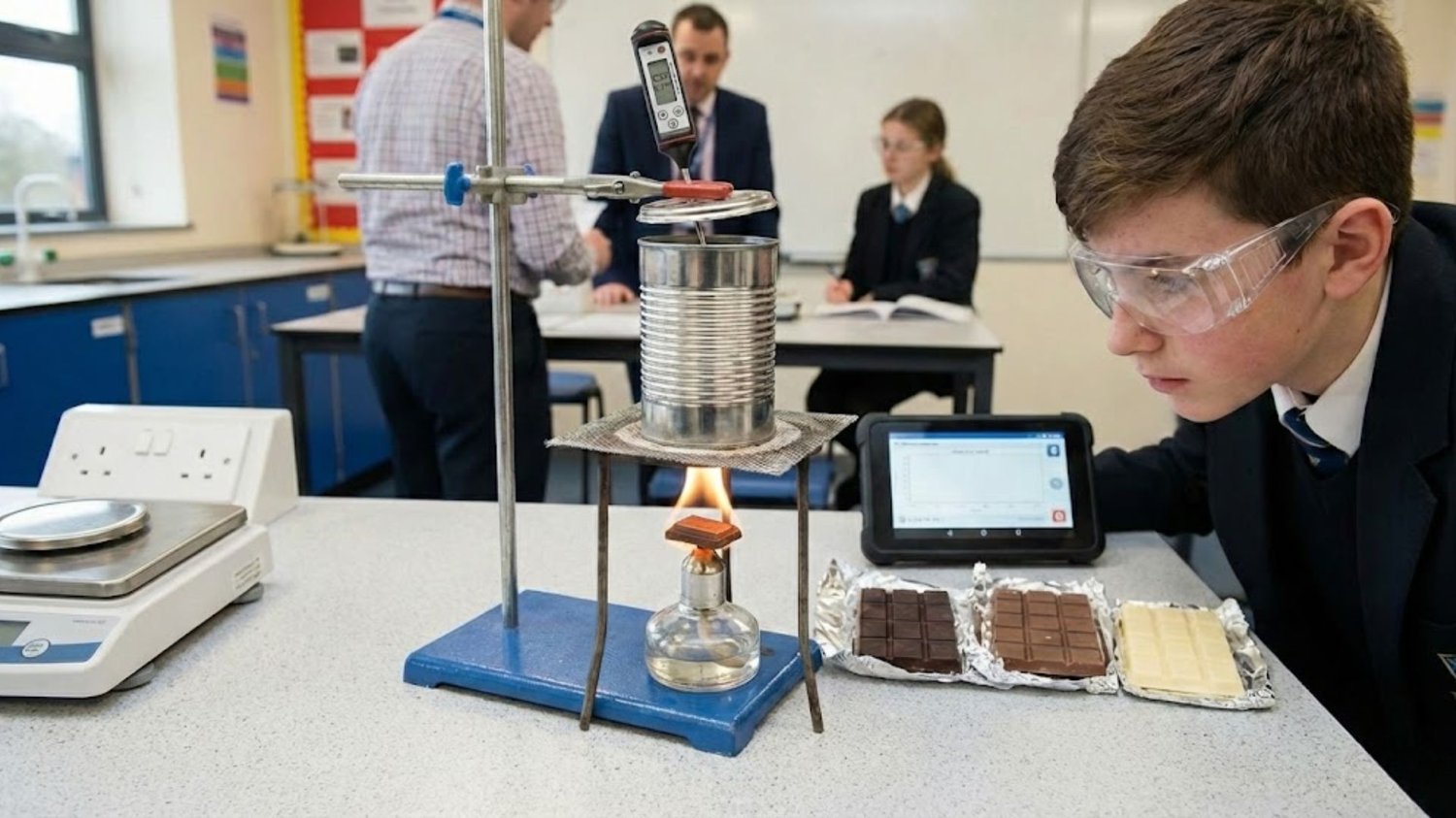
Cupid has a marathon night of deliveries ahead and needs the ultimate fuel source. Which chocolate packs the biggest punch? This is not just a sugar rush exercise, but it will showcase the unlocking of massive chemical potential energy hidden inside.
In this fiery investigation, your students will literally burn chocolate to reveal the invisible power stored in every gram.
The "Burn" Notice
This is a classic calorimetry experiment with a Valentine’s twist that lights up the classroom (safely!).
- The Mystery: We know chocolate gives us energy, but how much? And why does dark chocolate often win the race?
- The Experiment: Students will construct a simple calorimeter to capture the heat released from burning chocolate, measuring precisely how much energy is transferred to the water.
- The Science: It’s a lesson in breaking bonds! Students will see how chemical energy in the food is converted into thermal energy, using the formula $Q = mc\Delta T$ to crunch the numbers.
Curriculum Concepts You’ll Cover
Energize your physics and chemistry lessons with these key topics:
- KS3 Energy: Energy stores, transfers, and heating.
- KS4 Calorimetry: Performing energy calculations and understanding bond energies.
- Required Practical: Builds essential skills for AQA and other exam boards.
⚠️ This investigation requires adult supervision throughout.
Ready to Fuel Up?
Save your energy for teaching. Download the full resource, which includes separate methods for school (burning chocolate) and home (using easier-to-burn snacks like cheese puffs), plus full safety guidance.
👉 Get this investigation here
👉 Or get all 10 Valentine's investigations in the bundle
Comments ()