

On International Women's Day 2026, I want to tell you about a woman whose contribution to science has saved millions of lives - yet she never consented to give it.
Her name was Henrietta Lacks.
In 1951, she was a 31-year-old mother of five living in Baltimore, Virginia. She was known to her family as Hennie - warm, generous, full of life. She visited Johns Hopkins Hospital for treatment of cervical cancer.
During her treatment, doctors took a small sample of her tumour cells.
Henrietta never knew. She was never asked. She never consented.
Those cells would go on to become one of the most important tools in the history of medicine. And her family would spend decades fighting to have her story told.
The Science: HeLa Cells
For decades, scientists had been trying and failing to grow human cells in a laboratory. Human cells removed from the body typically died within days. No one could understand why.
Then Henrietta's cells arrived on a researcher's desk.
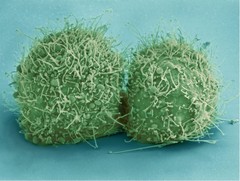
When George Gey, a Johns Hopkins scientist, placed them in a laboratory dish, something extraordinary happened. They kept dividing. Day after day. Week after week. They did not die.
These were the first human cells ever to survive and multiply outside the human body.
They were named HeLa cells - from the first two letters of her first and last name.
What HeLa cells made possible:
- The polio vaccine (Jonas Salk, 1952) - one of the most significant public health achievements in human history
- Cancer research - fundamental advances in understanding how cancer cells grow and respond to treatment
- HIV/AIDS research - early breakthroughs that helped develop antiretroviral therapies
- IVF and fertility science - understanding cell division and human reproduction
- Genetic research - contributions to the Human Genome Project and cloning science
- COVID-19 vaccines - HeLa cells contributed to the rapid development of mRNA vaccines during the pandemic
- Space research - HeLa cells were sent to the International Space Station to study how human cells behave in zero gravity
HeLa cells have been used in over 75,000 published scientific studies.
More than 50 million metric tonnes of HeLa cells have been grown since 1951.
The Ethics: Informed Consent
Informed consent is now a cornerstone of medical research. It means a person must be fully told about any procedure involving their body, and must freely agree to it before it happens.
Today, it's the law. Every clinical trial, every biopsy, every medical study requires it.
But in 1951, informed consent was not standard practice in the United States. Doctors routinely took tissue samples from patients without asking. It was considered normal. Acceptable. Legal.
Henrietta Lacks was never told her cells were being taken.
For decades, she remained unnamed. Her contribution unknown. While corporations built multi-billion-dollar industries from HeLa cells, her family received nothing.
A story about race
The story of Henrietta Lacks cannot be separated from the history of race in American medicine.
Johns Hopkins Hospital in Baltimore served a largely Black community in 1951. Historians and ethicists have documented that Black patients in this era were routinely given less information and fewer choices than white patients - a pattern rooted in a long, painful history of medical exploitation of Black bodies in America.
From the Tuskegee syphilis experiments to J. Marion Sims' non-consensual surgeries on enslaved women, the story of African Americans in medical research is one of exploitation, erasure, and injustice.
Henrietta's story is part of that history. To honour her fully, we must acknowledge it.
The Family's Fight for Justice
For over two decades, the Lacks family did not know that Henrietta's cells existed. They did not know about HeLa cells. They did not know about the billions of dollars being made from her biological material.
Then, in the 1970s, they found out.
Henrietta's daughter, Deborah Lacks, spent much of her adult life trying to learn the truth - not as a scientist, but as a daughter who simply wanted to know her mother. She pursued journalists, researchers, and doctors. She demanded answers. She insisted on acknowledgement.
In 2010, Rebecca Skloot published The Immortal Life of Henrietta Lacks, bringing Henrietta's story to the world. For the first time, the public learned what the scientific community had long known but rarely discussed.
Slowly, things began to change.
In 2013, the Lacks family gained the legal right to be consulted on HeLa cell research.
In 2023, after a legal battle, the Lacks family reached a settlement with Thermo Fisher Scientific.
Finally - however late - Henrietta's family received recognition and compensation.
Why This Matters for Education
Henrietta Lacks' story sits at the intersection of science, ethics, history, and justice. It's a story every science student should know.
In GCSE Biology, her story illuminates:
- Cell biology - how cells divide, what makes HeLa cells unique, cancer cells
- Health and disease - cervical cancer, treatment, prevention
- Ethics in science - the importance of informed consent, research ethics, the responsibility of scientists
In PSHE and RSE, it raises vital questions:
- What are our individual rights?
- How do we ensure vulnerable people are protected in research?
- How does racism show up in medicine?
- What does justice look like when it comes so late?
In History and Citizenship, it connects to:
- Civil rights in America
- The development of medical ethics and law
- How power imbalances shape who benefits from science
For homeschoolers, it's a perfect cross-curricular anchor:
Science + English (reading The Immortal Life of Henrietta Lacks) + History + PSHE + Media literacy
Free Teaching Pack
I've created a free, downloadable teaching pack to help educators bring Henrietta's story into the classroom.
The pack includes:
- 16-slide presentation with full teaching notes
- Biography and context (who Henrietta was, her life, her family)
- The science (what HeLa cells are, why they mattered, what they helped achieve)
- Timeline (1920 to 2023)
- The ethics (informed consent, race and medicine, the family's fight for justice)
- Key vocabulary (10 essential terms)
- Discussion questions (three levels: understanding, ethics, wider thinking)
- Classroom activities (four options for different learning styles)
- Quiz with answers (suitable for assessment)
- Curriculum links (mapped to GCSE Biology, Combined Science, PSHE, English, History, and homeschool)
- Further reading (books, films, documentaries, and websites)
The pack is suitable for ages 11-16 (KS3, KS4, and homeschool).
Download and pay what you want, minimum £1
https://advisoryscience.com/b/henrietta-lacks-teaching-pack
Henrietta's Legacy
Henrietta Lacks died on 4 October 1951. She was 31 years old.
She never knew that her cells would change medicine. She never knew that scientists around the world would use them to save millions of lives. She never knew that her story would eventually become a symbol of the importance of consent, ethics, and justice in science.
But her cells knew.
HeLa cells have been used in research that has touched nearly every person alive today. Whether it's the polio vaccine in your arm as a child, the cancer treatment that saved a loved one, or the COVID-19 vaccine that protected your community - there is a good chance Henrietta's cells were part of it.
Her legacy reminds us that science is not just about experiments and discoveries. It is about people. It is about ethics, gratitude, and respect.
It's about making sure that the people whose bodies and cells contribute to science are recognised, honoured, and compensated.
Further Reading
Book: The Immortal Life of Henrietta Lacks by Rebecca Skloot (2010) - the definitive account
Film: The Immortal Life of Henrietta Lacks (2017, HBO/Sky) - starring Oprah Winfrey and Rose Byrne (Note: contains adult themes - suitable for ages 14+)
Websites:
- Henrietta Lacks Foundation (henriettalacksfoundation.org)
- Johns Hopkins Medicine
Documentaries: Search YouTube for short documentaries on HeLa cells - several excellent options suitable for classroom viewing
Bring This Into Your Classroom
Henrietta Lacks' story is one that lingers. It stays with students. It makes them think about science differently - not just as discoveries and breakthroughs, but as human stories with consequences, ethics, and justice.
Download the free teaching pack and use it in your classroom this week.
Ask your students: "If your cells helped save millions of lives, what would you want people to know about you?"
That question - simple, profound - is where Henrietta's legacy lives on.
Designed by Advisory Science. Resources for science educators and homeschool families. advisoryscience.com
25+ years in education. Resources used in 150+ schools.