

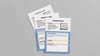

GCSE Chemistry Answer Improvement Worksheets | Vague to Precise
GCSE Chemistry answer improvement worksheets. Real vague answers vs full-mark exemplars, drawn from AQA, Edexcel and OCR examiner reports. Bonding, rates, equilibrium.
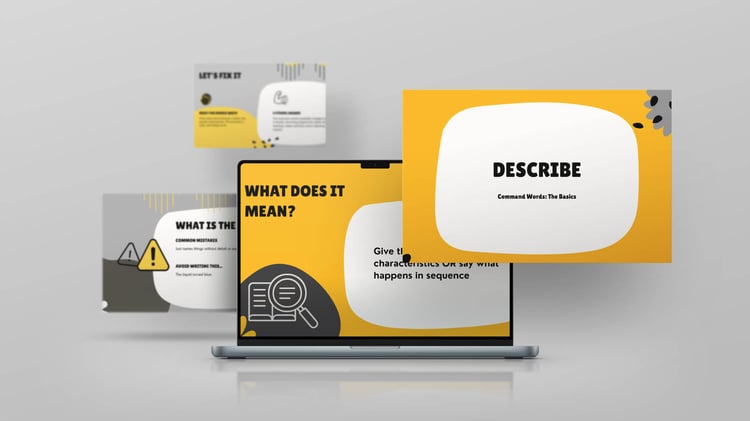
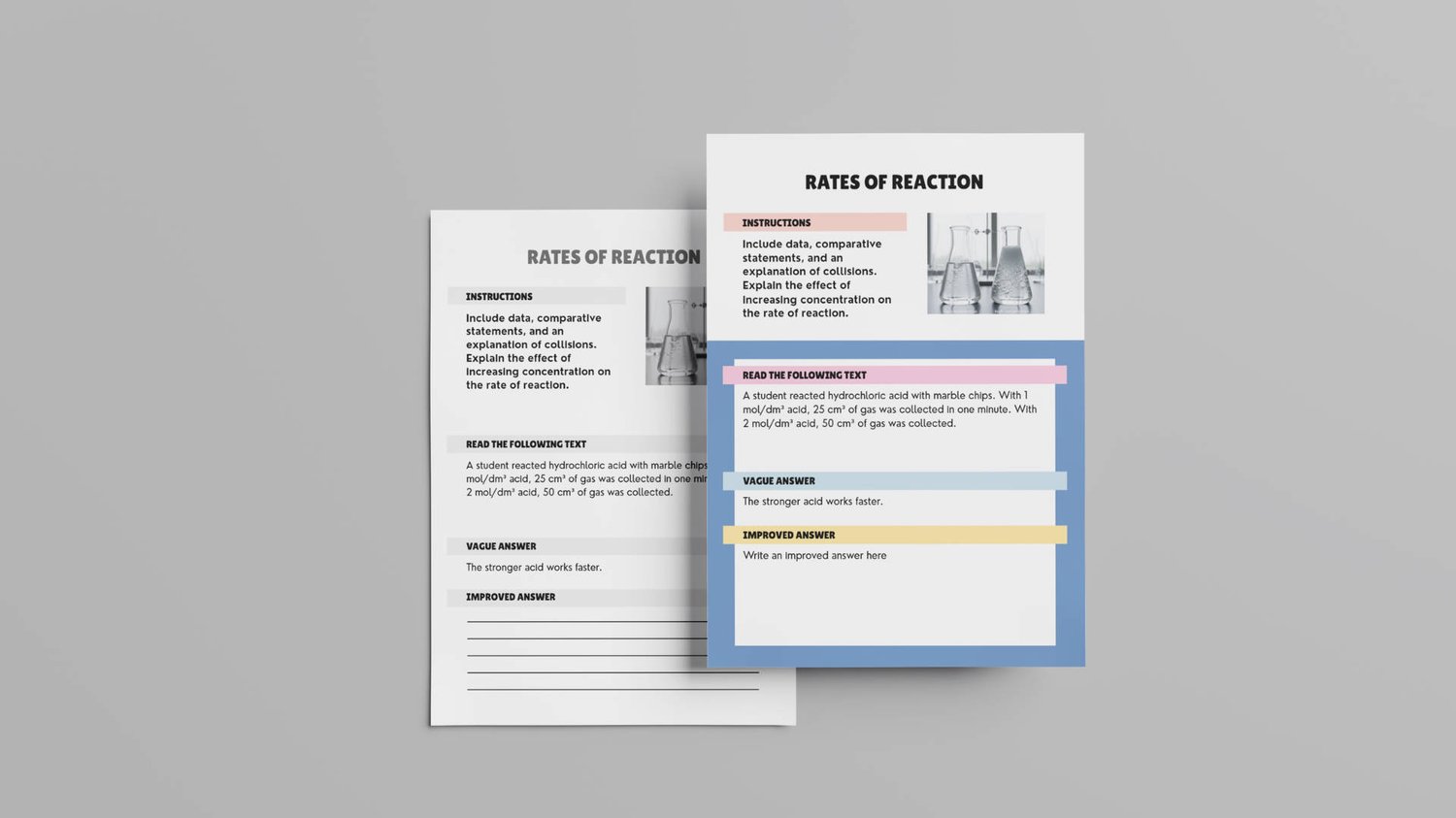
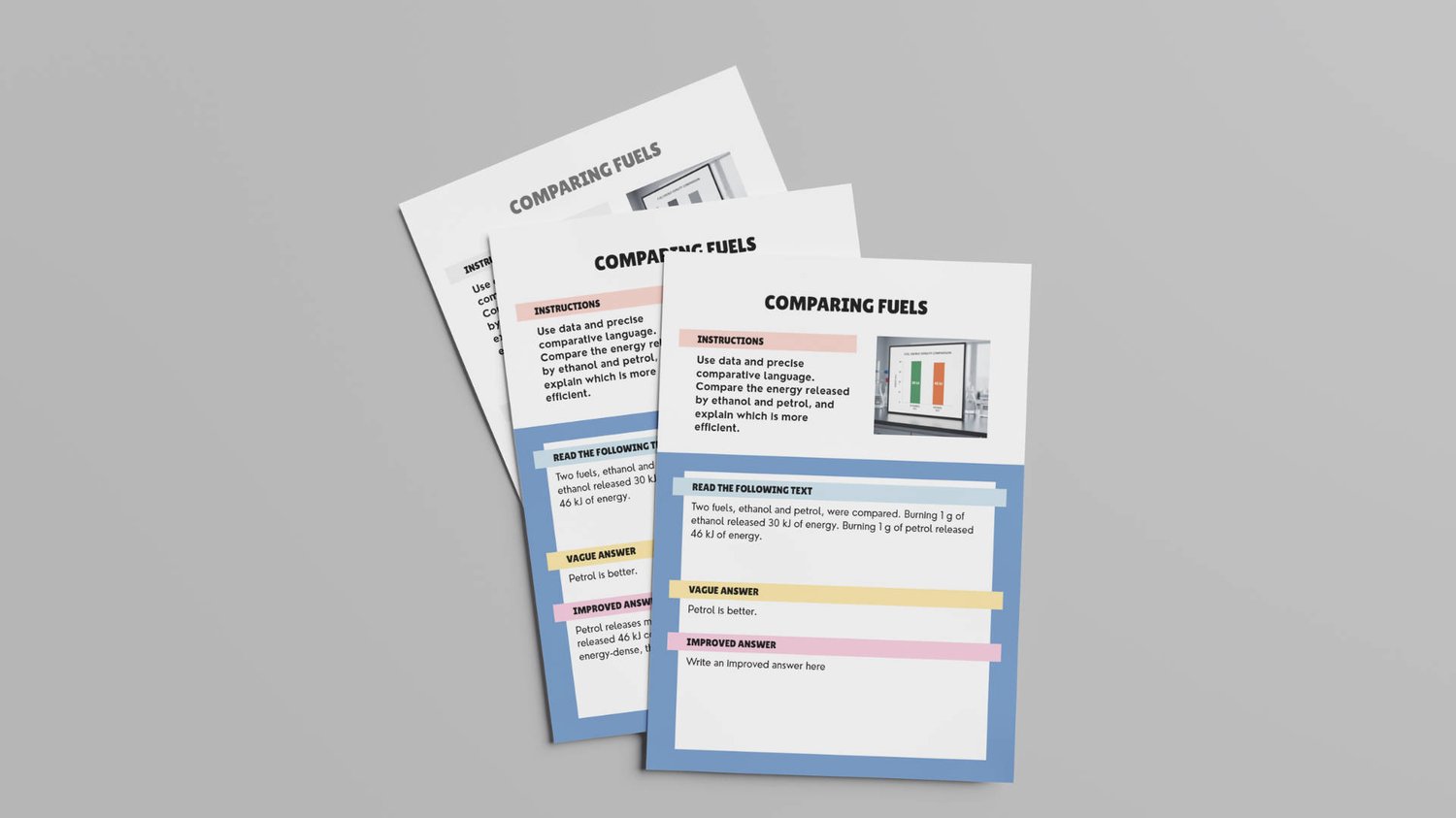
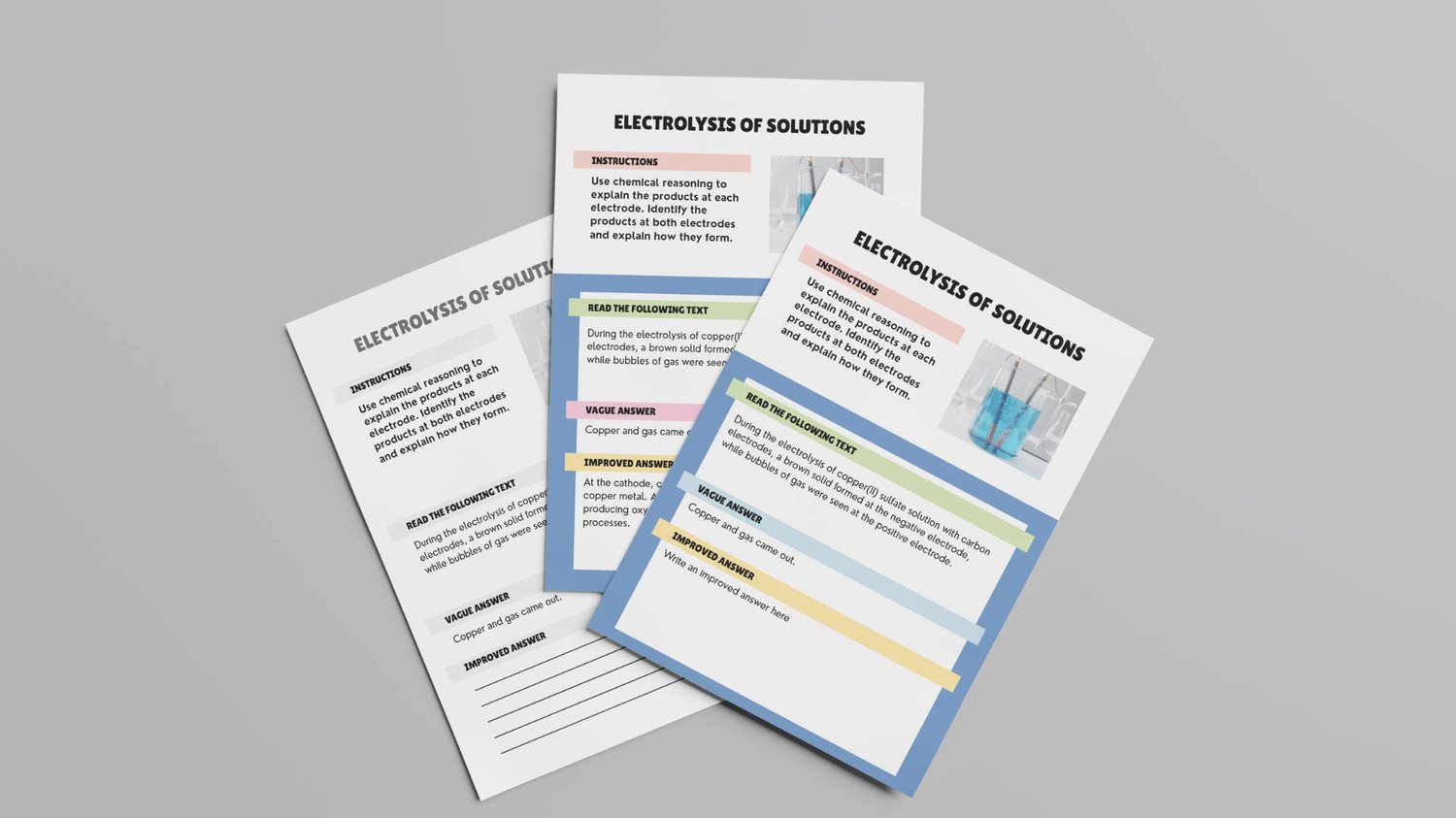
The gap between "I understand it" and "I wrote it precisely enough to get the mark" is where most Higher tier learners lose grade boundaries. Examiner reports for AQA, Edexcel and OCR GCSE Chemistry papers say the same thing every series: candidates use vague verbs, miss key terminology, and write answers that "could mean almost anything." This pack closes that gap with side-by-side practice — a vague learner response on the left, a full-mark exemplar on the right, and a worksheet activity that forces learners to rewrite their own attempt to the exemplar standard.
What's inside:
- Vague-vs-precise answer pairs across high-stakes Chemistry topics: bonding, structure and properties of matter, rates of reaction, equilibrium, energy changes, and quantitative chemistry
- Real-world phrasing pulled from AQA, Edexcel and OCR examiner reports (e.g. "candidates wrote that bonds broke without referring to intermolecular forces" → fixed exemplar)
- Worksheet tasks that ask learners to underline vague language, rewrite using examiner-approved verbs, and self-mark against the exemplar
- A precision-checklist for each topic so learners know exactly which terms must appear
- A teacher's guide PDF with mark-scheme rationales and intervention sequencing
- Compatible across AQA, Edexcel and OCR — same skill, same examiner expectations
AQA / Edexcel / OCR specification alignment: built from examiner report feedback across all three boards. The bonding, rates, and equilibrium sections cover content common to AQA 5.2 / 5.6 / 5.7, Edexcel SC3 / SC11 / SC12, and OCR C3 / C5. Most useful at Higher tier where extended-response questions dominate the mark scheme.
Who it's for: GCSE Chemistry teachers running mock-paper feedback or pre-exam intervention, science department leads building a precision-language programme, GCSE tutors targeting Grade 6 to Grade 8 progression, parents supporting Year 11 learners through final revision, and homeschool families on the UK national curriculum.
Pair with the free video: AQA GCSE Chemistry Quantitative Chemistry Quiz — https://www.youtube.com/watch?v=z-61xPOIYC8
Read the supporting blog post: 10 ways to get yourself and your learners organised — https://advisoryscience.com/blog/school-organisation-and-productivity/10-ways-to-get-yourself-and-your-learners-organised-from-day-one
Buy with the matching Biology and Physics packs: GCSE Science Answer Improvement Bundle (Biology + Chemistry + Physics) — https://advisoryscience.com/b/gcse-science-answer-improvement-bundle-biology-chemistry-physics
Related Chemistry exam-skills resources: AQA GCSE Chemistry 6-Mark Question Practice, GCSE Science Command Words Practice Worksheets, GCSE Science Graph Improvement Worksheets.
Made by an award-winning science educator. Used by 150+ UK schools. Instant download, A4 PDFs.
Format: PDF. © 2026 Advisory Science. Personal/classroom use only. Print copies for your own learners; not for sharing, reselling, or redistribution.
Tags (6): GCSE Chemistry answer improvement | vague to precise Chemistry | AQA Edexcel OCR Chemistry | examiner report intervention | Year 11 revision | bonding rates equilibrium