



AQA GCSE Chemistry Required Practicals | All 6 Revision Slides
AQA GCSE Chemistry required practicals presentation. Every practical with method, expected results, conclusion writing, exam-style questions. 60 pages.
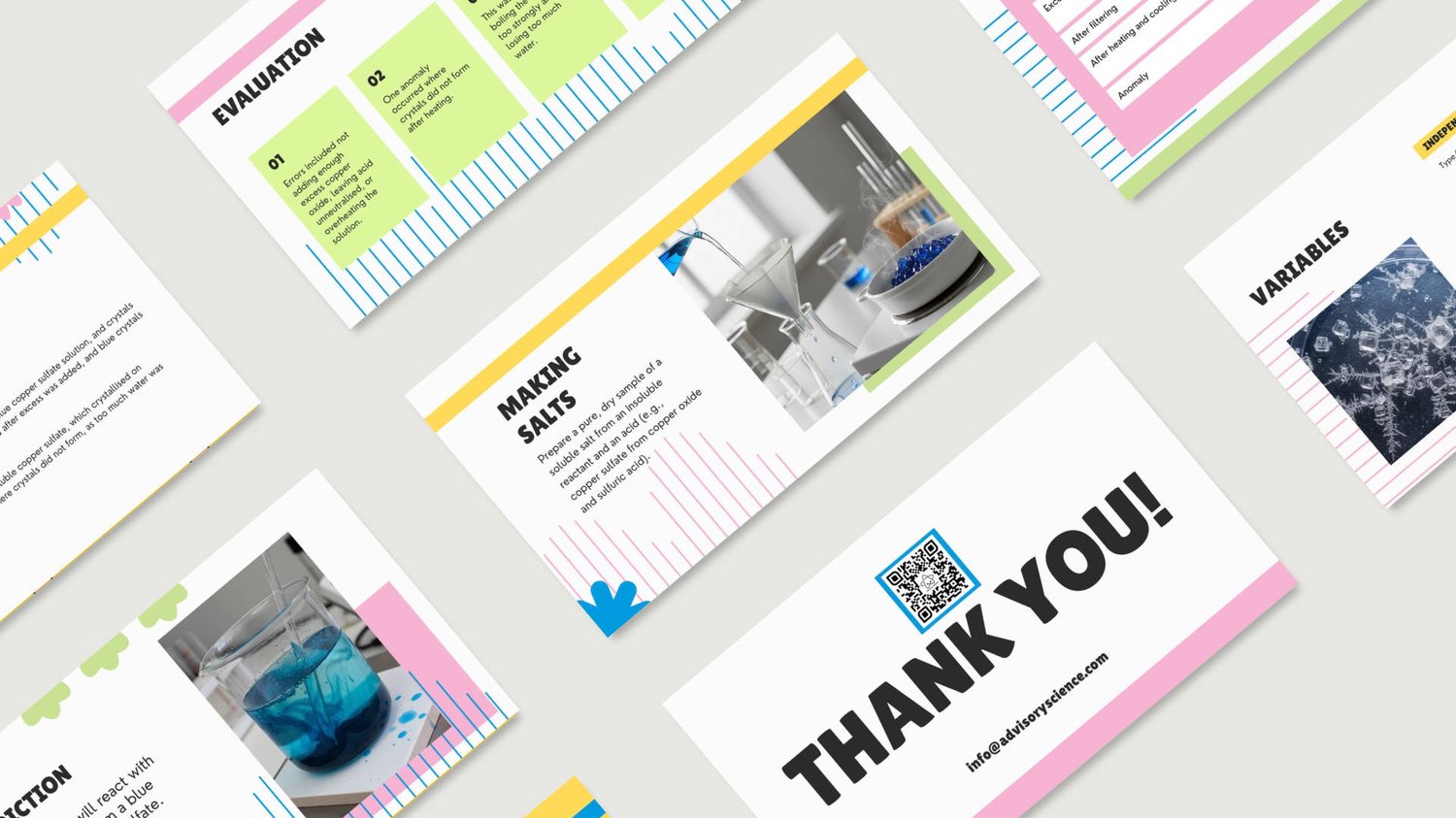
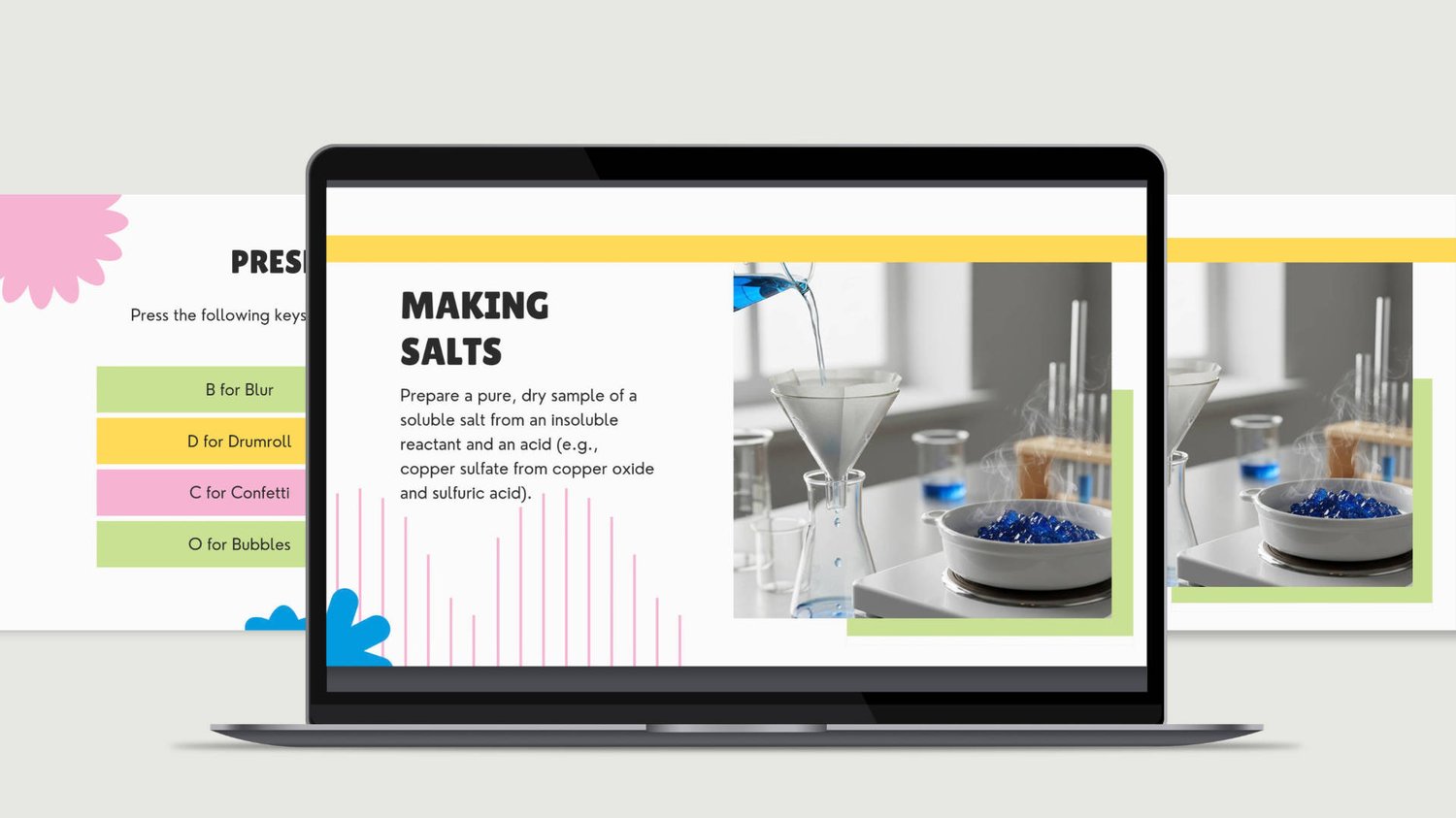
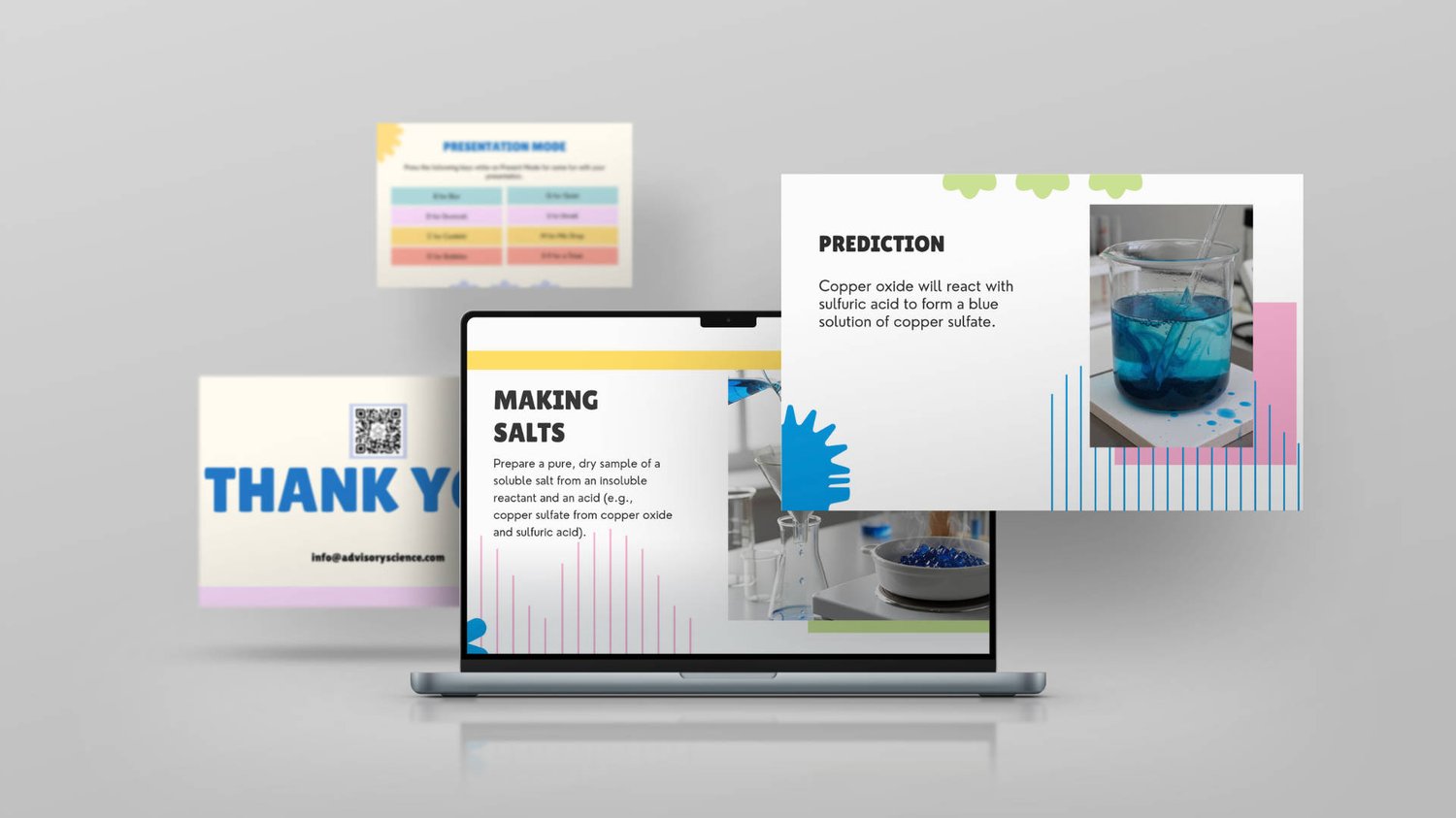
Required practicals show up in roughly 15% of AQA GCSE Chemistry marks across Paper 1 and Paper 2, and learners who miss a practical or never re-encountered it before mock season are at a real disadvantage. This 60-page presentation gives every required practical the same structured treatment (method summary, expected results, scaffolded conclusion writing, and exam-style questions), so learners can revise practicals end to end without needing a lab.
What's inside:
- 60 lesson-ready slides spanning every AQA Chemistry required practical
- Clear method summaries with apparatus, variables (independent, dependent, control), and procedural detail
- Expected results sections with sample data tables and graphs in the format AQA uses in exam questions
- Conclusion-writing guidance with scaffolded sentence stems and key terminology cues
- Exam-style questions modelled on AQA Paper 1 and Paper 2 formats, including 6-mark extended-response items
- Practicals covered: preparation of a pure dry salt (RP1), electrolysis (RP3), temperature changes / energy changes in reactions (RP4), rates of reaction with concentration (RP5), chromatography (RP6), and analysis and purification of water (RP8). Triple Chemistry students also sit Neutralisation (RP2) and Identifying Ions (RP7), which are not covered in this pack
- Hand-drawn student-notebook design at 300 DPI for clean classroom projection or print
AQA specification reference: AQA GCSE Chemistry 8462 practical assessment. Built from the AQA practical assessment specification and the Use of apparatus and techniques (AT) criteria. Suitable for Combined Science Trilogy (Chemistry component) and Triple Chemistry.
Use it in lessons as a sequence of mini-lessons, as a revision pack before mocks, or as a catch-up for learners who missed a practical. The conclusion-writing slides are especially useful for the 6-mark extended-response questions where learners typically lose 2-3 marks for vague language.
Who it's for: AQA GCSE Chemistry teachers, science department leads building a practicals revision sequence, GCSE tutors, parents supporting Year 10 and Year 11 learners through revision, and homeschool families on the UK national curriculum who can't always replicate the practical at home but want full coverage of the content.
Pair with the matching learner pack: AQA GCSE Chemistry 6-Mark Question Practice. https://advisoryscience.com/b/aqa-gcse-chemistry-6-mark-required-practicals
Save with the bundle: AQA GCSE Chemistry Required Practicals Bundle. https://advisoryscience.com/b/aqa-gcse-chemistry-required-practicals-complete-bundle
Pair with the free video: AQA GCSE Chemistry Quantitative Chemistry Quiz. https://www.youtube.com/watch?v=z-61xPOIYC8
Read about teaching practical-heavy units on the blog: How to teach ecosystems well in KS2 and KS3. https://advisoryscience.com/blog/ecosystems-and-habitats-teaching-resources/how-to-teach-ecosystems-well-in-ks2-and-ks3
Related Chemistry resources: GCSE Chemistry Answer Improvement Worksheets, GCSE Chemistry Yield Calculations Booklet, GCSE Science Command Words Bundle.
Made by an award-winning science educator. Used by 150+ UK schools. Instant download, A4 PDF.
Format: PDF (compatible with PDF readers, printers, classroom projectors). © 2026 Advisory Science. Personal/classroom use only. Print copies and project slides for your own learners; not for sharing, reselling, or redistribution.
Tags (6): AQA GCSE Chemistry required practicals | 60 page presentation | methods results conclusions | titration electrolysis chromatography | Year 10 Year 11 revision | Combined Triple Chemistry