GCSE Chemistry Calculations Complete Bundle (Yield)
Presentation + Scaffolded Booklet | EVERY Method | Moles & Concentration

Presentation + Scaffolded Booklet | EVERY Method | Moles & Concentration
Save £1.99 with this complete yield calculations bundle combining the 11-page teaching presentation with the 21-page scaffolded practice booklet.
AQA GCSE Chemistry moles, yield and concentration calculations bundle. 11-page teaching presentation + 21-page learner booklet. EVERY method. AQA 5.3.
Two resources, one quantitative chemistry workflow. The 11-page presentation teaches the method with animated worked examples and guided practice; the 21-page booklet gives learners the independent practice and full answers they need to make it stick. Combined, they take a class from "no idea where to start" to confident through every moles, percentage yield, and concentration question on AQA GCSE Chemistry.
What's inside:
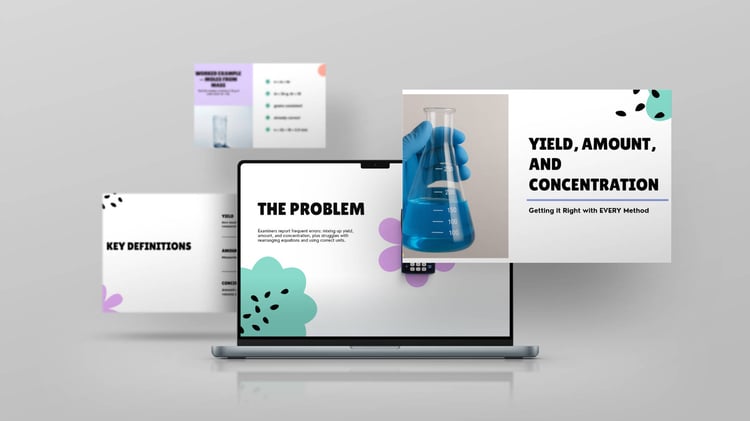
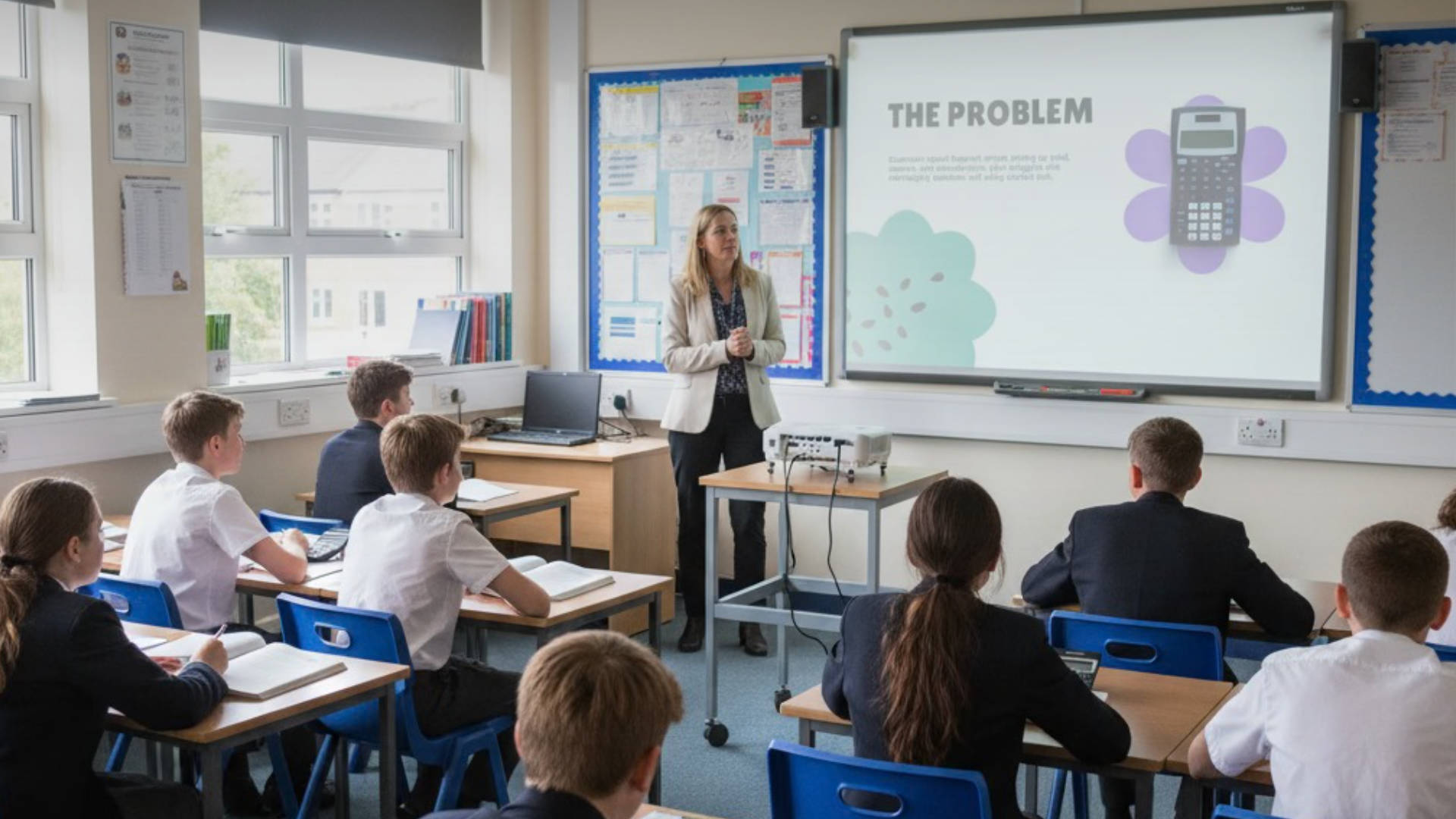
Resource 1 — Yield Amount & Concentration Teaching Presentation (11 pages, PDF). Explicit instruction on the EVERY method. Animated worked examples for percentage yield, moles (n = m / Mr), and concentration. Guided practice questions before independent work. Exam-style problems for plenary. Editable in Canva, compatible with AQA, Edexcel and OCR.
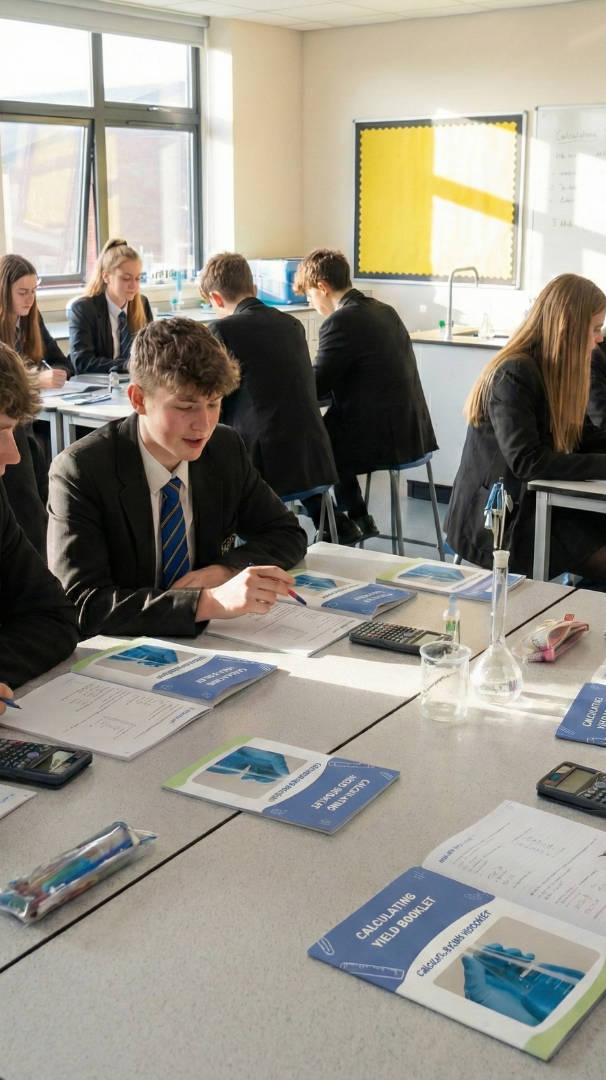
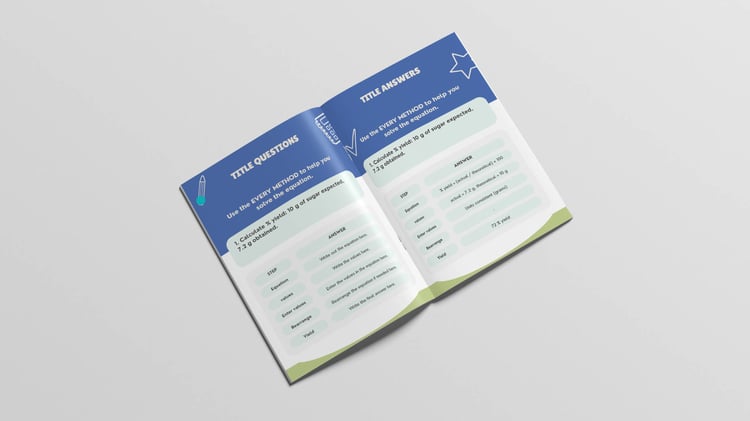
Resource 2 — Calculating Yield Learner Booklet (21 pages, PDF). Mixed practice across moles, concentration and percentage yield. Every question scaffolded with the EVERY method table (Equation, Values, Enter, Rearrange, Yield). Includes worked examples (e.g. 10 g of sugar expected, 7.2 g obtained → 72%; 36 g water, Mr = 18 → 2 mol). Full worked answers throughout. Teacher's guide PDF also included for sequencing in lessons, intervention, and homework.
AQA specification reference: 5.3 Quantitative Chemistry. Covers section 5.3.1 (Conservation of mass), 5.3.2 (Relative formula mass and calculations using moles), 5.3.3 (Percentage yield and atom economy). Higher tier content included; suitable for Combined Science and Triple Chemistry.
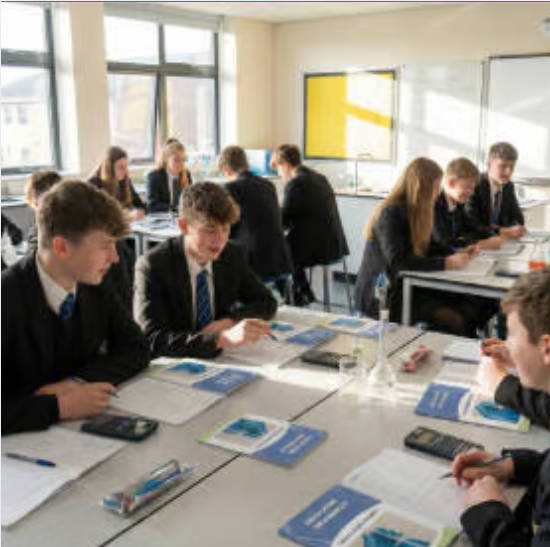
Use it as a complete sequence: teach with the presentation, set the booklet for independent practice, use the answers for homework marking or revision sessions. Or hand the booklet straight to learners for revision and intervention without prep.
The EVERY method: Equation → Values → Enter → Rearrange → Yield. A consistent five-step framework that makes every calculation look the same on the page, regardless of whether it's moles, concentration, or yield. The method is what carries learners through the multi-step quantitative questions on Paper 1 and Paper 2.
Who it's for: AQA GCSE Chemistry teachers, science department leads, GCSE tutors, parents supporting Year 10 and Year 11 learners through revision, and homeschool families on the UK national curriculum. Use in lessons, intervention sessions, homework, mock revision, or independent study at home.
Pair with the free video: AQA GCSE Chemistry Quantitative Chemistry Quiz (20 questions) — https://www.youtube.com/watch?v=z-61xPOIYC8
Read the calculation workbook series on the blog: https://advisoryscience.com/blog/the-physics-equations-calculations-practice-workbooks-series/why-gcse-students-struggle-with-physics-equations-and-what-actually-helps
Both items also sold separately:
Related Chemistry resources: AQA GCSE Chemistry 6-Mark Question Practice, AQA GCSE Chemistry Required Practicals Complete Bundle, GCSE Chemistry Answer Improvement Worksheets.
Made by an award-winning science educator. Used by 150+ UK schools. Instant download, A4 PDFs, print-ready, full answers throughout. Editable Canva versions available for the presentation.
Format: PDF + Canva edit link for the presentation. © 2026 Advisory Science. Personal/classroom use only. Print copies for your own learners; not for sharing, reselling, or redistribution.
Tags (6): AQA GCSE Chemistry calculations bundle | moles yield concentration | quantitative chemistry 5.3 | EVERY method scaffold | Year 10 Year 11 GCSE revision | Combined Triple Chemistry
Here are all the products that are included in your bundle