

AQA GCSE Chemistry Moles, Yield & Concentration Slides
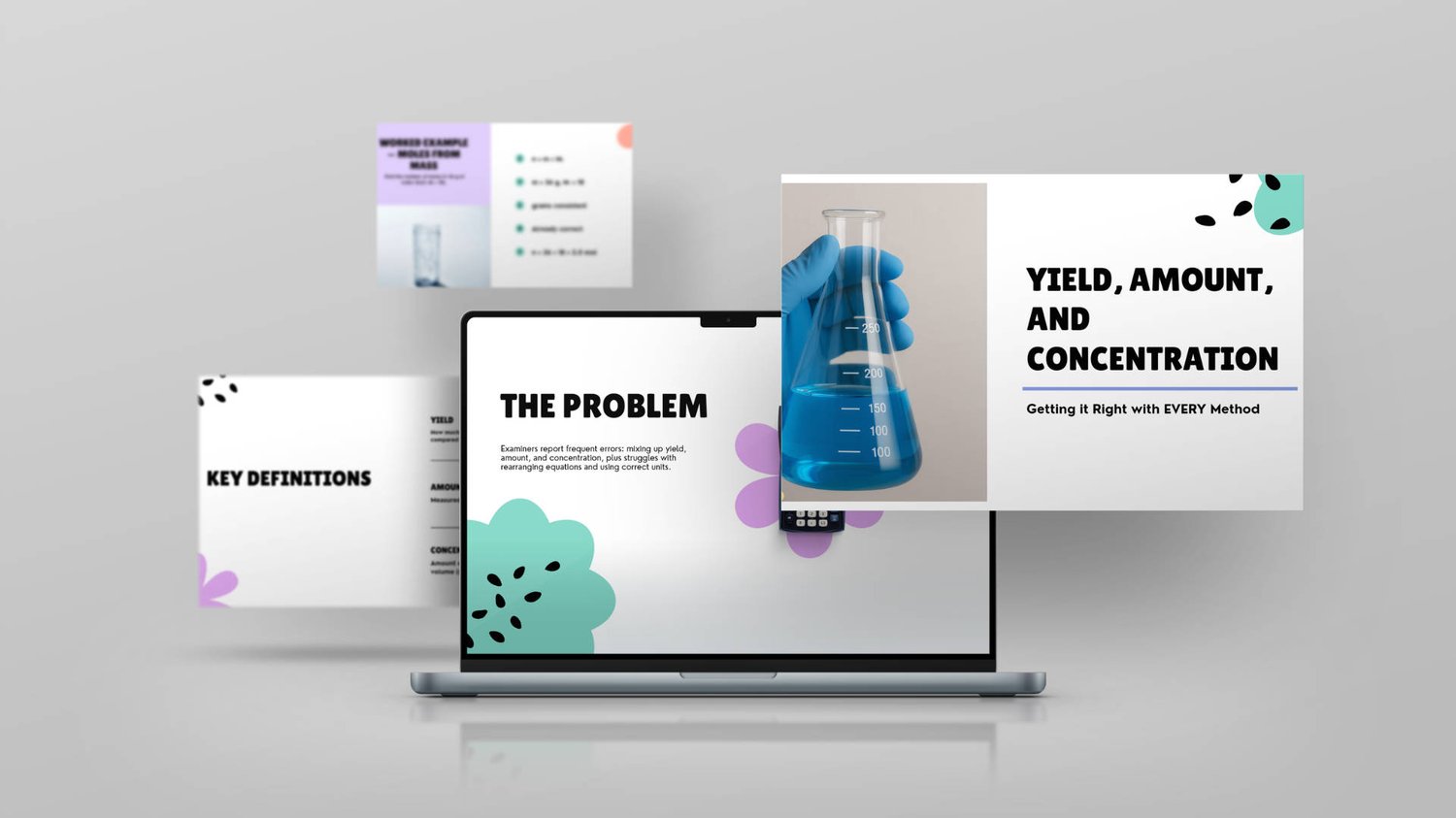
AQA GCSE Chemistry moles, yield and concentration teaching presentation. 11 pages, EVERY method, worked examples and exam-style practice. AQA 5.3.
Quantitative chemistry is where the marks go to die. Learners who can recite definitions go blank when a Paper 1 or Paper 2 question asks them to combine moles, mass, and yield in a single multi-step calculation. This 11-page teaching presentation gives you a ready-to-use lesson sequence built around the EVERY method, so you can take a whole class from blank-page-panic to confident in one period.
What's inside:
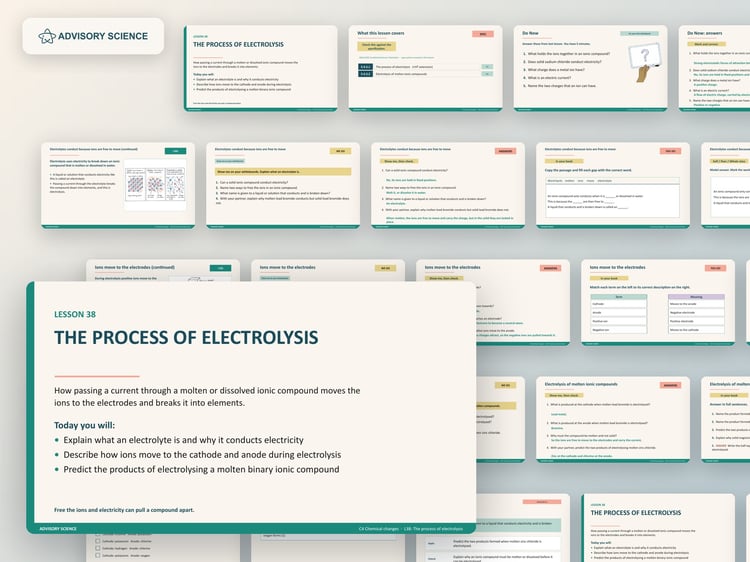
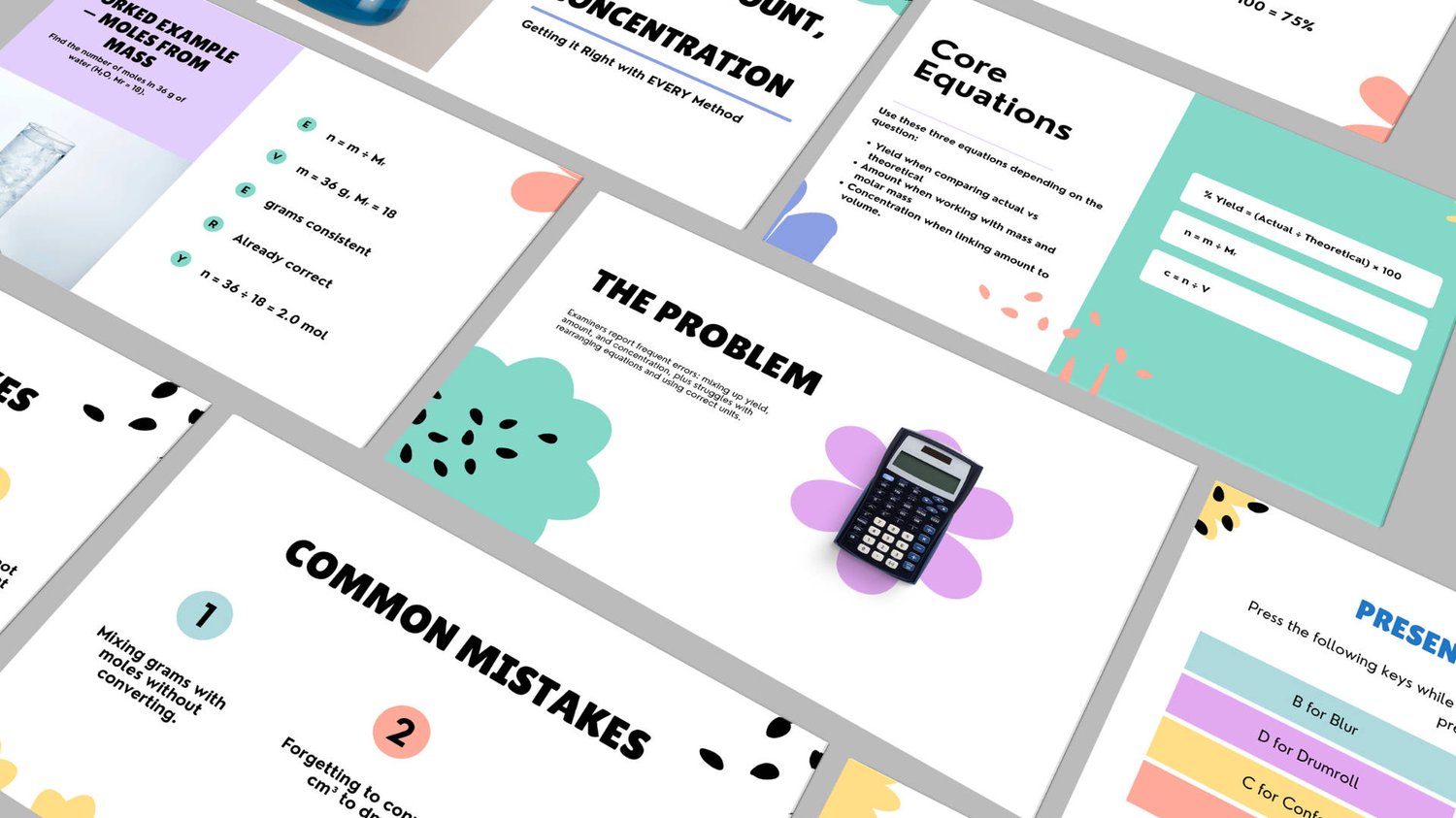
- 11 lesson-ready slides covering percentage yield, amount of substance (moles, n = m / Mr), and concentration
- Explicit teaching of the EVERY method (Equation → Values → Enter → Rearrange → Yield) with a single consistent layout learners recognise on every slide
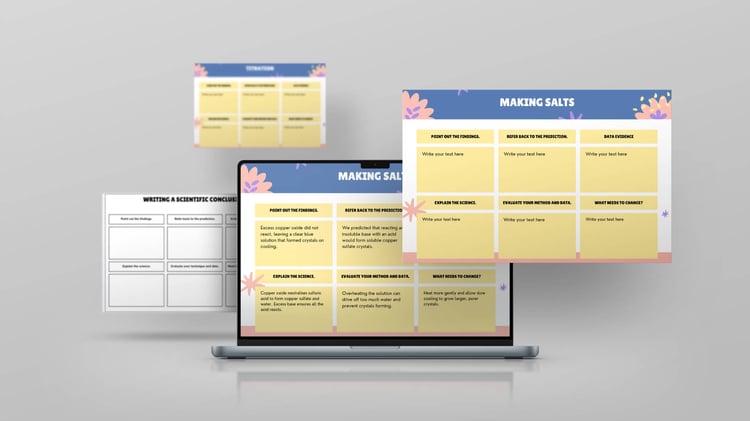
- Animated worked examples that build the method step by step on screen
- Guided practice questions where learners try, then the slide reveals the working
- Exam-style problems for plenary and stretch
- Editable in Canva so you can re-skin for your department style or insert your own data
AQA specification reference: 5.3 Quantitative Chemistry. Section 5.3.2 (relative formula mass, moles, n = m / Mr) is Foundation and Higher. Section 5.3.3 (percentage yield, atom economy) is Foundation and Higher. The presentation covers both tiers and is compatible with Combined Science and Triple Chemistry. Also useful for Edexcel and OCR equivalent topics: the EVERY method is exam-board agnostic.
The EVERY method: Equation → Values → Enter → Rearrange → Yield. Once learners have used it three times on screen with you, they keep using it on every calculation question after. It is the single biggest predictor of whether a Higher tier learner picks up the multi-step quantitative marks.
Who it's for: AQA GCSE Chemistry teachers planning a moles or yield lesson, science department leads building a calculation intervention sequence, GCSE tutors needing a structured teaching aid, and homeschool families on the UK national curriculum needing direct instruction before independent practice. Pair with the learner booklet for a complete sequence.
Pair with the free video: AQA GCSE Chemistry Quantitative Chemistry Quiz (20 questions). https://www.youtube.com/watch?v=z-61xPOIYC8
Read the calculation workbook series on the blog: https://advisoryscience.com/blog/the-physics-equations-calculations-practice-workbooks-series/why-gcse-students-struggle-with-physics-equations-and-what-actually-helps
Save with the bundle (presentation + learner booklet): GCSE Chemistry Calculations Complete Bundle (Yield). https://advisoryscience.com/b/gcse-chemistry-calculations-complete-bundle-yield
Hand learners the matching booklet for independent practice: https://advisoryscience.com/b/calculating-yield-booklet
Related Chemistry teaching resources: AQA GCSE Chemistry Required Practicals Presentation, AQA GCSE Chemistry 6-Mark Question Practice.
Made by an award-winning science educator. Used by 150+ UK schools. Instant download, PDF + Canva editable link.
Format: PDF + Canva edit link. © 2026 Advisory Science. Personal/classroom use only. Print copies and project slides for your own learners; not for sharing, reselling, or redistribution.
Tags (6): AQA GCSE Chemistry presentation | moles yield concentration slides | quantitative chemistry teaching | EVERY method calculation | Canva editable Chemistry | Year 10 Year 11 lesson