
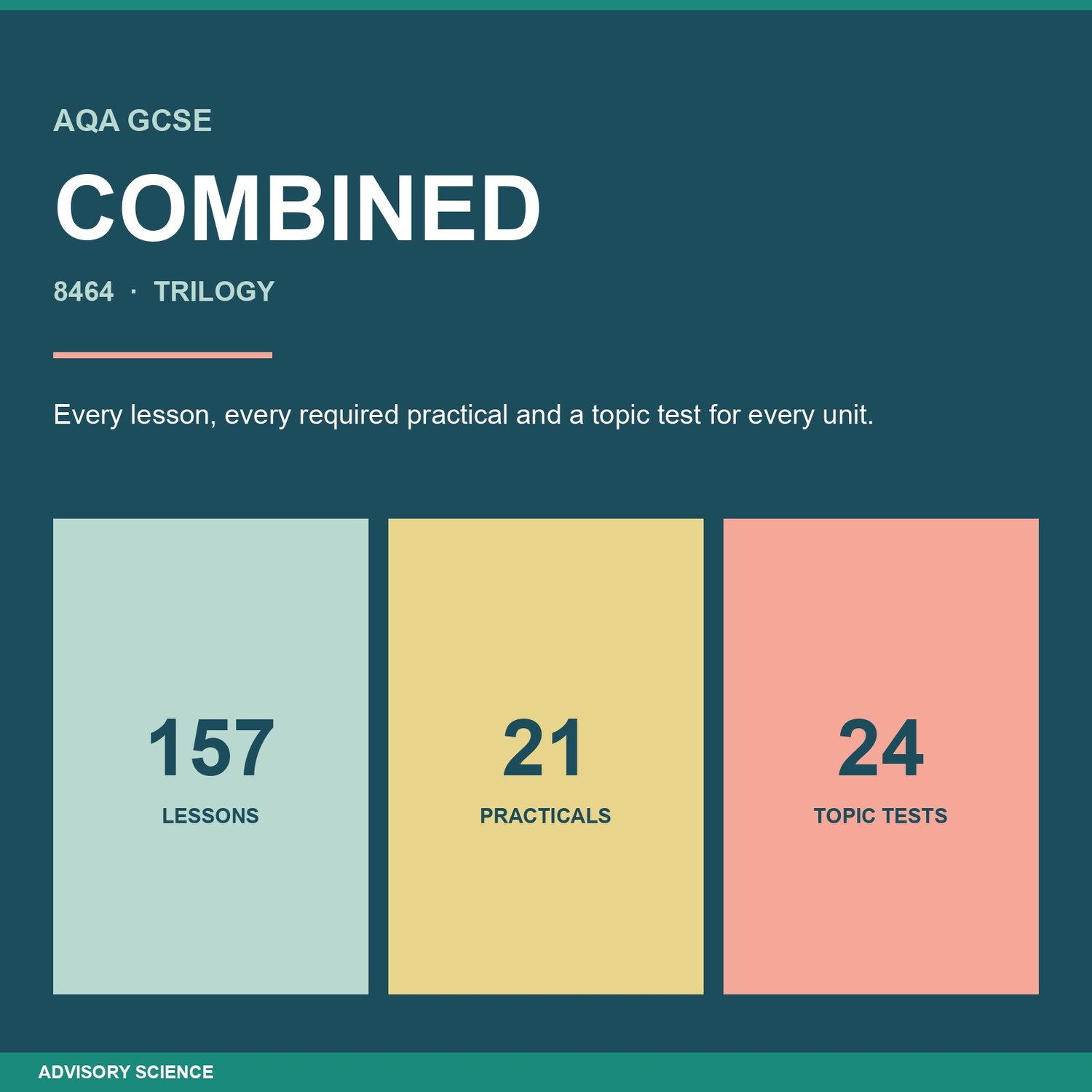

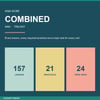
AQA GCSE Combined Science Trilogy 8464 Complete Course | 157 Lessons, 21 Required Practicals, 24 Topic Tests
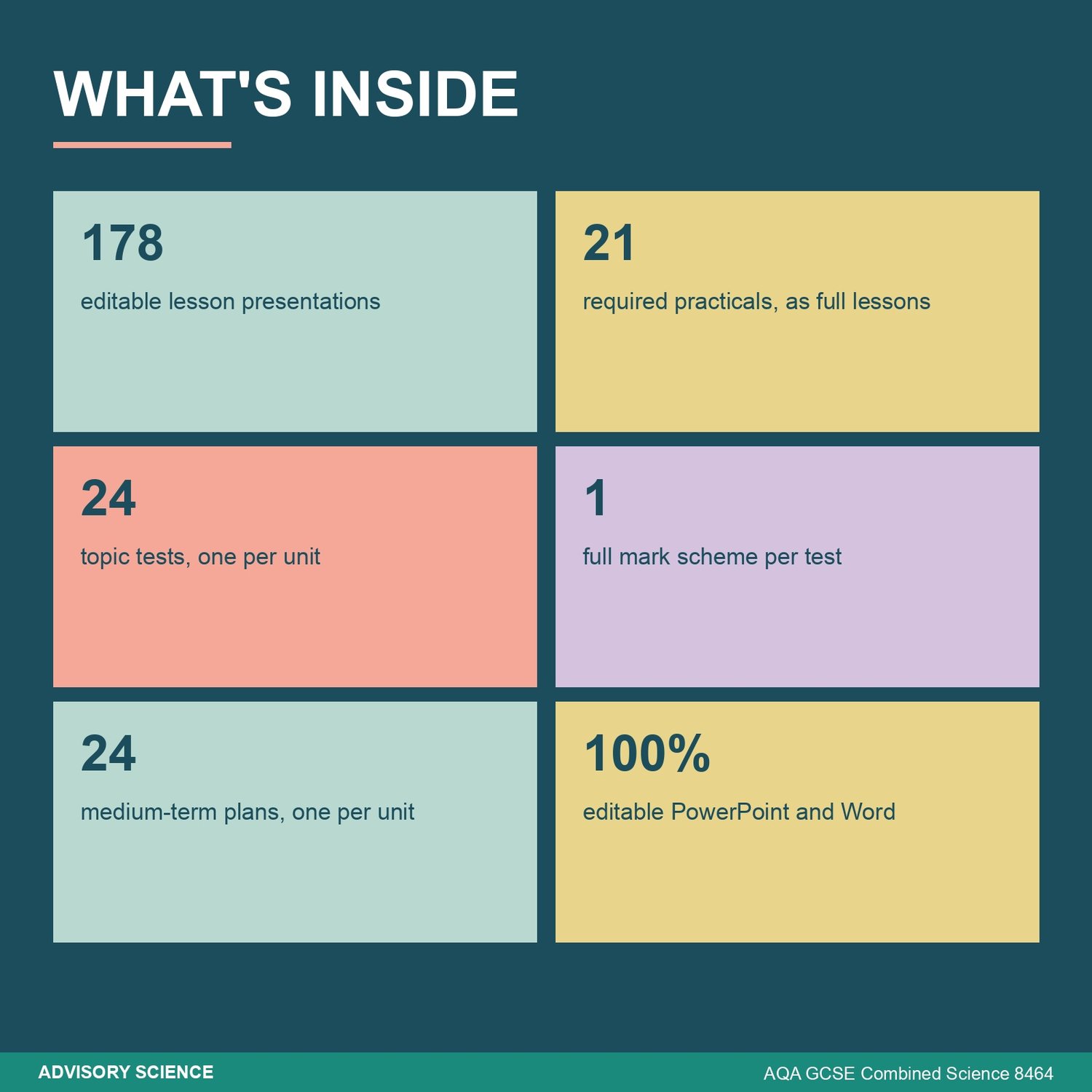
The whole of AQA Combined Science: Trilogy, planned, resourced and ready to teach. 157 editable lesson presentations, all 21 required practicals and 24 topic tests, written by Mrs Hayles, an award-winning science educator and science curriculum author who has taught this specification and trained the teachers delivering it.
A consistent teaching cycle: Gradual Release of Responsibility
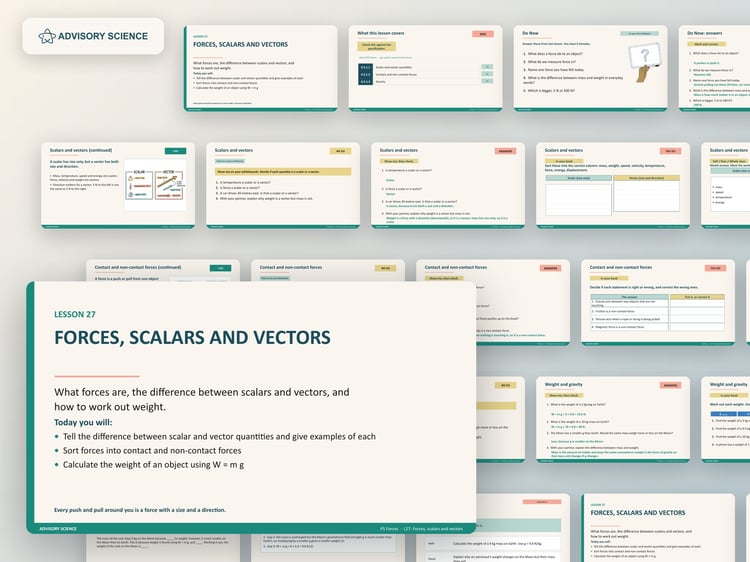
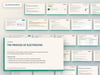
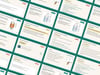
Every lesson follows the same I do, we do, you do structure, so pupils always know where they are and cognitive load stays low.
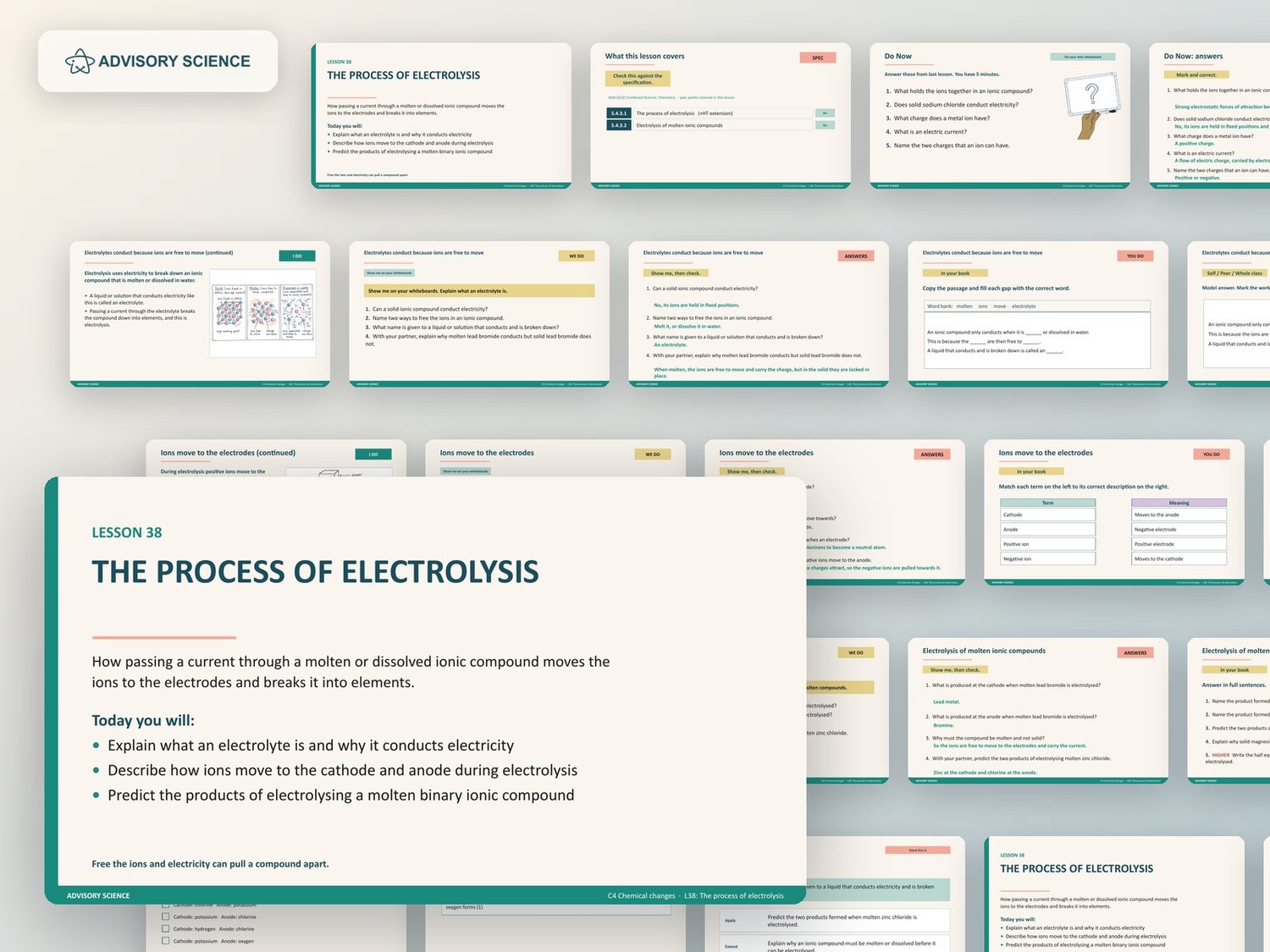
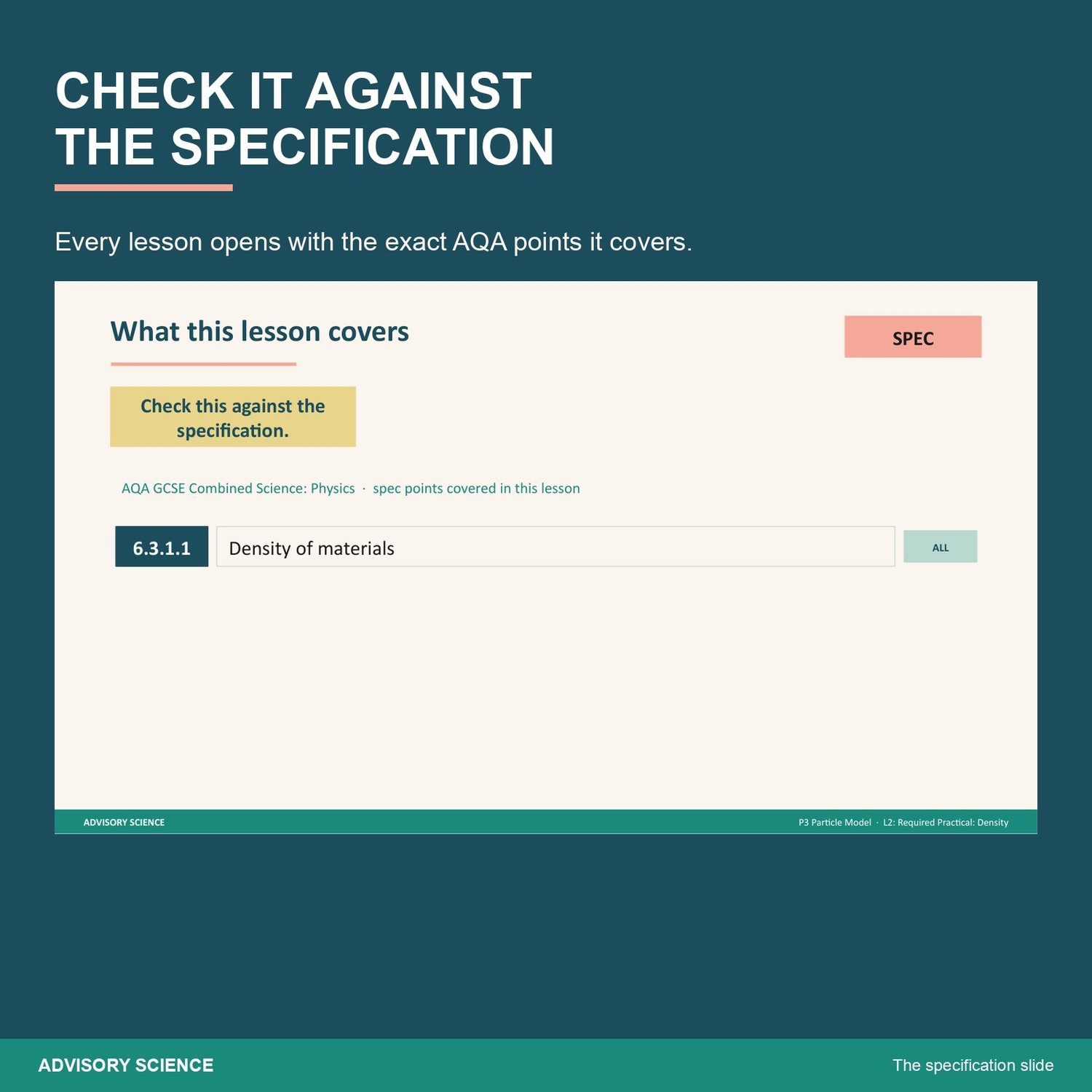
- Title, objectives and hook to open, then a specification slide naming the exact AQA points covered
- Do Now retrieval starter on last lesson's content
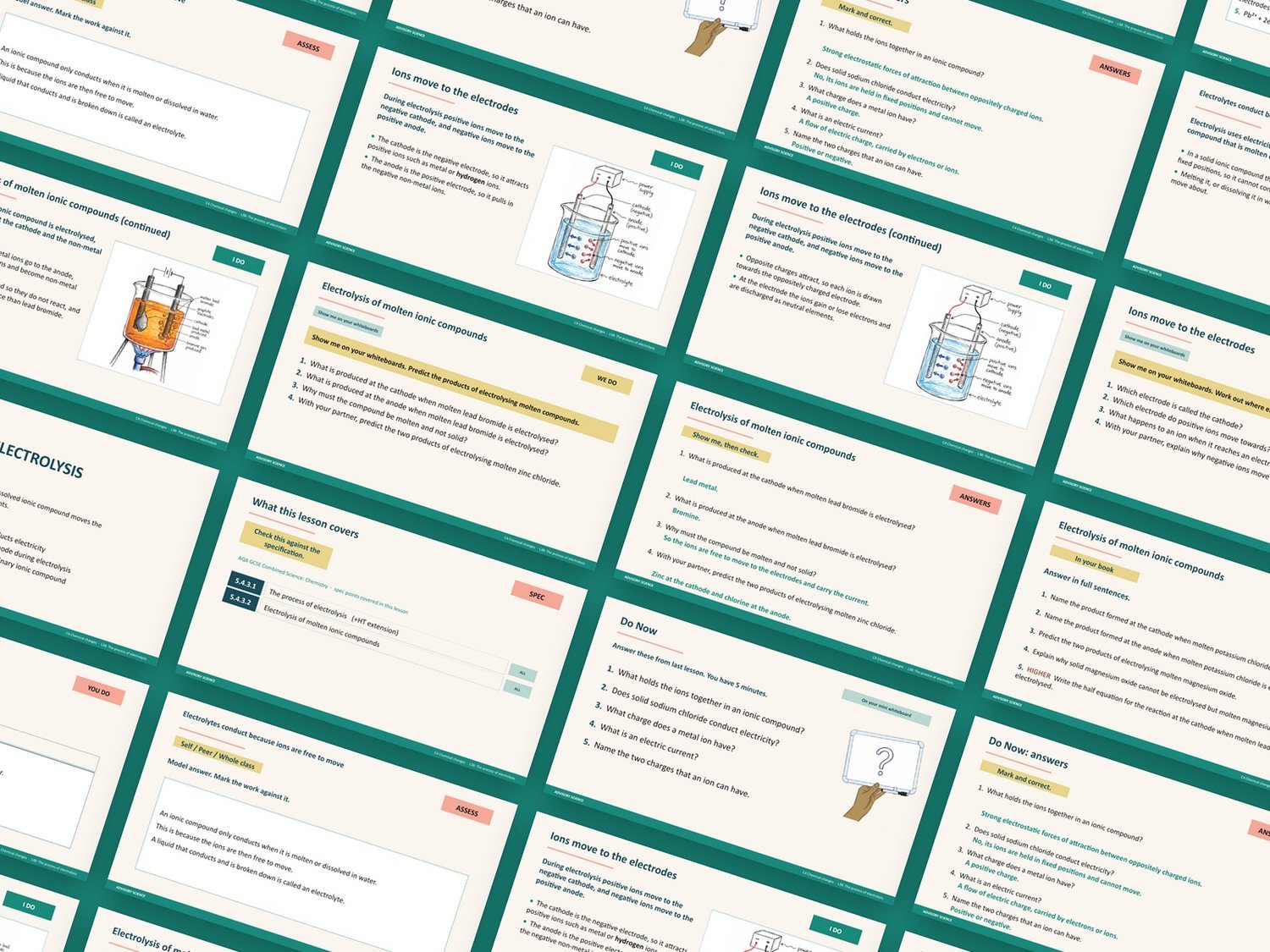
- I Do teacher explanation, with a diagram
- We Do whiteboard questioning and partner talk
- You Do independent written practice
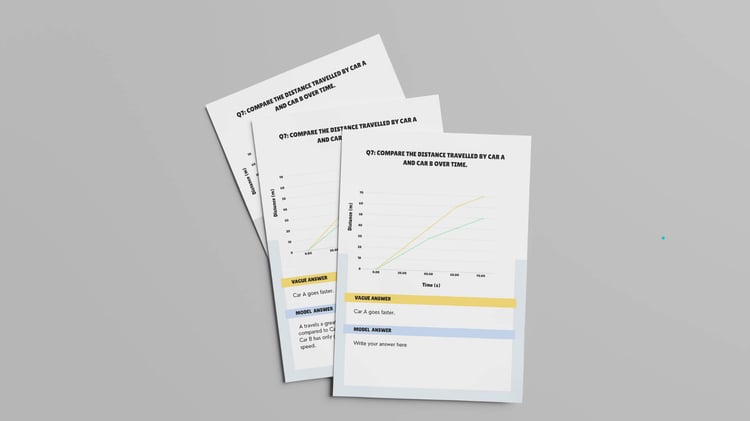
- Assess a model answer slide for every task, so pupils mark their own work
- Exam-style question and mark scheme, then an exit ticket to close
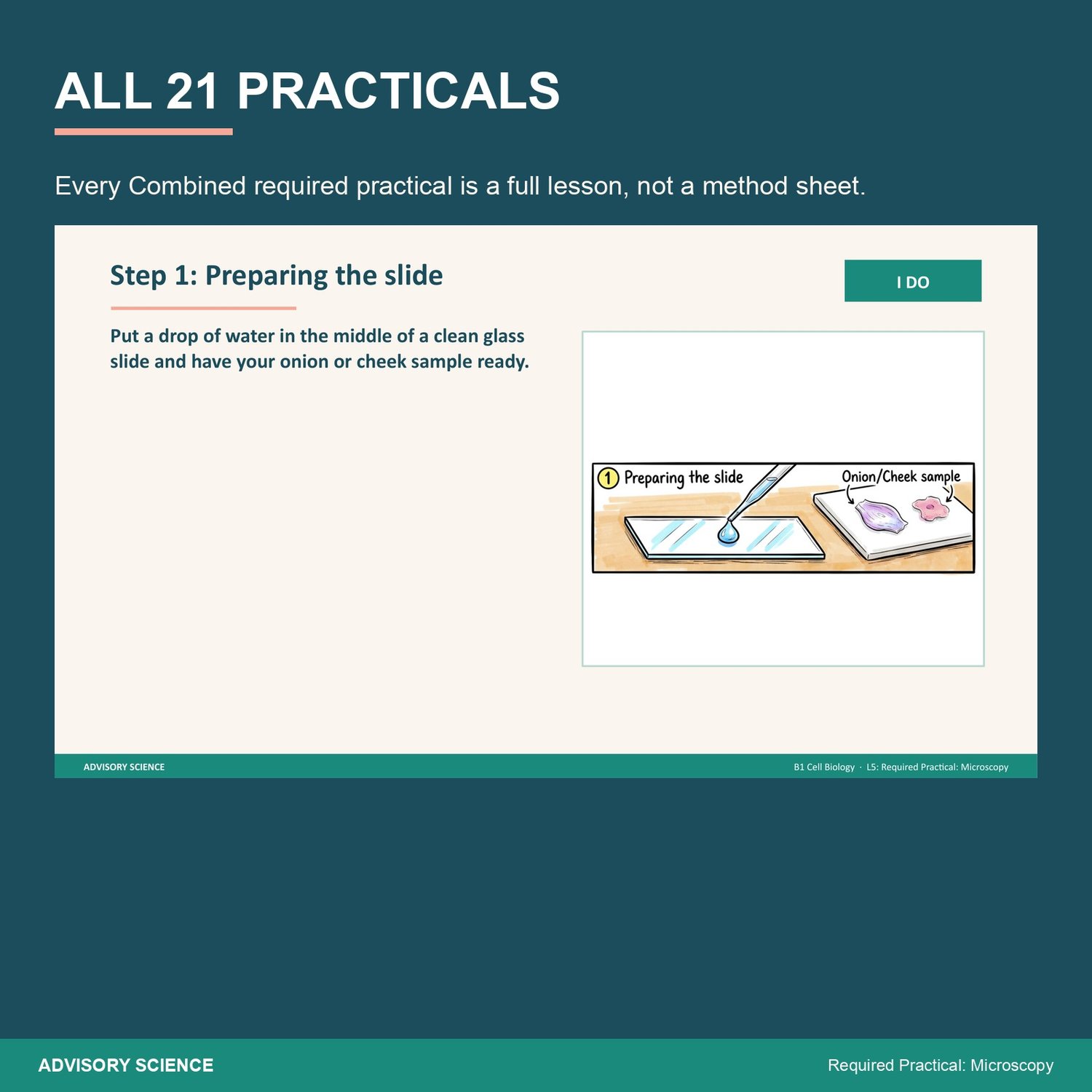
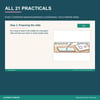
All 21 required practicals, as full lessons
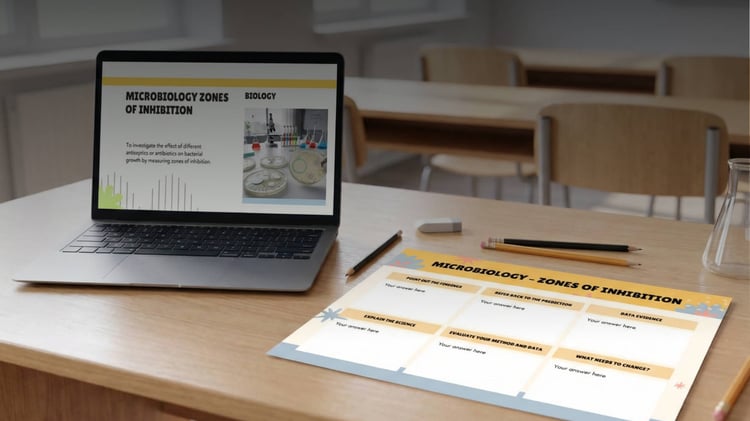
Not method sheets. Each one covers the method, the variables, the results table, the graph work and the analysis. Pupils plan the reaction time investigation, determine density by displacement, design a circuit to obtain I-V characteristics, and calculate rate from a gradient.
Planning and resources.
Three planning documents come with the lessons, so a head of department can see the whole course at once.
- Teacher guide: how the course is built, how much there is, and where to start
- Curriculum map: all 178 lessons in teaching order with their objectives, AQA specification points, tier and teaching hours. Filterable, with a per-unit tab and a summary
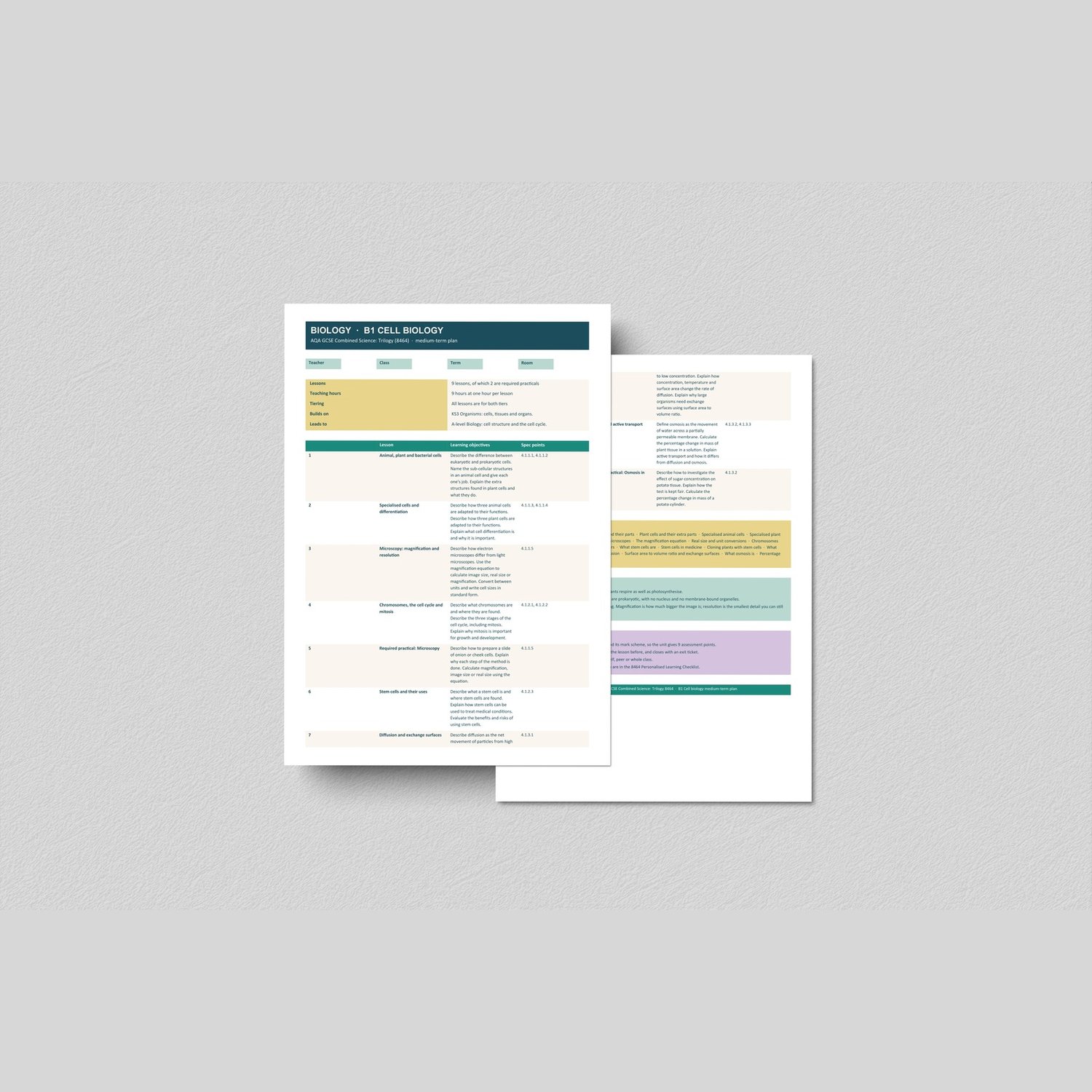
- 24 medium-term plans, one per unit, in Word and PDF. Each carries the lesson sequence, teaching hours, key ideas, common misconceptions to plan for, assessment points, and editable teacher, class, term and room fields
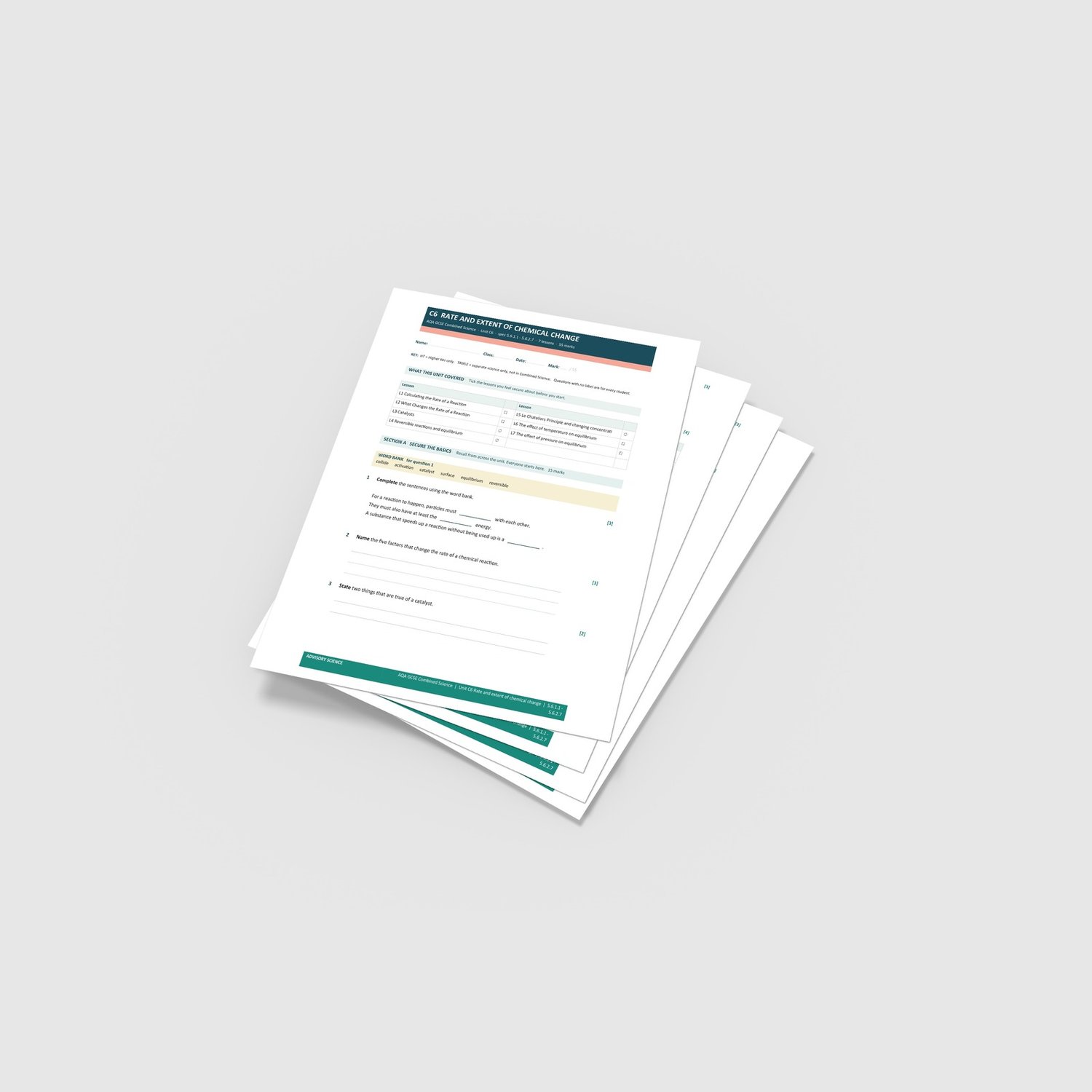
- 24 topic tests, one per topic, with a full mark scheme for every question
Also included
A Personalised Learning Checklist covering the whole specification, for pupils to RAG-rate their confidence before mocks.
Formats and customisation
- Presentations: editable PowerPoint
- Topic tests: editable Word documents
Everything is customisable. Change the examples, the names and the numbers, or add your own school branding.
Please note: this bundle covers AQA GCSE Combined Science: Trilogy (8464) only. If you teach the separate sciences, the Biology (8461), Chemistry (8462) and Physics (8463) bundles are listed separately, because the specification codes and the content differ.
Every lesson in the course, in teaching order
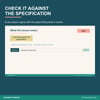
All 178 lessons are listed below so you can check the course against your own scheme of work before you buy.
Biology, B1 Cell biology
- Animal, plant and bacterial cells
- Specialised cells and differentiation
- Microscopy: magnification and resolution
- Chromosomes, the cell cycle and mitosis
- Required practical: Microscopy
- Stem cells and their uses
- Diffusion and exchange surfaces
- Osmosis and active transport
- Required practical: Osmosis in Plant Tissue
Biology, B2 Organisation
- The human digestive system
- The heart, lungs and blood vessels
- Blood and its components
- Required practical: Food Tests
- Coronary heart disease and treating the heart
- Health and disease
- Required practical: Effect of pH on Enzymes
- Lifestyle and non-communicable disease
- Cancer
- Plant tissues and the leaf
- Transport in plants: transpiration and translocation
- Levels of organisation
Biology, B3 Infection and response
- Pathogens and communicable disease
- Viral diseases: measles, HIV and TMV
- Bacterial, fungal and protist diseases
- Defending the body: white blood cells and vaccination
- Antibiotics and painkillers
- Discovery and development of drugs
Biology, B4 Bioenergetics
- The photosynthesis reaction
- Rate of photosynthesis and limiting factors
- Required practical: Light Intensity and Photosynthesis
- Uses of glucose from photosynthesis
- Aerobic and anaerobic respiration
- Response to exercise
- Metabolism
Biology, B5 Homeostasis and response
- The nervous system and reflex arc
- The human endocrine system
- Controlling blood glucose
- Required practical: Reaction Time
- Hormones in human reproduction
- Contraception
- Using hormones to treat infertility (Higher tier)
- Homeostasis and negative feedback
Biology, B6 Inheritance, variation and evolution
- Sexual and asexual reproduction and meiosis
- DNA and the genome
- Genetic inheritance and genetic crosses
- Inherited disorders and sex determination
- Variation and mutation
- Evolution by natural selection
- Selective breeding
- Genetic engineering
- The evidence for evolution
- Fossils and extinction
- Antibiotic resistant bacteria
- Classification of living organisms
Biology, B7 Ecology
- Communities, competition and interdependence
- Abiotic and biotic factors
- Adaptations and extremophiles
- Food chains, predators, prey and sampling
- Required practical: Field Investigations
- Cycling materials: carbon and water
- Biodiversity and the waste we produce
- Land use, deforestation and global warming
- Maintaining biodiversity
Chemistry, C1 Atomic structure and the periodic table
- Atoms, elements and compounds
- Mixtures and separating them
- How the model of the atom developed
- Charges of subatomic particles and atomic number
- The size, mass and relative atomic mass of atoms
- The electronic structure of atoms
- The periodic table
- The development of the periodic table
- Metals and non-metals
- Group 0 and Group 1
- Group 7: the halogens
Chemistry, C2 Bonding, structure and properties
- The three types of chemical bond
- Ionic bonding and the charges on ions
- Ionic lattices and covalent bonding
- Metallic bonding
- The three states of matter
- State symbols and the properties of ionic compounds
- Small molecules and polymers
- Giant covalent structures, metals and alloys
- Diamond and graphite
- Graphene, fullerenes and carbon nanotubes
Chemistry, C3 Quantitative chemistry
- Conservation of mass and relative formula mass
- Mass changes and chemical measurements
- Moles and molar mass (Higher tier)
- Calculating masses from balanced equations (Higher tier)
- Limiting reactants and concentration of solutions (Higher tier)
Chemistry, C4 Chemical changes
- Metal oxides, oxidation and reduction
- The reactivity series
- Extracting metals and redox (Higher tier)
- Reactions of acids: metals, salts and neutralisation
- Making salts and the pH scale
- Strong versus weak acids (Higher tier)
- The process of electrolysis
- Required practical: Making a Soluble Salt
- Extracting metals and electrolysing solutions
- Half equations at the electrodes (Higher tier)
- Required practical: Electrolysis
Chemistry, C5 Energy changes
- Exothermic and endothermic reactions
- Required practical: Temperature Changes
- Reaction profiles and activation energy
- Bond Energies and Energy Change (Higher tier)
Chemistry, C6 Rate and extent of chemical change
- Calculating the Rate of a Reaction
- What Changes the Rate of a Reaction
- Required practical: Rates of Reaction
- Catalysts
- Reversible reactions and equilibrium
- Le Chatelier's Principle and changing concentration (Higher tier)
- The effect of temperature on equilibrium (Higher tier)
- The effect of pressure on equilibrium (Higher tier)
Chemistry, C7 Organic chemistry
- Crude oil, hydrocarbons and alkanes
- Fractional distillation and petrochemicals
- The properties and combustion of hydrocarbons
- Cracking hydrocarbons to make alkenes
Chemistry, C8 Chemical analysis
- Pure substances and formulations
- Chromatography and Rf values
- Required practical: Chromatography
- Testing for hydrogen, oxygen and carbon dioxide
- Testing for Chlorine
Chemistry, C9 Chemistry of the atmosphere
- The gases in today's atmosphere
- The Earth's early atmosphere
- How oxygen rose and carbon dioxide fell
- Greenhouse gases and the greenhouse effect
- Climate change and the carbon footprint
- The problems pollutants cause
Chemistry, C10 Using resources
- Resources and sustainable development
- Potable water
- Waste water treatment and extracting copper from low-grade ores (Higher tier)
- Required practical: Water Purification
- Life cycle assessment
- Reduce, Reuse and Recycle
Physics, P1 Energy
- Energy stores and calculating energy changes
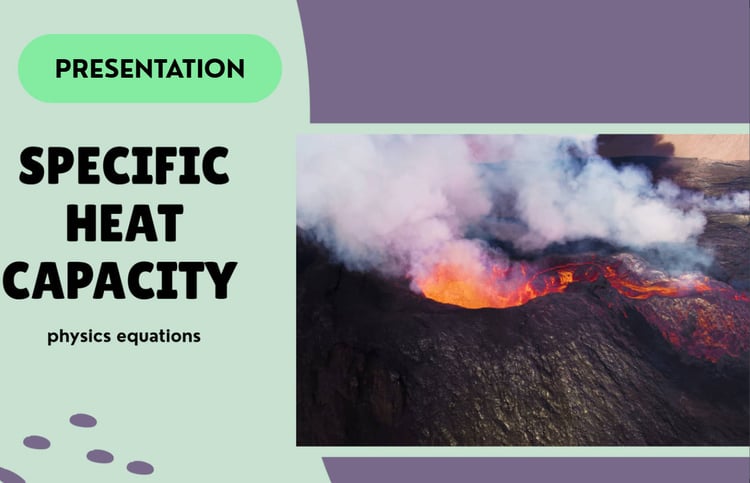
- Specific heat capacity and power
- Conservation, dissipation and efficiency
- National and global energy resources
- Required practical: Specific Heat Capacity
Physics, P2 Electricity
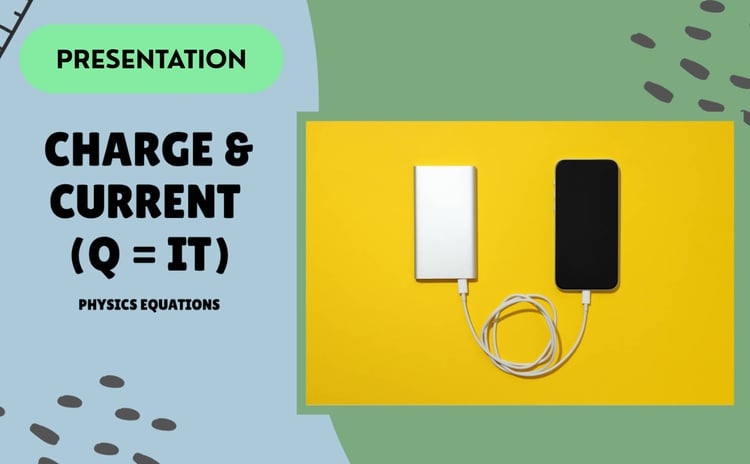
- Circuits, charge and current
- Resistors: ohmic and non-ohmic
- Mains electricity: ac, dc and the three wires
- Required practical: Resistance of a Wire
- Electrical power
- Energy transfers in everyday appliances
- Required practical: I-V Characteristics
- The National Grid
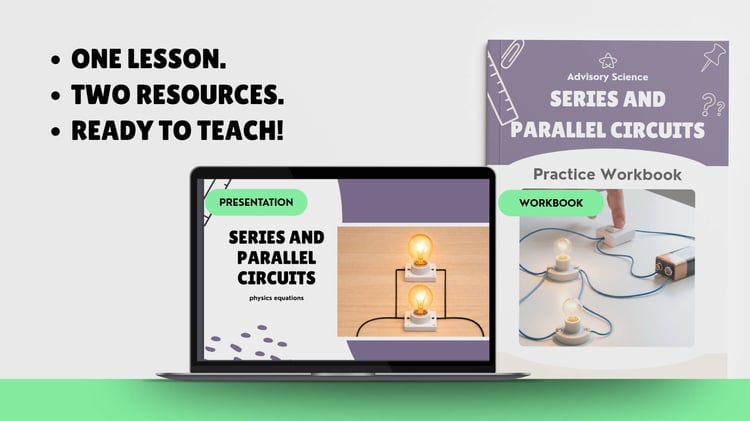
- Series and parallel circuits
Physics, P3 Particle model of matter
- Density and changes of state
- Required practical: Density
- Internal energy of a system
- Specific heat capacity and latent heat
- Particle motion in gases
Physics, P4 Atomic structure
- The structure of an atom
- Atomic number, mass number and isotopes
- The development of the model of the atom
- Radioactive decay and nuclear radiation
- Nuclear equations and half-life
- Radioactive contamination and irradiation
Physics, P5 Forces
- Forces, scalars and vectors
- Resultant forces
- Distance and displacement
- Newton's laws and braking
- Required practical: Force and Extension
- Momentum and collisions
- Work done and energy transfer
- Forces and elasticity
- Required practical: Acceleration and Force
Physics, P6 Waves
- Transverse and longitudinal waves
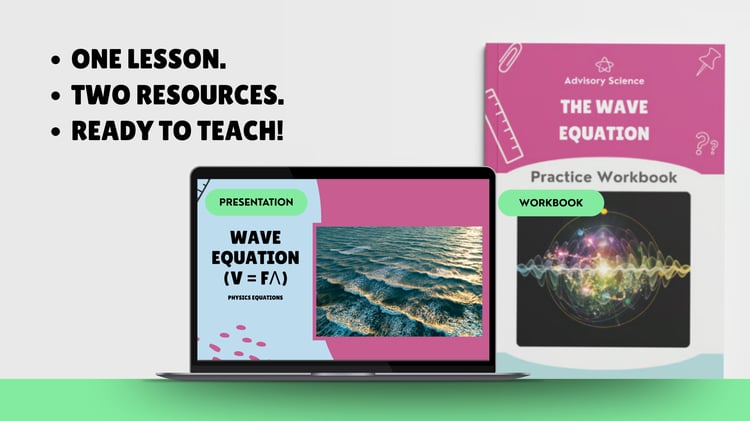
- Amplitude, wavelength, frequency and the wave equation
- Required practical: Waves
- The electromagnetic spectrum (Higher tier)
- Generating electromagnetic waves and their dangers
- Required practical: Infrared Radiation
- Uses of electromagnetic waves
Physics, P7 Magnetism and electromagnetism
- Magnetic poles, forces and induced magnets
- Magnetic Fields
- Electromagnetism: Fields From Currents
- The Motor Effect and Electric Motors (Higher tier)
Licence
One purchase covers one teacher. You can use these lessons with your own classes for as long as you teach, edit them to suit your pupils, print them and share them with the children you teach and their parents.
If your whole department wants to use them, buy one copy per teacher or email info@advisoryscience.com and I will arrange a department price.
Please do not upload the files to a public website, share them outside your own school, or resell them.