

Using Resources Lessons PowerPoint | AQA GCSE Chemistry C10 8462, 11 Lessons
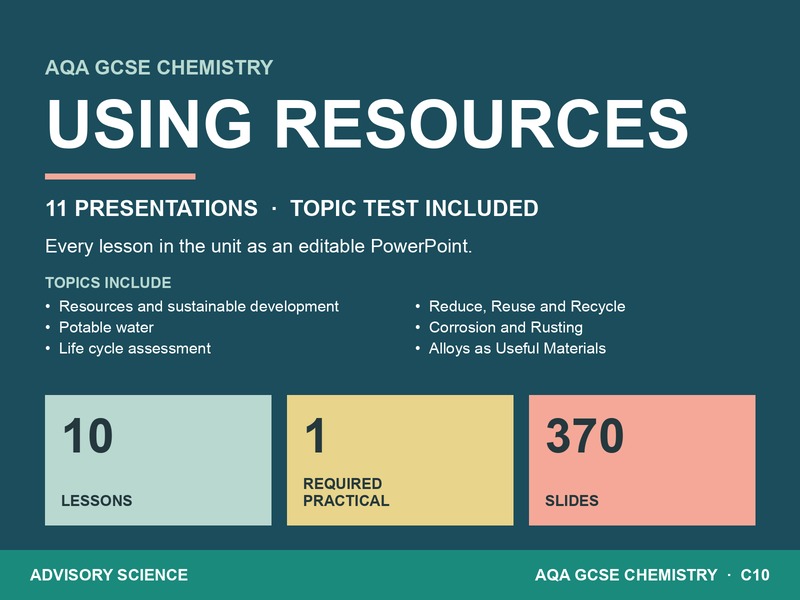
AQA GCSE Chemistry C10 Using Resources: 11 lessons ready to teach, with a topic test
You get every lesson for AQA GCSE Chemistry C10 Using Resources, planned and ready to teach. There are 10 teaching lessons and the 1 required practical as full lessons. Each one is editable PowerPoint and matched to the AQA 8462 specification.
What your classes work through
- Resources and sustainable development. Pupils describe the difference between finite and renewable resources and explain why crude oil is finite and timber is renewable.
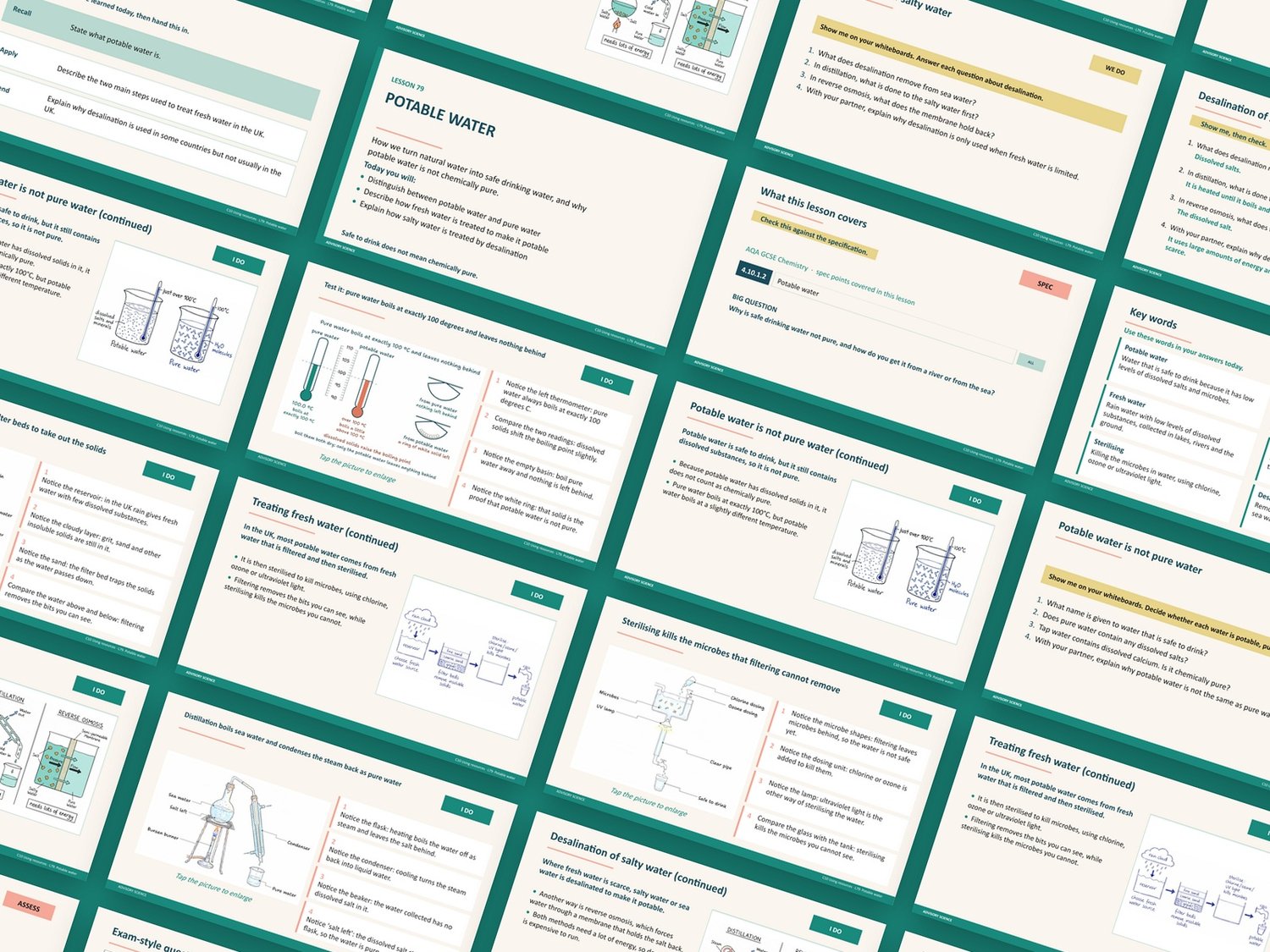
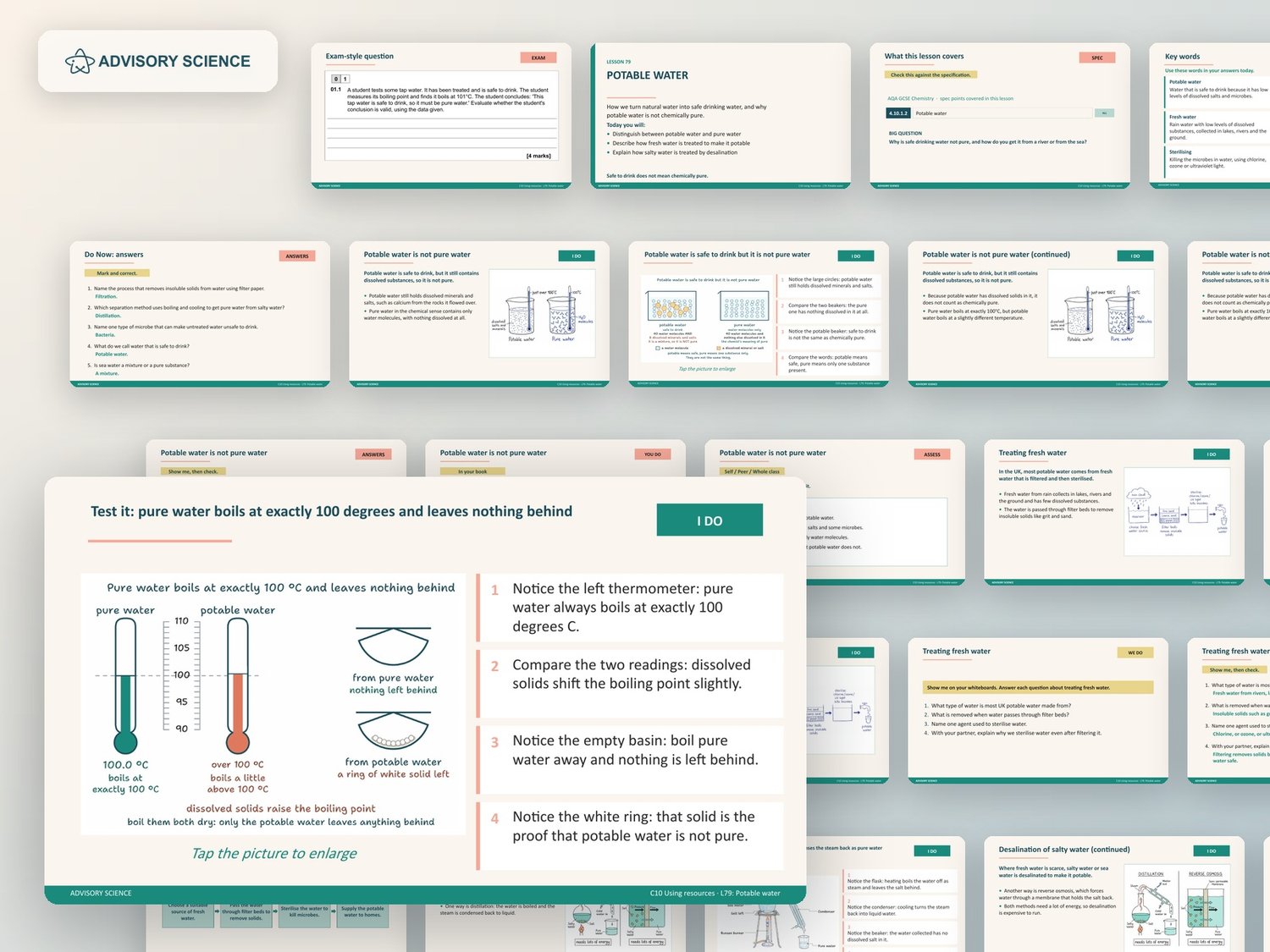
- Potable water. Pupils evaluate whether tap water that boils at 101°C is pure, using the data to test a student's conclusion.
- Waste water treatment and extracting copper from low-grade ores. Pupils explain how a mining company could use phytomining to extract copper from land with a low concentration of copper compounds.
- Life cycle assessment. Pupils predict the carbon dioxide per use for a plastic bag used 8 times from a life cycle assessment table and justify the trend.
- Reduce, Reuse and Recycle. Pupils compare washing and refilling glass milk bottles with crushing and melting them, and explain which option saves more energy.
- Corrosion and Rusting. Pupils predict what happens at a deep scratch on a steel ship hull fitted with magnesium blocks by choosing the correct statement.
- Alloys as Useful Materials. Pupils complete the reasoning that justifies an aluminium alloy over high carbon steel for the body panels of a passenger aircraft.
- Ceramics, Polymers and Composites. Pupils weigh up a claim that saucepan handles should be thermosoftening polymers, using polymer structures to reach a justified conclusion.
- The Haber Process. Pupils calculate how much of 8000 kg of gas is converted to ammonia on one pass at 15% and how much is recycled.
- NPK Fertilisers. Pupils decide whether ammonium nitrate or potassium sulfate suits soil short only of nitrogen and justify the choice.
The 1 required practical
- RP8 Water Purification. Pupils describe how to produce pure water from sea water and explain how to show that the collected water is pure.
Who it is for
Use it to teach AQA GCSE Chemistry Using Resources lessons in Year 10 and Year 11 on sustainable development, potable water, life cycle assessment, corrosion, alloys, polymers, the Haber process and NPK fertilisers. It also includes the water purification required practical and works well for GCSE Chemistry revision or cover lessons.
How each lesson runs
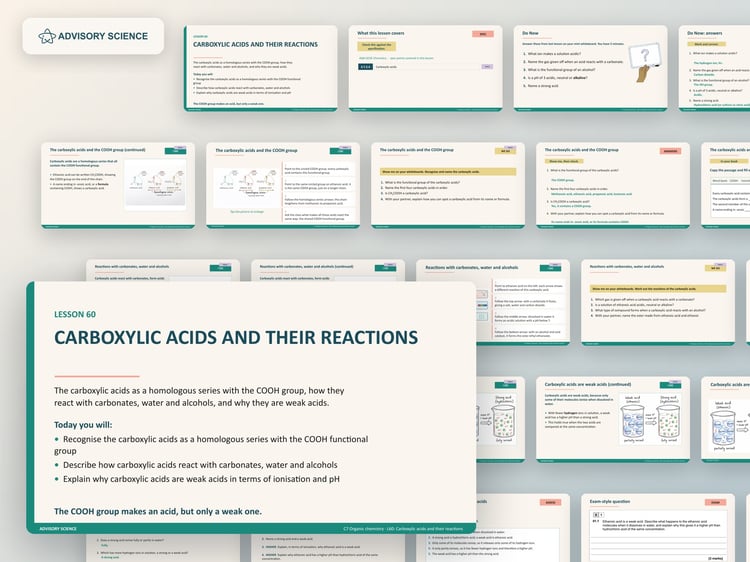
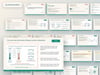
Each C10 Using Resources lesson starts with a Do Now that recalls earlier learning, with the answers on the next slide. It then moves through I Do, We Do and You Do, with a model answer after each task. It finishes with the AQA-style question listed above, its mark scheme and an exit ticket. A specification slide names the AQA points the lesson covers, so you can check it against your scheme of work.
Topic test
The C10 Using Resources topic test covers the whole unit with AQA-style questions and comes with its mark scheme, both in Word and PDF.
Free revision videos for this unit
- Using Resources revision
- Using Resources Quiz, 20 questions
- Corrosion, Alloys and the Haber Process (Triple)