

Chemical Changes Lessons PowerPoint | AQA GCSE Chemistry C4 8462, 12 Lessons
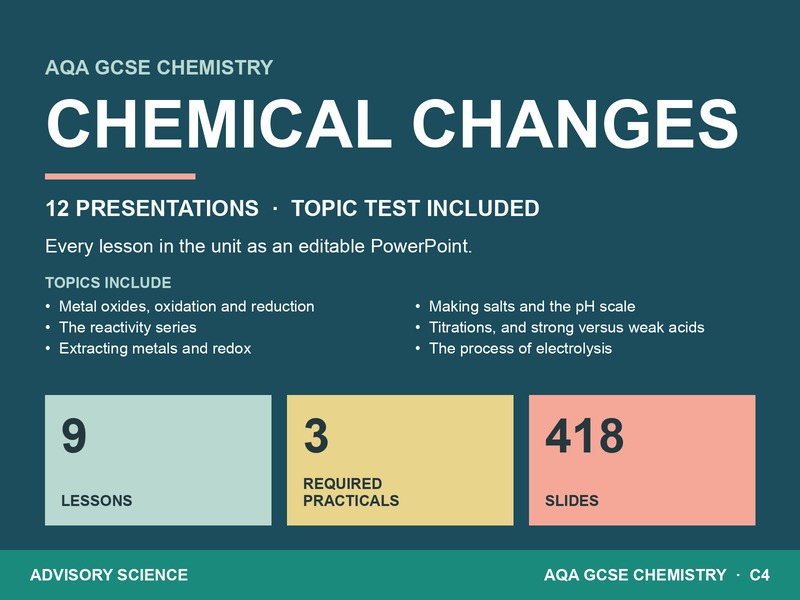
AQA GCSE Chemistry C4 Chemical Changes: 12 lessons ready to teach, with a topic test
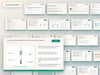
You get every lesson for AQA GCSE Chemistry C4 Chemical Changes, planned and ready to teach. There are 9 teaching lessons and the 3 required practicals as full lessons. Each one is editable PowerPoint and matched to the AQA 8462 specification.
What your classes work through
- Metal oxides, oxidation and reduction. Pupils calculate the percentage increase in mass when 6.4 g of copper is fully oxidised to 8.0 g of copper oxide.
- The reactivity series. Pupils describe how potassium and copper differ in reactivity and explain the difference through how easily each forms positive ions.
- Extracting metals and redox. Pupils evaluate the claim that carbon can extract any metal from its oxide, using where metals appear relative to carbon in the reactivity series.
- Reactions of acids: metals, salts and neutralisation. Pupils explain why excess magnesium fizzes in dilute sulfuric acid, name the salt formed and explain why the fizzing stops.
- Making salts and the pH scale. Pupils predict a missing pH value in a table of results for adding sodium hydroxide to hydrochloric acid, using ideas about hydrogen and hydroxide ions.
- Titrations, and strong versus weak acids. Pupils compare the ionisation and pH of hydrochloric and ethanoic acids at the same concentration and explain why they differ.
- The process of electrolysis. Pupils identify the products formed at the cathode and anode when molten potassium chloride is electrolysed, choosing one row from four.
- Extracting metals and electrolysing solutions. Pupils give full reasons why hydrogen and chlorine form when sodium chloride solution is electrolysed, then reason about copper chloride solution.
- Half equations at the electrodes. Pupils assess a claim that ions are oxidised at both electrodes, referring to the half equations at the cathode and anode.
The 3 required practicals
- RP1 Making a Soluble Salt. Pupils calculate the percentage yield of copper sulfate crystals from the actual and maximum possible masses.
- RP2 Titration. Pupils use titration results for sodium hydroxide and hydrochloric acid to calculate the concentration of the acid in mol/dm3.
- RP3 Electrolysis. Pupils complete the half equation for hydrogen forming at the cathode and explain what happens to the hydrogen ions.
Who it is for
Use it to teach AQA GCSE Chemistry Chemical Changes lessons on the reactivity series, metal extraction, acids, salts, pH, titrations and electrolysis in Year 10 and Year 11. It also covers the making a soluble salt, titration and electrolysis required practicals for GCSE Chemistry revision.
How each lesson runs
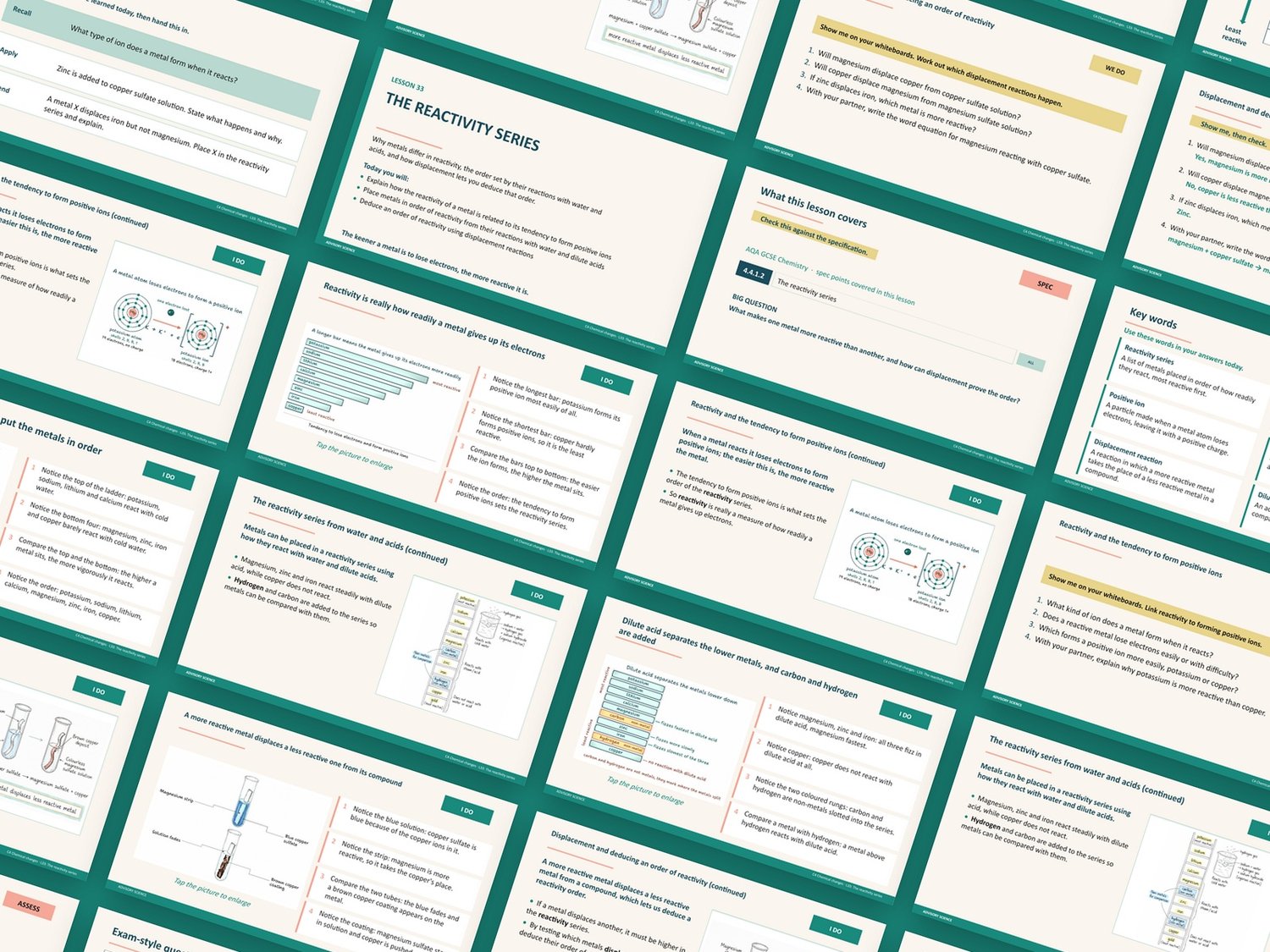
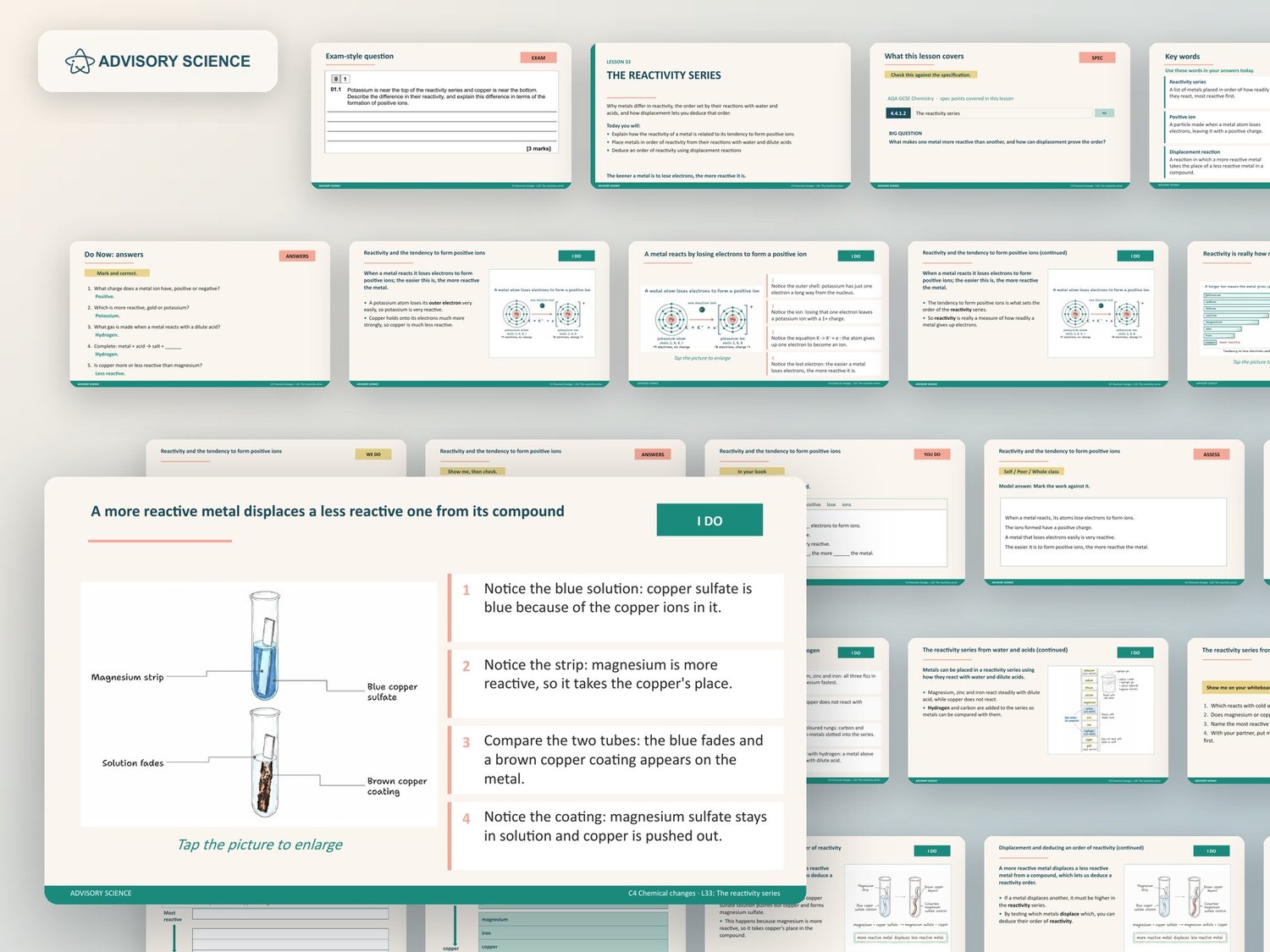
Each C4 Chemical Changes lesson starts with a Do Now that recalls earlier learning, with the answers on the next slide. It then moves through I Do, We Do and You Do, with a model answer after each task. It finishes with the AQA-style question listed above, its mark scheme and an exit ticket. A specification slide names the AQA points the lesson covers, so you can check it against your scheme of work.
Topic test
The C4 Chemical Changes topic test covers the whole unit with AQA-style questions and comes with its mark scheme, both in Word and PDF.
Free revision videos for this unit