
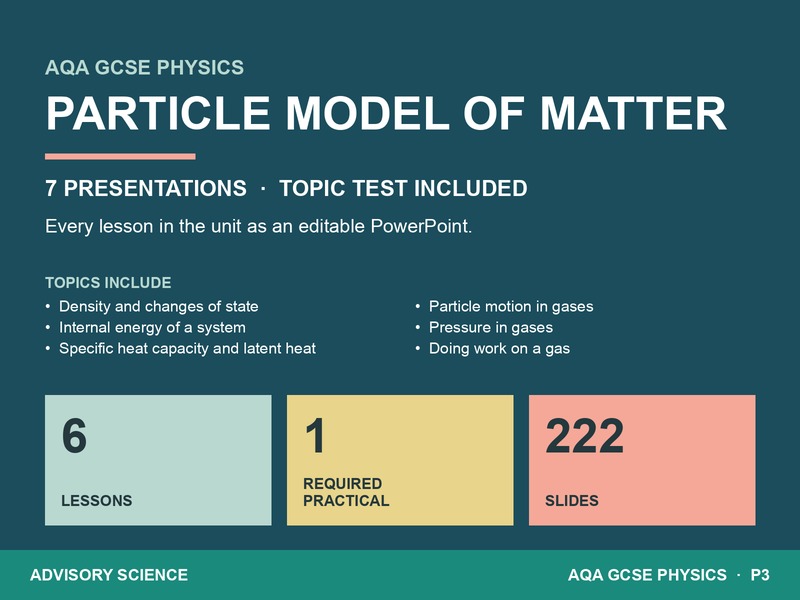

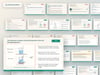
AQA GCSE Physics P3 Particle Model of Matter | 7 Lesson Presentations and Topic Test
AQA GCSE Physics P3 Particle Model of Matter: 7 lessons ready to teach, with a topic test
You get every lesson for AQA GCSE Physics P3 Particle Model of Matter, planned and ready to teach. There are 6 teaching lessons and the 1 required practical as full lessons. Each one is editable PowerPoint and matched to the AQA 8463 specification.
What your classes work through
- Density and changes of state. Pupils calculate the density of a frozen solid after a sealed liquid expands on freezing, using the fact that its mass stays the same.
- Internal energy of a system. Pupils find the rate of temperature rise from a heating graph for water and state what happens during the flat section.
- Specific heat capacity and latent heat. Pupils explain why melting ice at 0 °C needs a steady energy supply even though its temperature does not rise.
- Particle motion in gases. Pupils match statements about gas molecules, temperature and heating in a sealed container to their correct descriptions.
- Pressure in gases. Pupils rearrange pV = constant to calculate the new volume of a trapped gas compressed at constant temperature.
- Doing work on a gas. Pupils use a graph from a bicycle pump to find the temperature rise per stroke and explain the rise in terms of work done.
The 1 required practical
- RP5 Density. Pupils calculate the density of a wooden block from its mass and volume, then predict with a reason whether it floats in water.
Who it is for
Use it to teach AQA GCSE Physics P3 Particle Model of Matter lessons on density, internal energy, latent heat and gas pressure in Year 10 and Year 11. It also supports GCSE Physics revision and includes the density required practical.
How each lesson runs
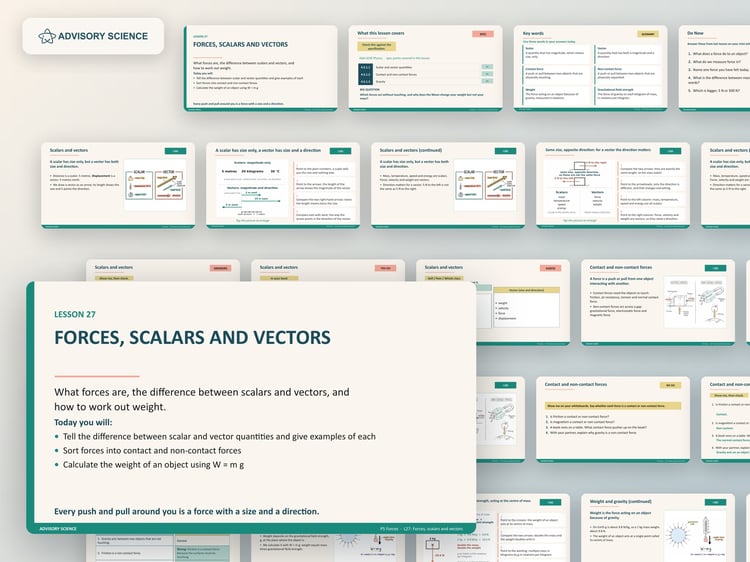
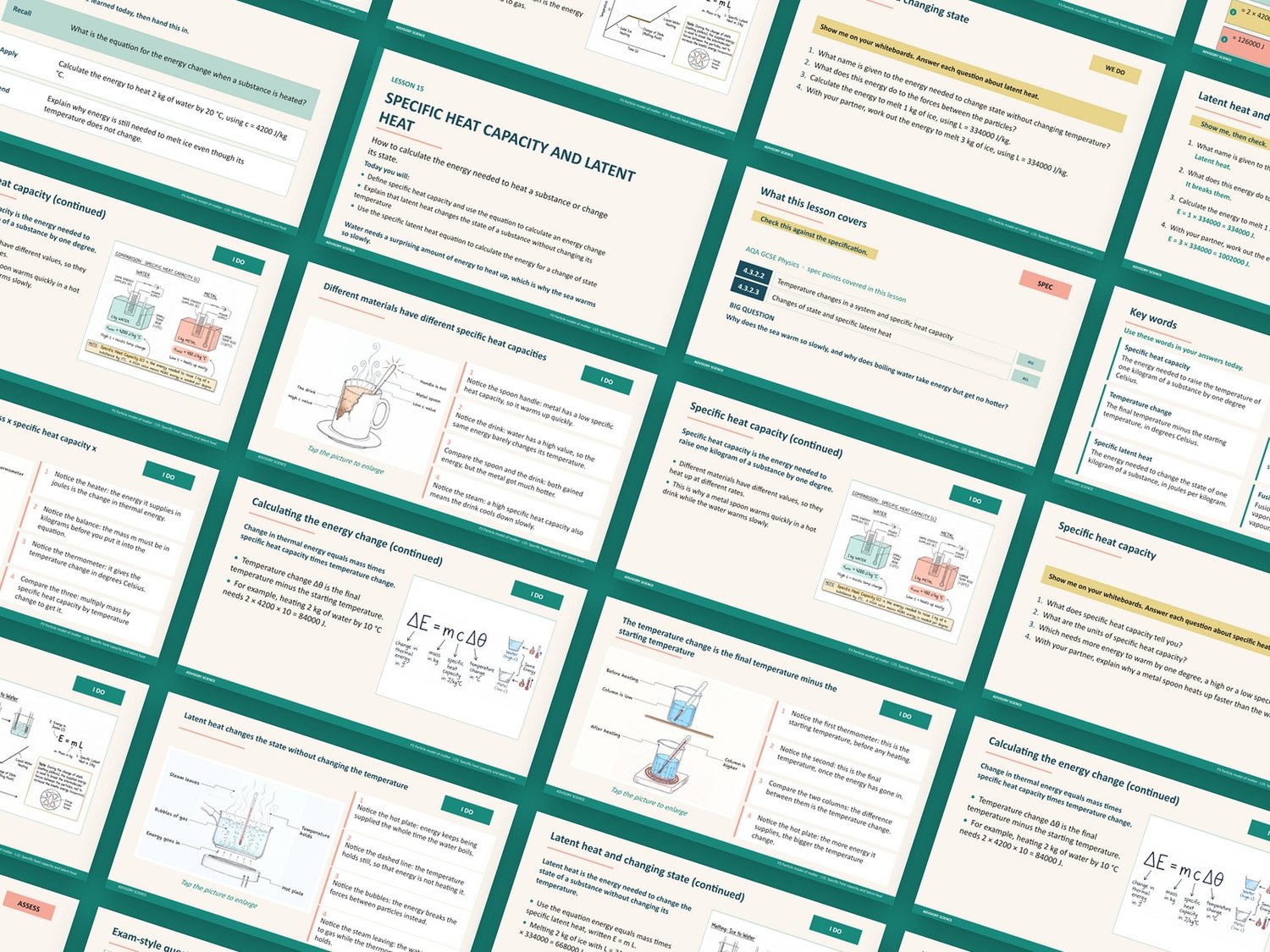
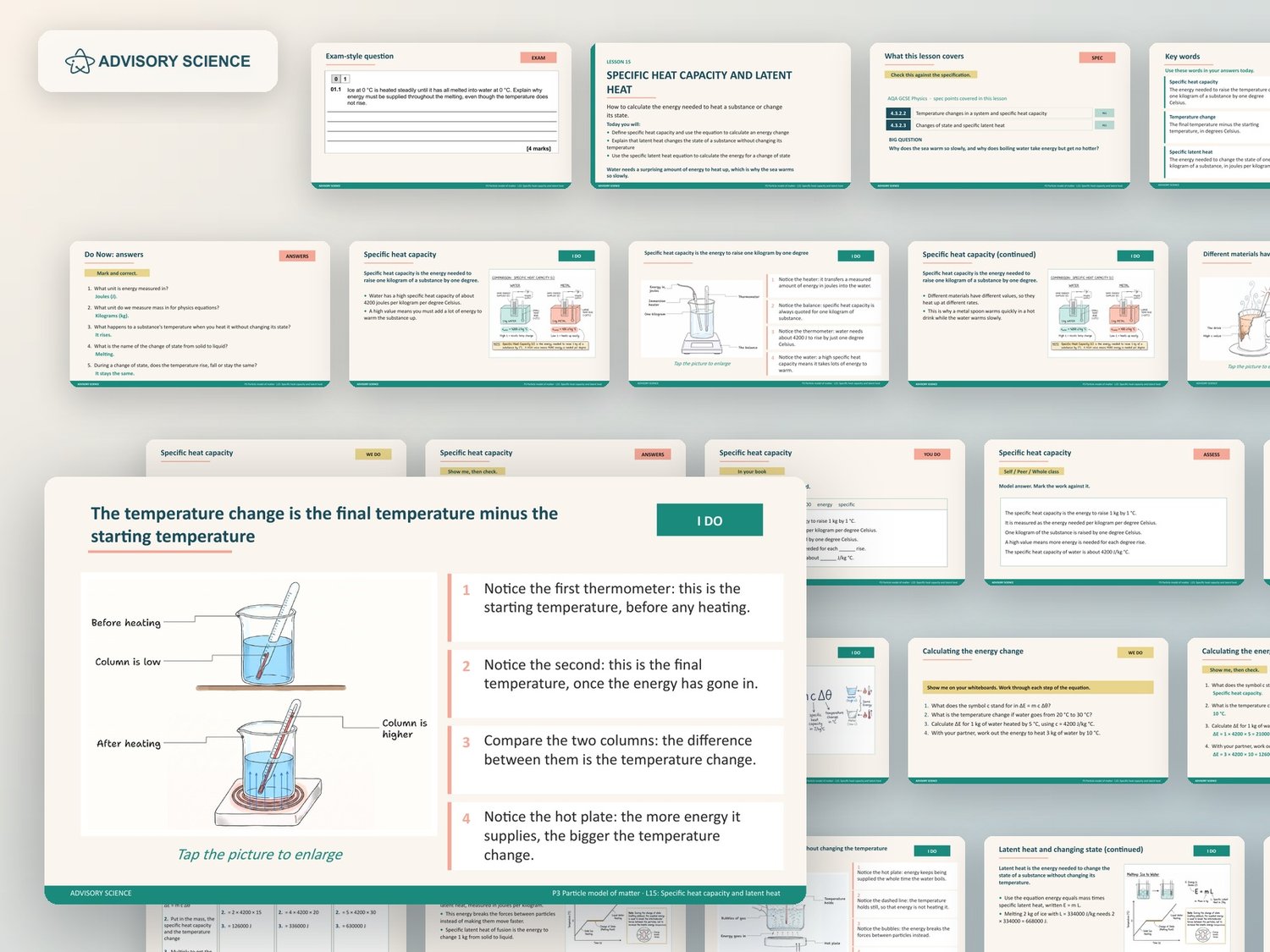
Each P3 Particle Model of Matter lesson starts with a Do Now that recalls earlier learning, with the answers on the next slide. It then moves through I Do, We Do and You Do, with a model answer after each task. It finishes with the AQA-style question listed above, its mark scheme and an exit ticket. A specification slide names the AQA points the lesson covers, so you can check it against your scheme of work.
Topic test
The P3 Particle Model of Matter topic test covers the whole unit with AQA-style questions and comes with its mark scheme, both in Word and PDF.
Free revision videos for this unit
- Particle Model of Matter revision (P3)
- Internal Energy
- Triple-only Paper 1 topics (gas laws)
- Paper 1 Triple whole paper walkthrough