

Inheritance, Variation and Evolution Lessons PowerPoint | AQA GCSE Combined Science Biology B6, 12 Lessons
AQA GCSE Combined Science Biology B6 Inheritance, Variation and Evolution: 12 lessons ready to teach, with a topic test
This is the Combined Science Trilogy version of B6 Inheritance, Variation and Evolution, matched to the AQA 8464 specification. You get 12 teaching lessons, all planned and ready to teach in editable PowerPoint.
What your classes work through
- Sexual and asexual reproduction and meiosis. Pupils spot that each gamete holds half the body cell number of chromosomes and apply this to a dog with 78.
- DNA and the genome. Pupils trace the steps from the base sequence of a gene to the protein it codes for, ending with eye colour.
- Genetic inheritance and genetic crosses. Pupils draw Punnett squares for two crosses of brown and white mice and account for the different proportions of white young.
- Inherited disorders and sex determination. Pupils work out the chance of polydactyly in the next child of a Dd man and a dd partner using a genetic cross.
- Variation and mutation. Pupils argue for and against the idea that frequent mutations make species change quickly, then reach a supported conclusion.
- Evolution by natural selection. Pupils reject the idea of lizards changing their own colour and pick the natural selection explanation for a population turning grey.
- Selective breeding. Pupils take milk yields at generations 2 and 8 from a graph and divide by six to find the mean gain per generation.
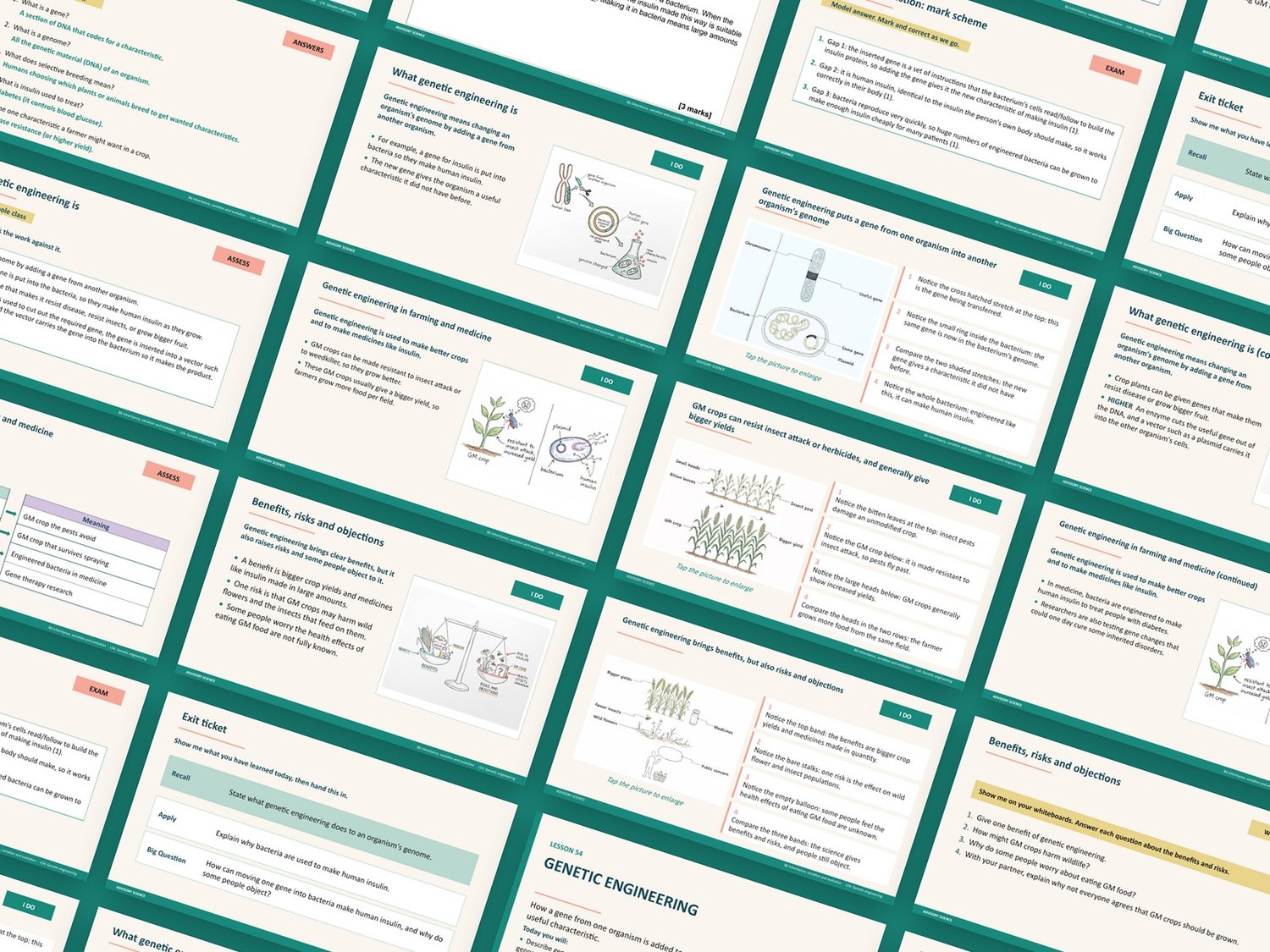
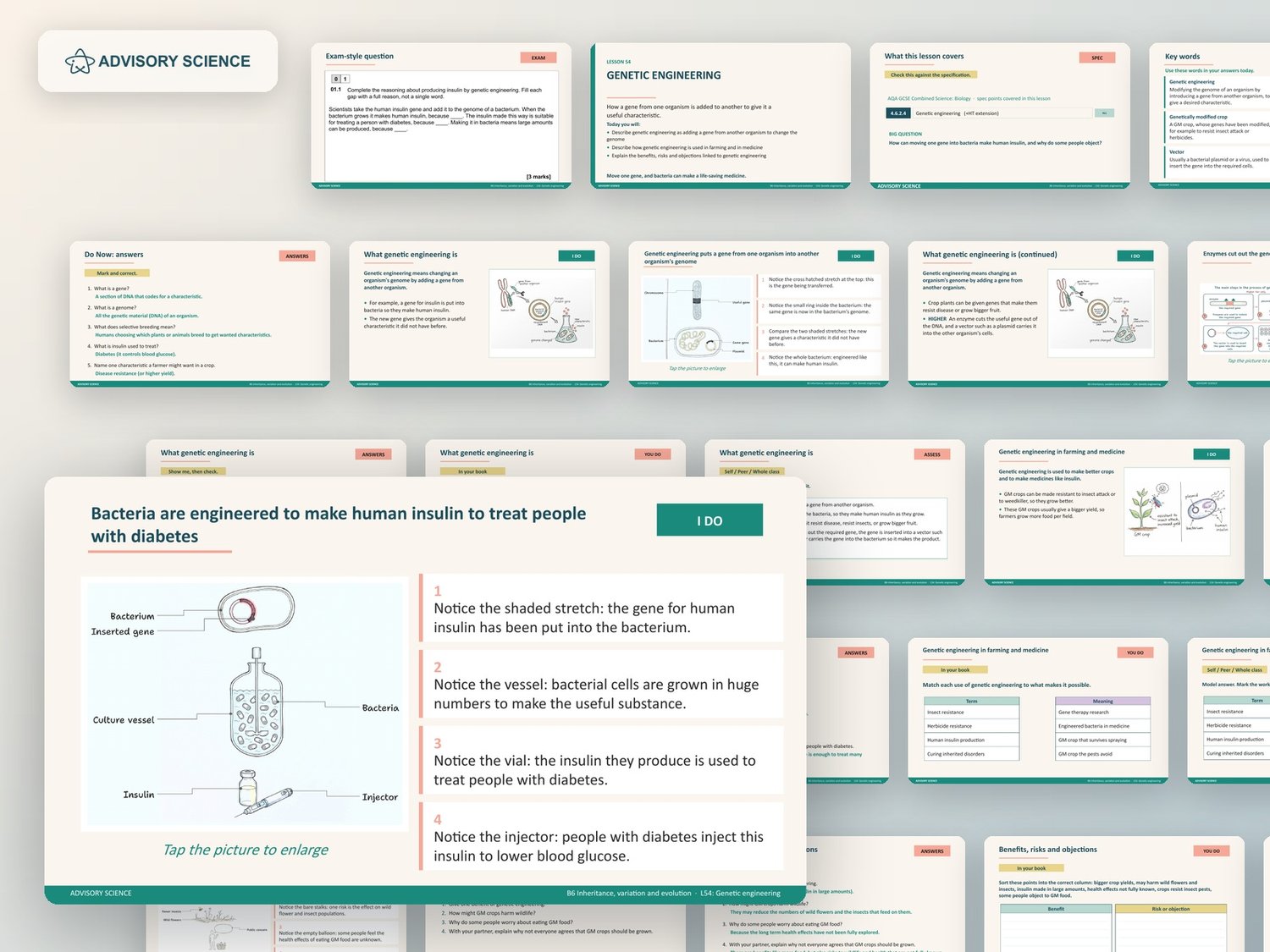
- Genetic engineering. Pupils write a reason into each gap to explain why a bacterium given a human gene goes on to produce insulin.
- The evidence for evolution. Pupils name a second kind of evidence for evolution besides fossils and explain why it is useful evidence for the theory.
- Fossils and extinction. Pupils draw a line from each fossil type, such as a footprint or burrow, to the process that formed it.
- Antibiotic resistant bacteria. Pupils extend the rising trend in resistant infections since 2010 to estimate 2022, explaining it with the survival of resistant bacteria.
- Classification of living organisms. Pupils outline archaea, bacteria and eukaryota and give reasons, such as new evidence from microscopes and chemical analysis, for moving beyond Linnaeus.
Who it is for
Use it for GCSE Combined Science Trilogy B6 Inheritance, Variation and Evolution, from meiosis, DNA and genetic crosses to natural selection, selective breeding, genetic engineering, fossils and classification. It also suits Combined Science Biology revision and intervention in Year 10 and Year 11.
How each lesson runs
Each B6 Inheritance, Variation and Evolution lesson starts with a Do Now that recalls earlier learning, with the answers on the next slide. It then moves through I Do, We Do and You Do, with a model answer after each task. It finishes with the AQA-style question listed above, its mark scheme and an exit ticket. A specification slide names the AQA points the lesson covers, so you can check it against your scheme of work.
Topic test
The B6 Inheritance, Variation and Evolution topic test covers the whole unit with AQA-style questions and comes with its mark scheme, both in Word and PDF.
Free revision videos for this unit