
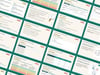
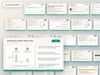
Atomic Structure and the Periodic Table Lesson PowerPoint | AQA GCSE Combined Science Chemistry C1, 11 Lessons
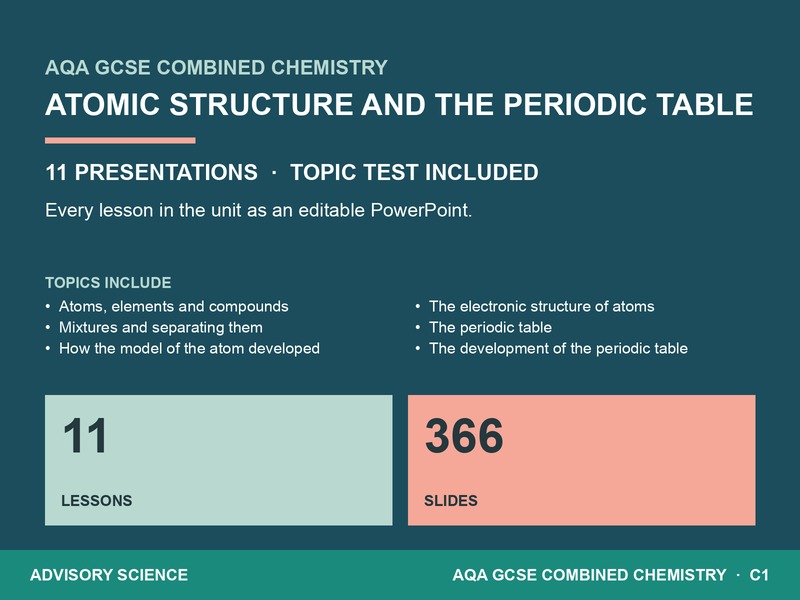
AQA GCSE Combined Science Chemistry C1 Atomic Structure and the Periodic Table: 11 lessons ready to teach, with a topic test
This is the Combined Science Trilogy version of C1 Atomic Structure and the Periodic Table, matched to the AQA 8464 specification. You get 11 teaching lessons, all planned and ready to teach in editable PowerPoint.
What your classes work through
- Atoms, elements and compounds. Pupils find the coefficients for Al, O2 and Al2O3 so that atoms of each element balance on both sides.
- Mixtures and separating them. Pupils plan the steps, from dissolving and filtering to evaporating, that split a three-part mixture into two dry solids.
- How the model of the atom developed. Pupils link most alpha particles passing straight through gold foil and a few bouncing back to a tiny, dense, positive nucleus.
- Charges of subatomic particles and atomic number. Pupils count 9 protons against 9 electrons to show a fluorine atom is neutral, so its extra neutron makes no difference.
- The size, mass and relative atomic mass of atoms. Pupils use isotopes and their abundance to account for chlorine having an average relative atomic mass of 35.5.
- The electronic structure of atoms. Pupils continue the pattern from sodium across Period 3 to give phosphorus its electron arrangement and number of outer electrons.
- The periodic table. Pupils fill a table contrasting lithium near the top of Group 1 with potassium further down, linking the trend to outer electrons.
- The development of the periodic table. Pupils pick the reason tellurium is placed ahead of iodine, recognising that the modern table orders elements by atomic number.
- Metals and non-metals. Pupils work out from a 2+ charge that element X is a metal that loses two electrons and decide its likely place in the table.
- Group 0 and Group 1. Pupils test a claim about reactivity rising down every group against the different behaviour of the unreactive noble gases and the alkali metals.
- Group 7: the halogens. Pupils double the relative atomic masses of fluorine and bromine to find each diatomic molecule's mass and compare them.
Who it is for
Use it for GCSE Combined Science Trilogy C1 Atomic Structure and the Periodic Table, covering atoms, mixtures, the history of the atomic model, isotopes, electronic structure and Groups 0, 1 and 7. It suits Combined Science Chemistry revision in Year 10 and Year 11.
How each lesson runs
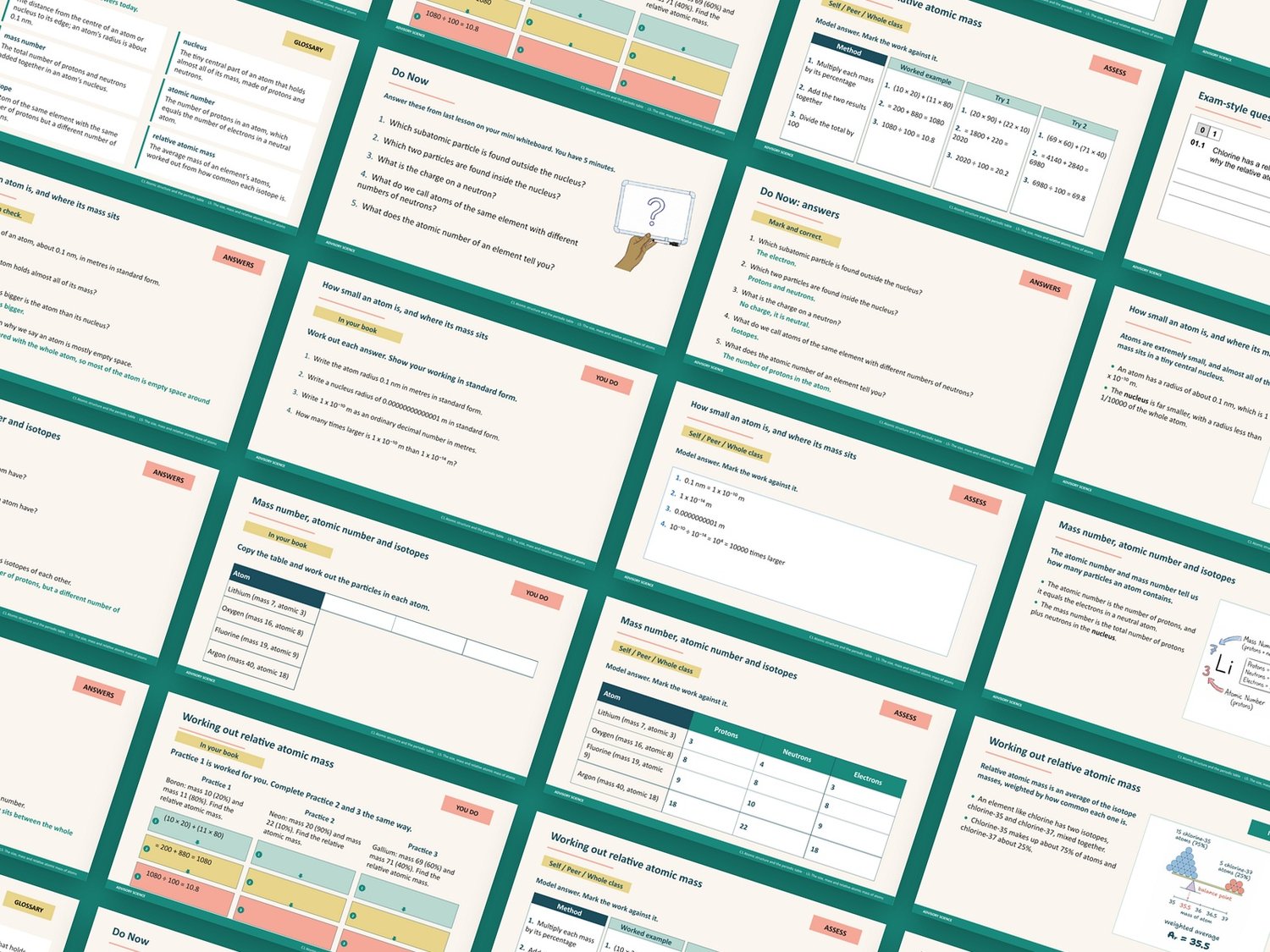
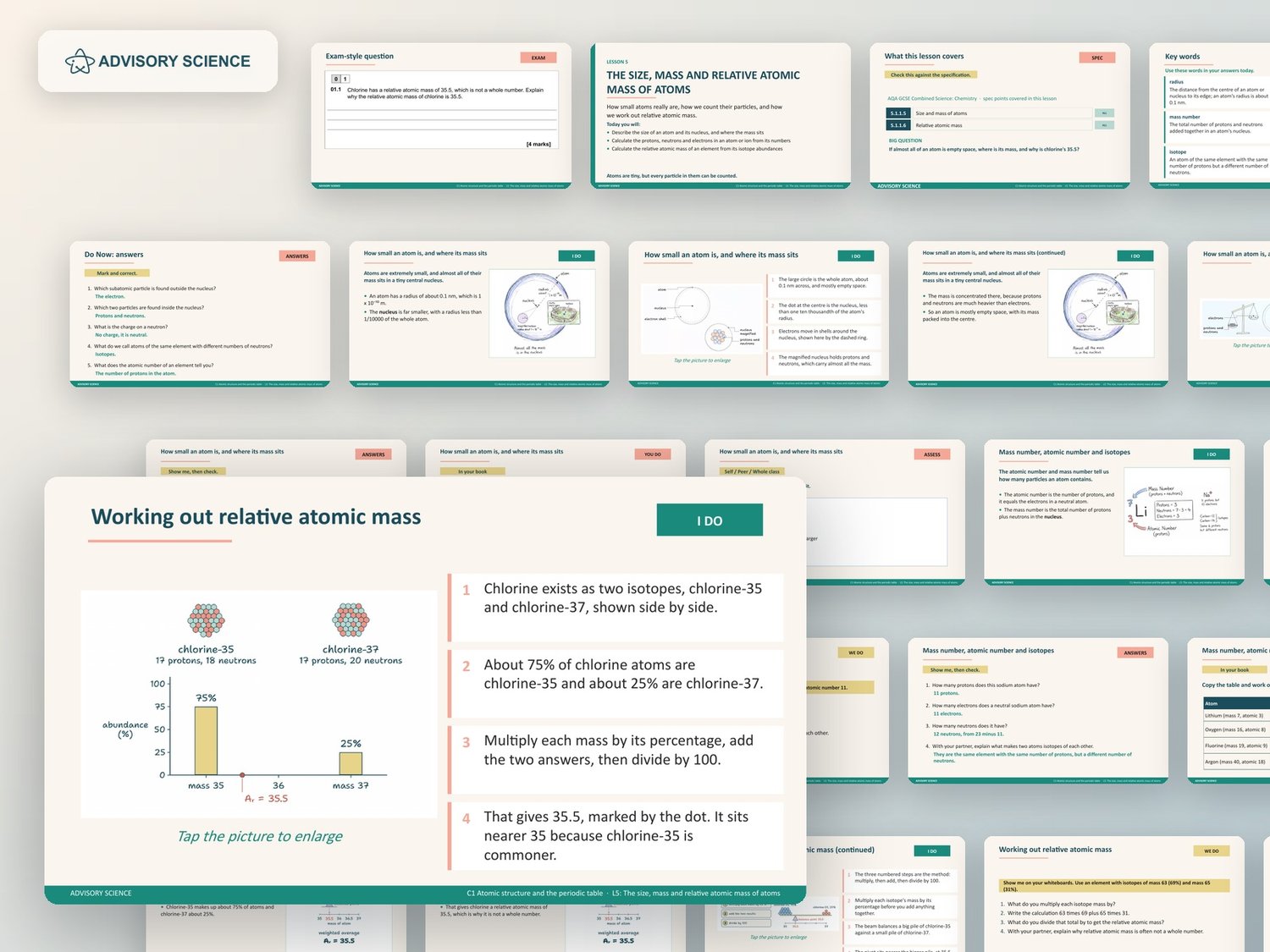
Each C1 Atomic Structure and the Periodic Table lesson starts with a Do Now that recalls earlier learning, with the answers on the next slide. It then moves through I Do, We Do and You Do, with a model answer after each task. It finishes with the AQA-style question listed above, its mark scheme and an exit ticket. A specification slide names the AQA points the lesson covers, so you can check it against your scheme of work.
Topic test
The C1 Atomic Structure and the Periodic Table topic test covers the whole unit with AQA-style questions and comes with its mark scheme, both in Word and PDF.
Free revision videos for this unit