
Chemistry of the Atmosphere Lessons PowerPoint | AQA GCSE Combined Science Chemistry C9, 7 Lessons
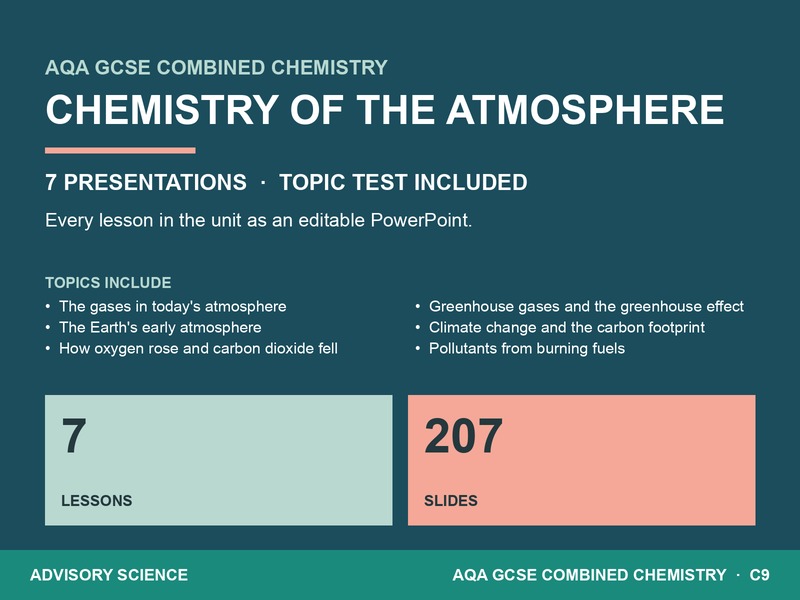
AQA GCSE Combined Science Chemistry C9 Chemistry of the Atmosphere: 7 lessons ready to teach, with a topic test
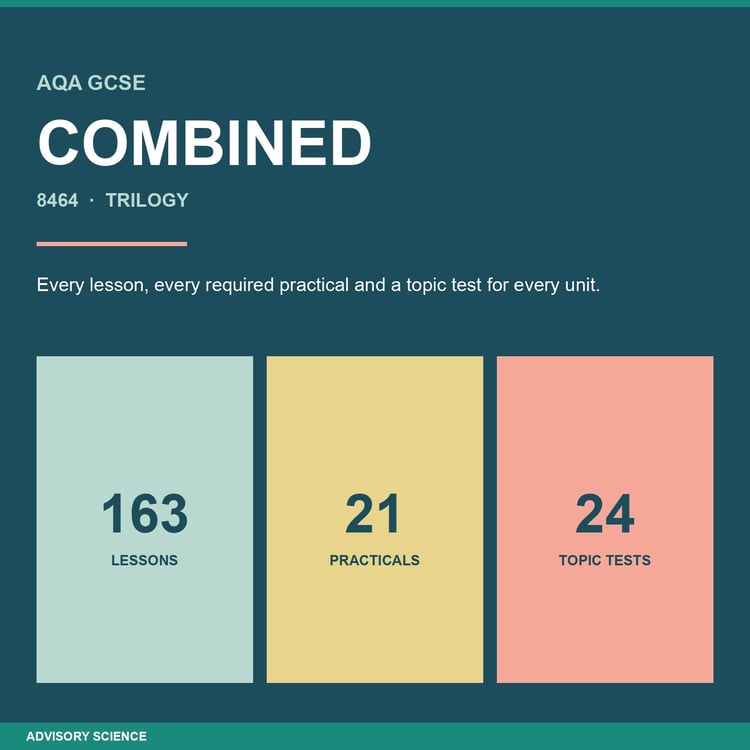
This is the Combined Science Trilogy version of C9 Chemistry of the Atmosphere, matched to the AQA 8464 specification. You get 7 teaching lessons, all planned and ready to teach in editable PowerPoint.
What your classes work through
- The gases in today's atmosphere. Pupils find the nitrogen volume from 45 cm³ of oxygen, then scale up from 99% to give the whole air sample to 3 significant figures.
- The Earth's early atmosphere. Pupils compare a young volcanic planet with early Earth to predict that its air is mostly carbon dioxide with little oxygen.
- How oxygen rose and carbon dioxide fell. Pupils take two carbon dioxide readings two billion years apart from an atmosphere graph and find the average fall per billion years.
- Greenhouse gases and the greenhouse effect. Pupils trace short wavelength radiation from the Sun reaching the surface and long wavelength radiation absorbed by greenhouse gases on its way out.
- Climate change and the carbon footprint. Pupils define a carbon footprint over a product's whole life cycle and give reasons a food firm finds zero emissions so hard to reach.
- Pollutants from burning fuels. Pupils explain why a butane camping stove is dangerous inside a closed tent and name the pollutant formed from sulfur in the fuel.
- The problems pollutants cause. Pupils find the rise from 12 to 78 µg/m³ in sulfur dioxide and express it as a percentage of the earlier reading.
Who it is for
Use it for AQA GCSE Combined Science Trilogy C9 Chemistry of the Atmosphere, from the early atmosphere and the rise of oxygen to greenhouse gases, climate change, carbon footprints and pollutants. It works for Combined Science Chemistry revision in Year 10 and Year 11.
How each lesson runs
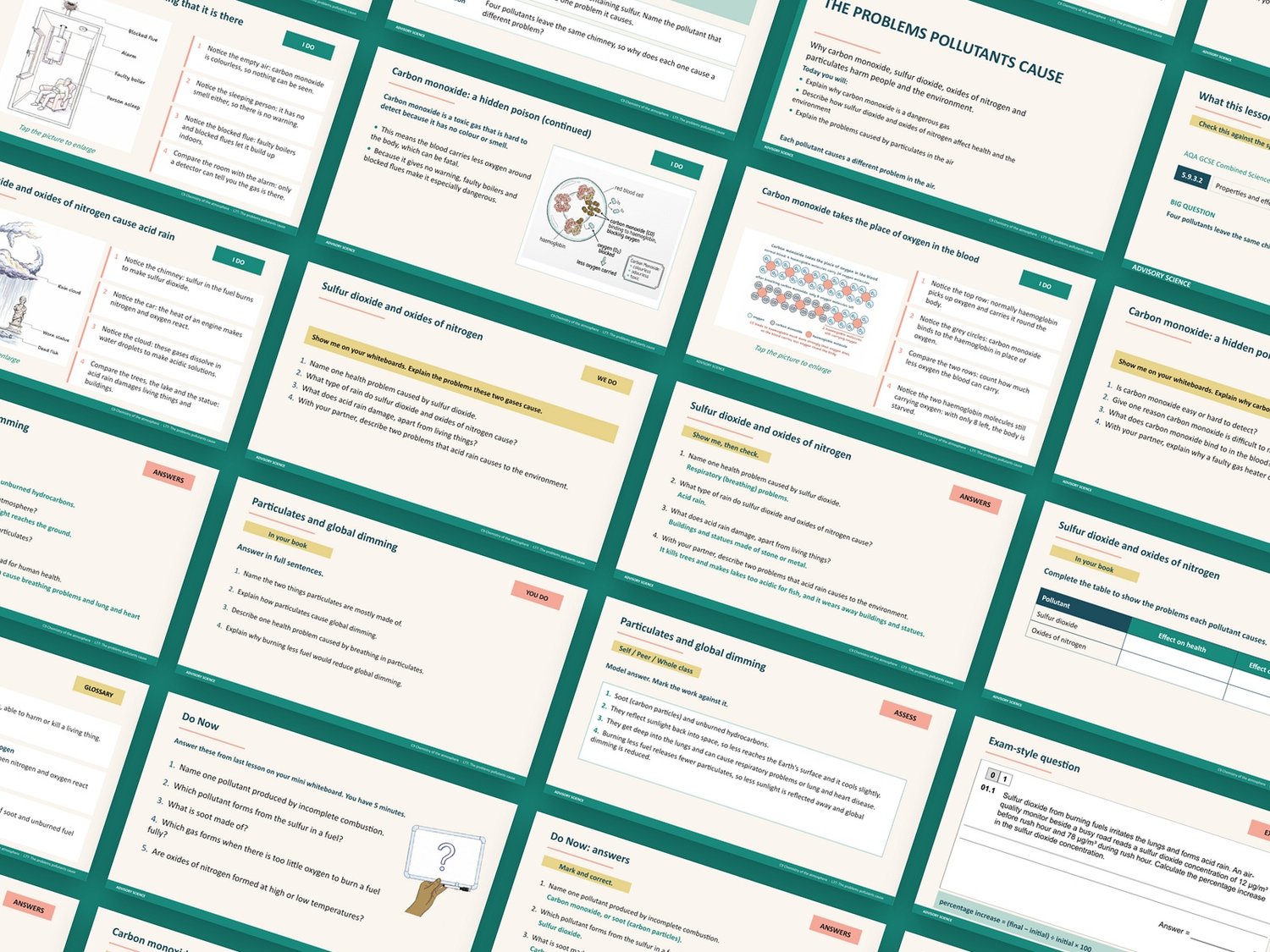
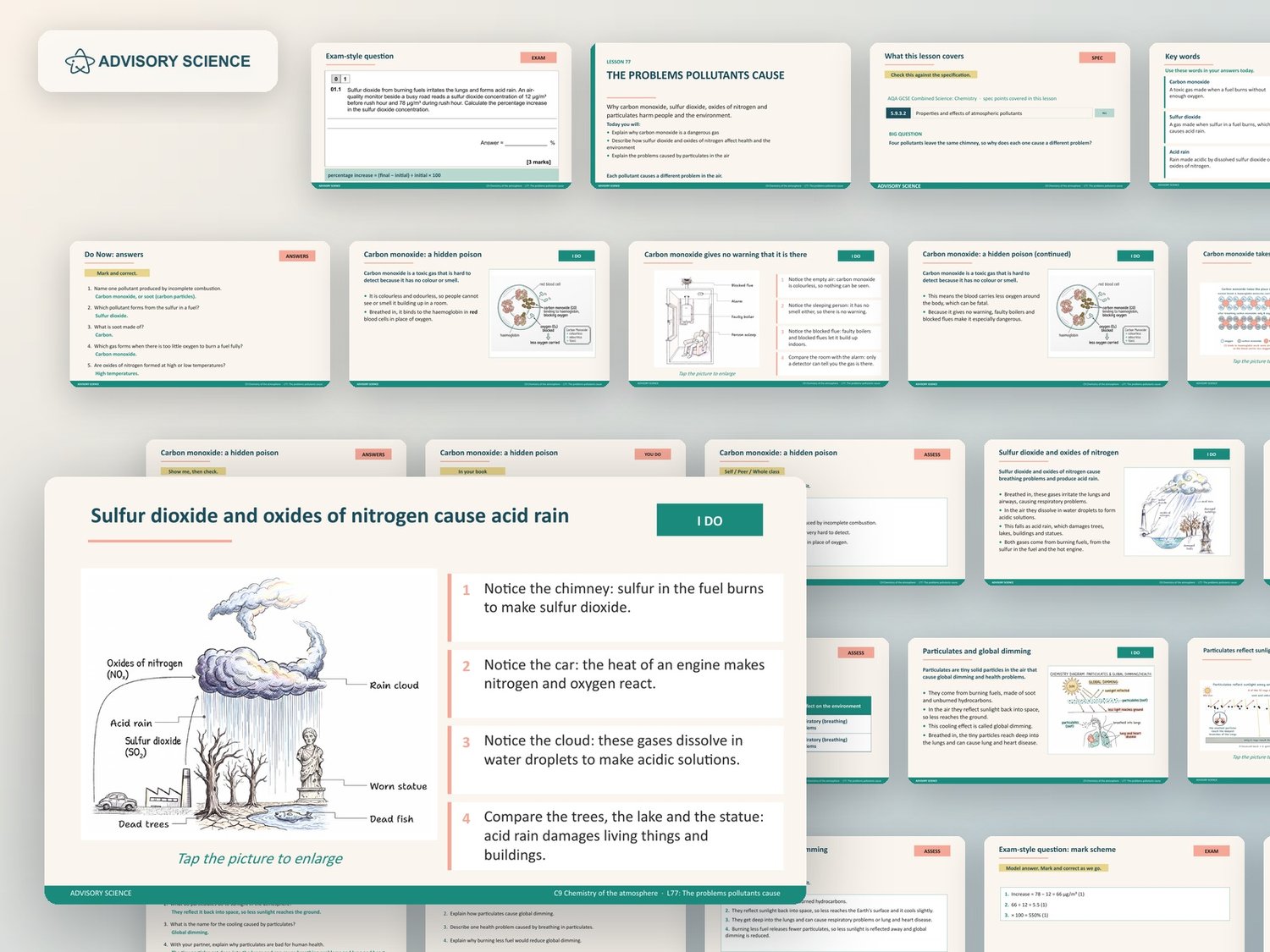
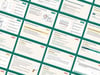
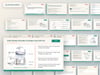
Each C9 Chemistry of the Atmosphere lesson starts with a Do Now that recalls earlier learning, with the answers on the next slide. It then moves through I Do, We Do and You Do, with a model answer after each task. It finishes with the AQA-style question listed above, its mark scheme and an exit ticket. A specification slide names the AQA points the lesson covers, so you can check it against your scheme of work.
Topic test
The C9 Chemistry of the Atmosphere topic test covers the whole unit with AQA-style questions and comes with its mark scheme, both in Word and PDF.
Free revision videos for this unit