


Rate and Extent of Chemical Change Lessons PowerPoint | AQA GCSE Chemistry C6 8462, 9 Lessons
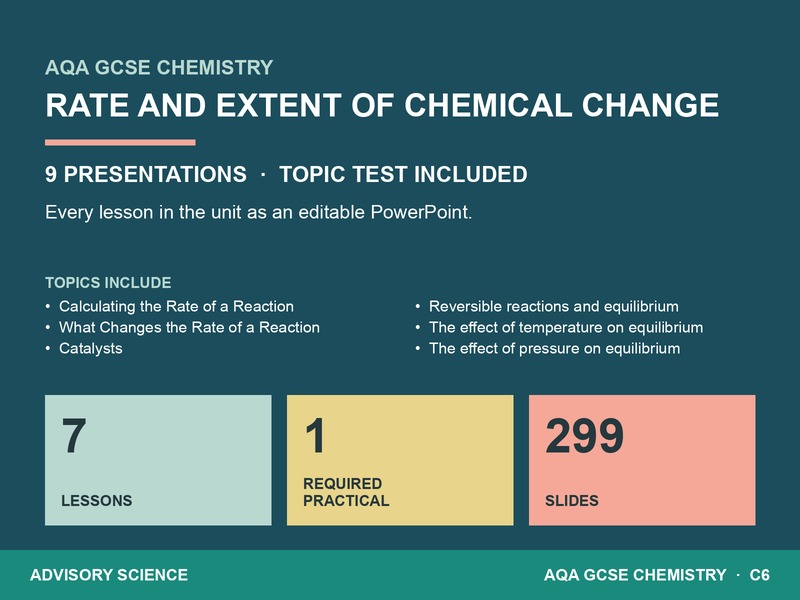
AQA GCSE Chemistry C6 Rate and Extent of Chemical Change: 9 lessons ready to teach, with a topic test
You get every lesson for AQA GCSE Chemistry C6 Rate and Extent of Chemical Change, planned and ready to teach. There are 7 teaching lessons and the 2 required practicals as full lessons. Each one is editable PowerPoint and matched to the AQA 8462 specification.
What your classes work through
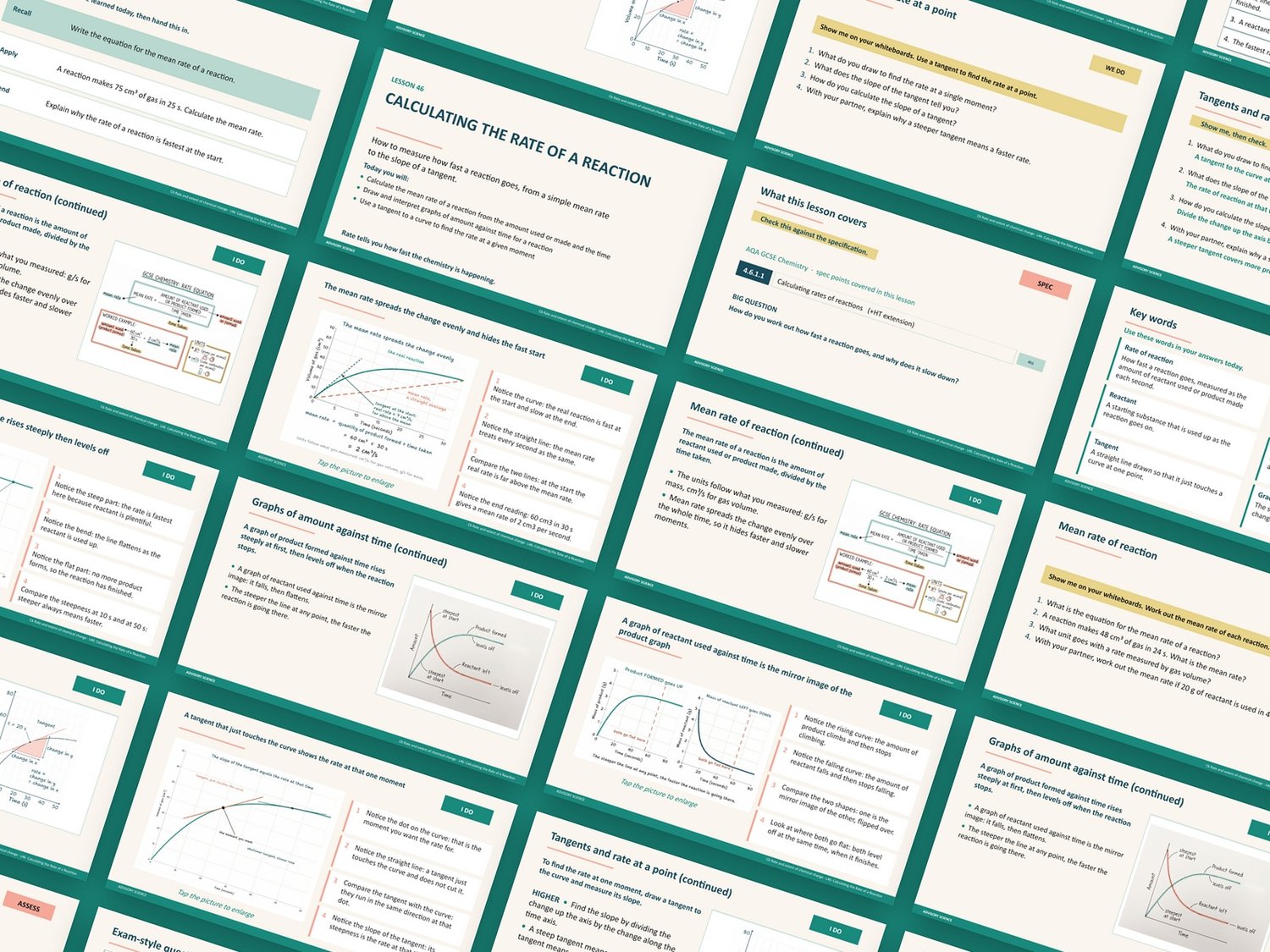
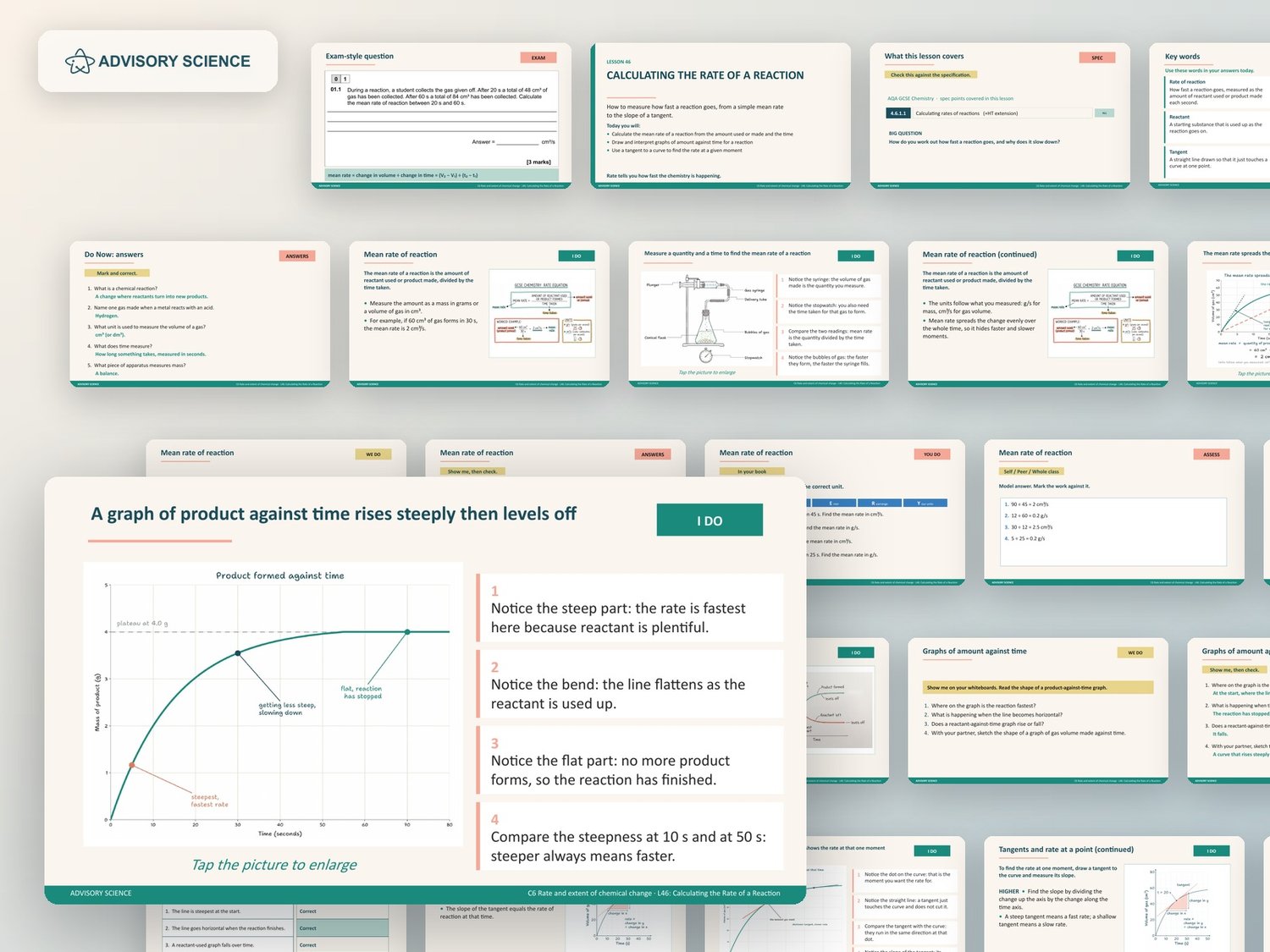
- Calculating the Rate of a Reaction. Pupils calculate the mean rate of reaction between 20 s and 60 s from two gas volume readings.
- What Changes the Rate of a Reaction. Pupils use collision theory to explain why more concentrated acid reacts faster with magnesium yet gives the same final volume of gas.
- Catalysts. Pupils explain in terms of collisions and energy why adding a catalyst speeds up a slow industrial reaction.
- Reversible reactions and equilibrium. Pupils evaluate the conclusion that both reactions have stopped once the amounts in a sealed flask stop changing.
- Le Chatelier's Principle and changing concentration. Pupils apply Le Chatelier's Principle to explain why removing ammonia as it forms increases the total amount produced.
- The effect of temperature on equilibrium. Pupils predict the equilibrium yield at 600 °C from a table and decide, with reasons, whether the forward reaction is exothermic or endothermic.
- The effect of pressure on equilibrium. Pupils compare how raising the pressure affects the yield in the ammonia and hydrogen iodide equilibria and explain the difference.
The 2 required practicals
- RP5 Rates of Reaction 1. Pupils calculate a rate of reaction from the time taken for the cross to disappear at one concentration.
- RP5 Rates of Reaction 2. Pupils use a graph of gas volume against time to work out the mean rate of reaction over the first 20 seconds.
Who it is for
Use it to teach AQA GCSE Chemistry Rate and Extent of Chemical Change lessons in Year 10 and Year 11, from calculating rates, collision theory and catalysts to reversible reactions, equilibrium and Le Chatelier's Principle. Both parts of the rates of reaction required practical are included for GCSE Chemistry revision.
How each lesson runs
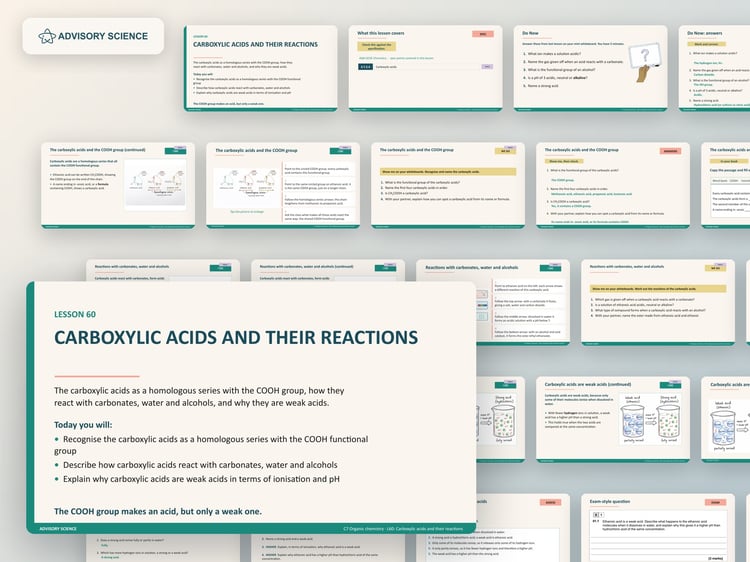
Each C6 Rate and Extent of Chemical Change lesson starts with a Do Now that recalls earlier learning, with the answers on the next slide. It then moves through I Do, We Do and You Do, with a model answer after each task. It finishes with the AQA-style question listed above, its mark scheme and an exit ticket. A specification slide names the AQA points the lesson covers, so you can check it against your scheme of work.
Topic test
The C6 Rate and Extent of Chemical Change topic test covers the whole unit with AQA-style questions and comes with its mark scheme, both in Word and PDF.
Free revision videos for this unit