


Bonding, Structure and Properties Lessons PowerPoint | AQA GCSE Chemistry C2 8462, 12 Lessons
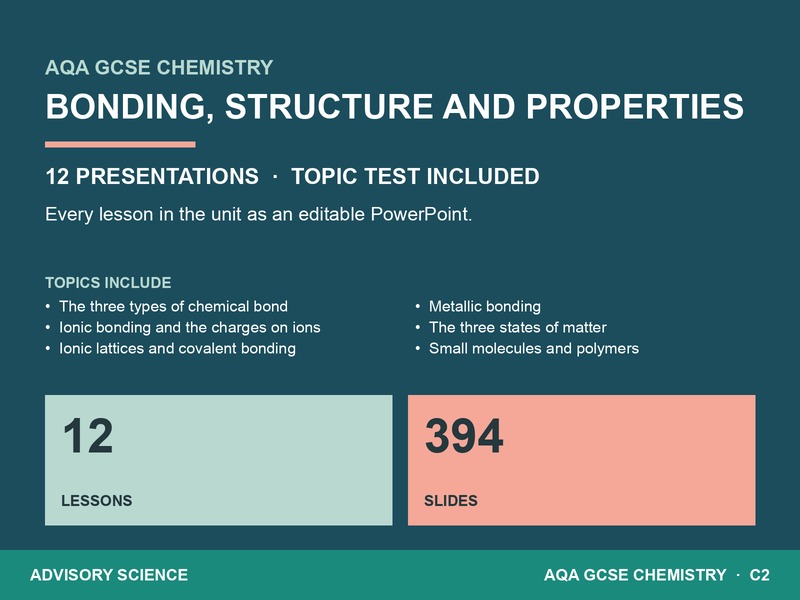
AQA GCSE Chemistry C2 Bonding, Structure and Properties: 12 lessons ready to teach, with a topic test
You get every lesson for AQA GCSE Chemistry C2 Bonding, Structure and Properties, planned and ready to teach. There are 12 teaching lessons. Each one is editable PowerPoint and matched to the AQA 8462 specification.
What your classes work through
- The three types of chemical bond. Pupils read two melting points from a chart, calculate the difference, then link each substance's elements to its type of bonding.
- Ionic bonding and the charges on ions. Pupils explain in terms of electron transfer and ion charges why magnesium chloride has the formula MgCl2.
- Ionic lattices and covalent bonding. Pupils define a covalent bond and contrast the simple molecular structure of water with the giant structure of diamond.
- Metallic bonding. Pupils use the structure and bonding of copper to explain why metals conduct electricity.
- The three states of matter. Pupils calculate the temperature range over which bromine is liquid from its melting and boiling points, then state its state at 25°C.
- State symbols and the properties of ionic compounds. Pupils describe what happens to the ions as solid sodium chloride melts and explain why it needs such a high temperature.
- Small molecules and polymers. Pupils evaluate a conclusion that the boiling points of methane to butane rise because the covalent bonds get stronger.
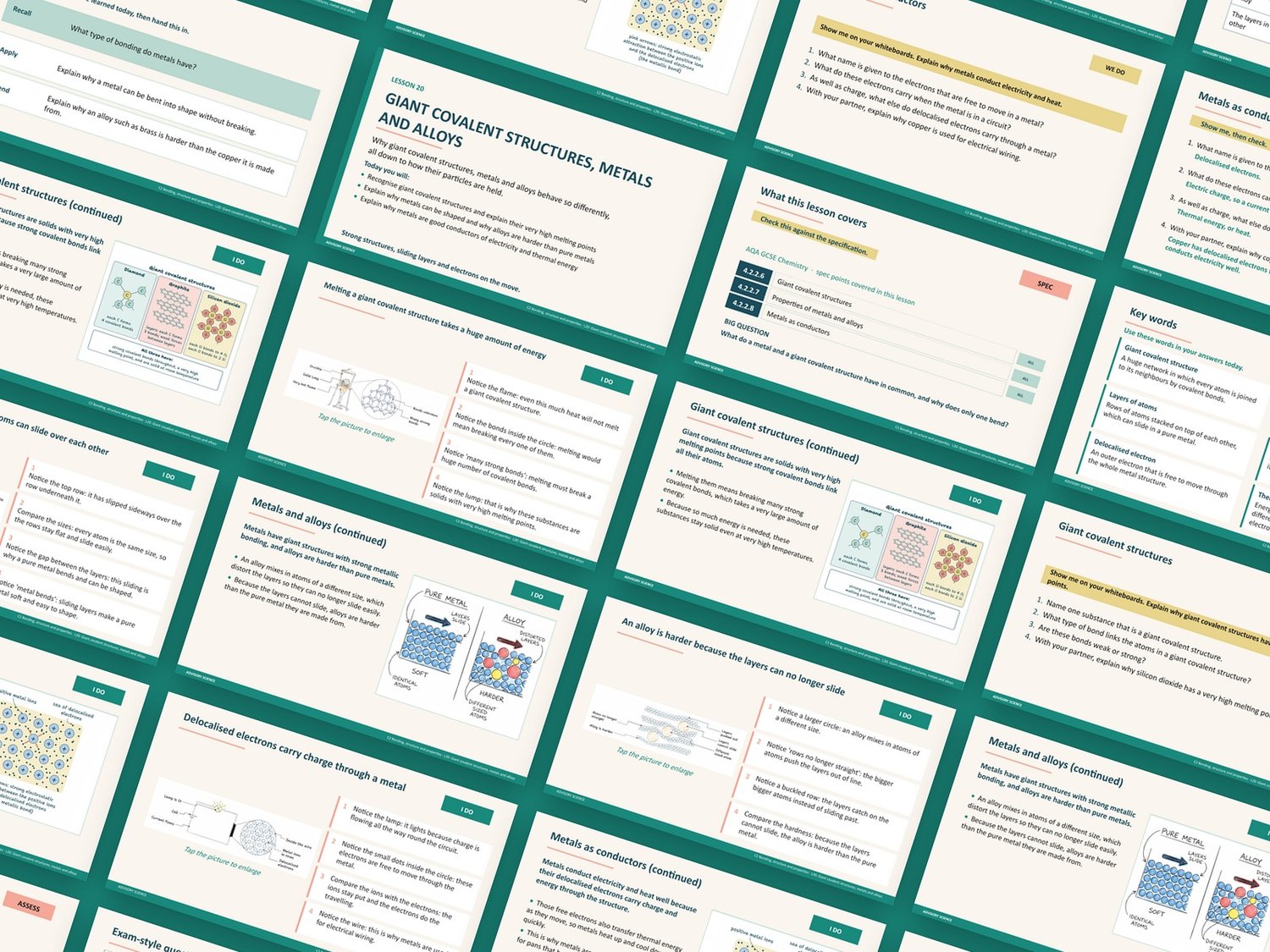
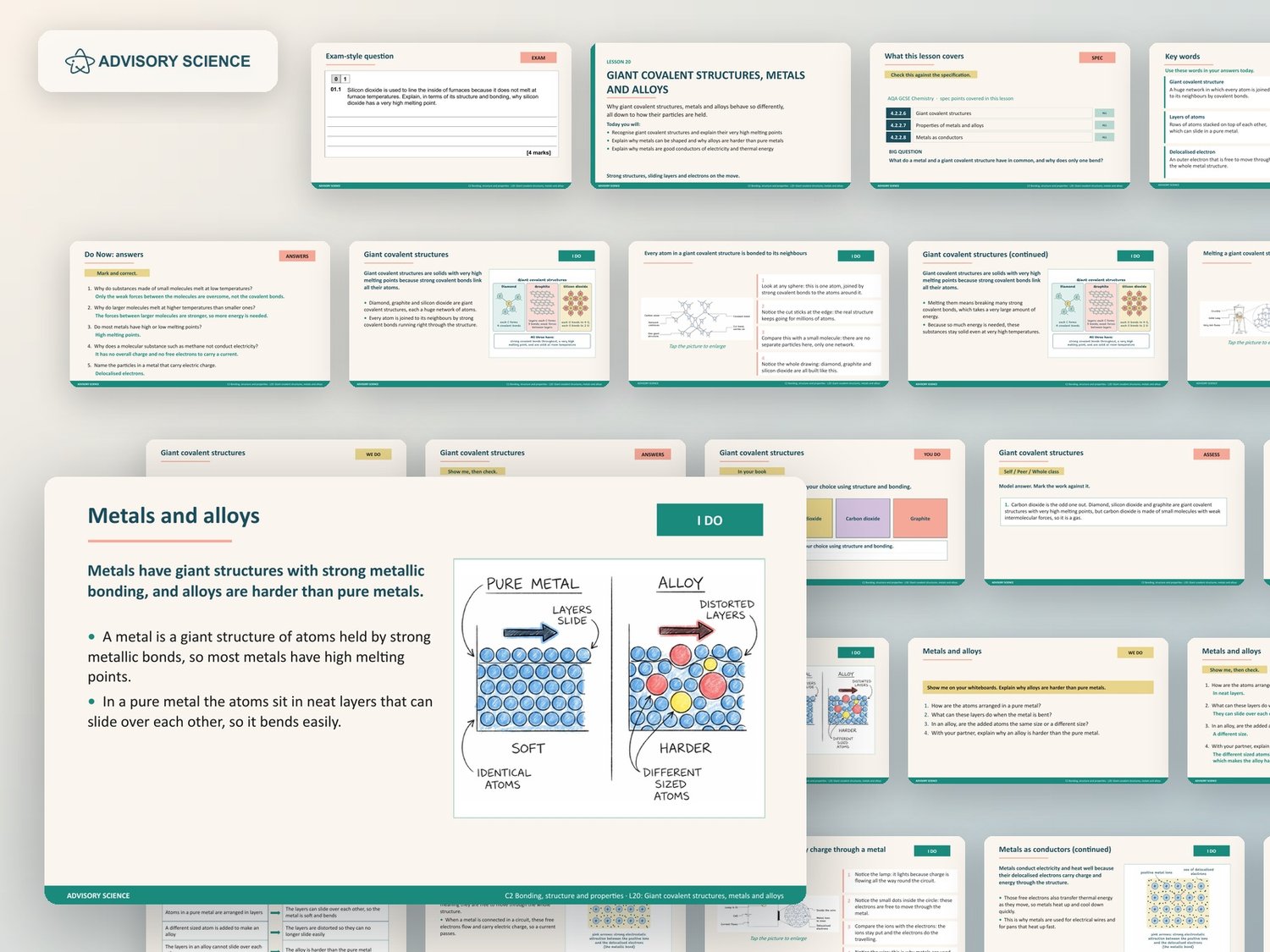
- Giant covalent structures, metals and alloys. Pupils account for the very high melting point of silicon dioxide, used to line furnaces, in terms of its structure and bonding.
- Diamond and graphite. Pupils predict the missing bonding and delocalised electron values for graphite in a table alongside diamond and justify their answers.
- Graphene, fullerenes and carbon nanotubes. Pupils compare the structures of graphene and Buckminsterfullerene and explain how those structures lead to different uses.
- The size of nanoparticles. Pupils work out the surface area to volume ratio of a 0.1 cm cube and pick the correct value from four options.
- Using nanoparticles. Pupils fill each gap in a passage with a full reason, covering why nanoparticles make good catalysts and why titanium dioxide sun cream goes on clear.
Who it is for
Use it to teach AQA GCSE Chemistry Bonding, Structure and Properties lessons on ionic, covalent and metallic bonding, states of matter, giant structures and nanoparticles in Year 10 and Year 11. It also gives GCSE Chemistry revision on diamond, graphite, graphene and fullerenes.
How each lesson runs
Each C2 Bonding, Structure and Properties lesson starts with a Do Now that recalls earlier learning, with the answers on the next slide. It then moves through I Do, We Do and You Do, with a model answer after each task. It finishes with the AQA-style question listed above, its mark scheme and an exit ticket. A specification slide names the AQA points the lesson covers, so you can check it against your scheme of work.
Topic test
The C2 Bonding, Structure and Properties topic test covers the whole unit with AQA-style questions and comes with its mark scheme, both in Word and PDF.
Free revision videos for this unit