



Which Valentine Cookies Absorb More Milk?
On Sale
£2.50
£2.50
Cupid loves dunking biscuits in his tea - but some fall apart before he can eat them! Which biscuit absorbs the most liquid? Pupils compare hobnobs, digestives, rich tea and ginger nuts to explore absorption and porosity.
What's included:
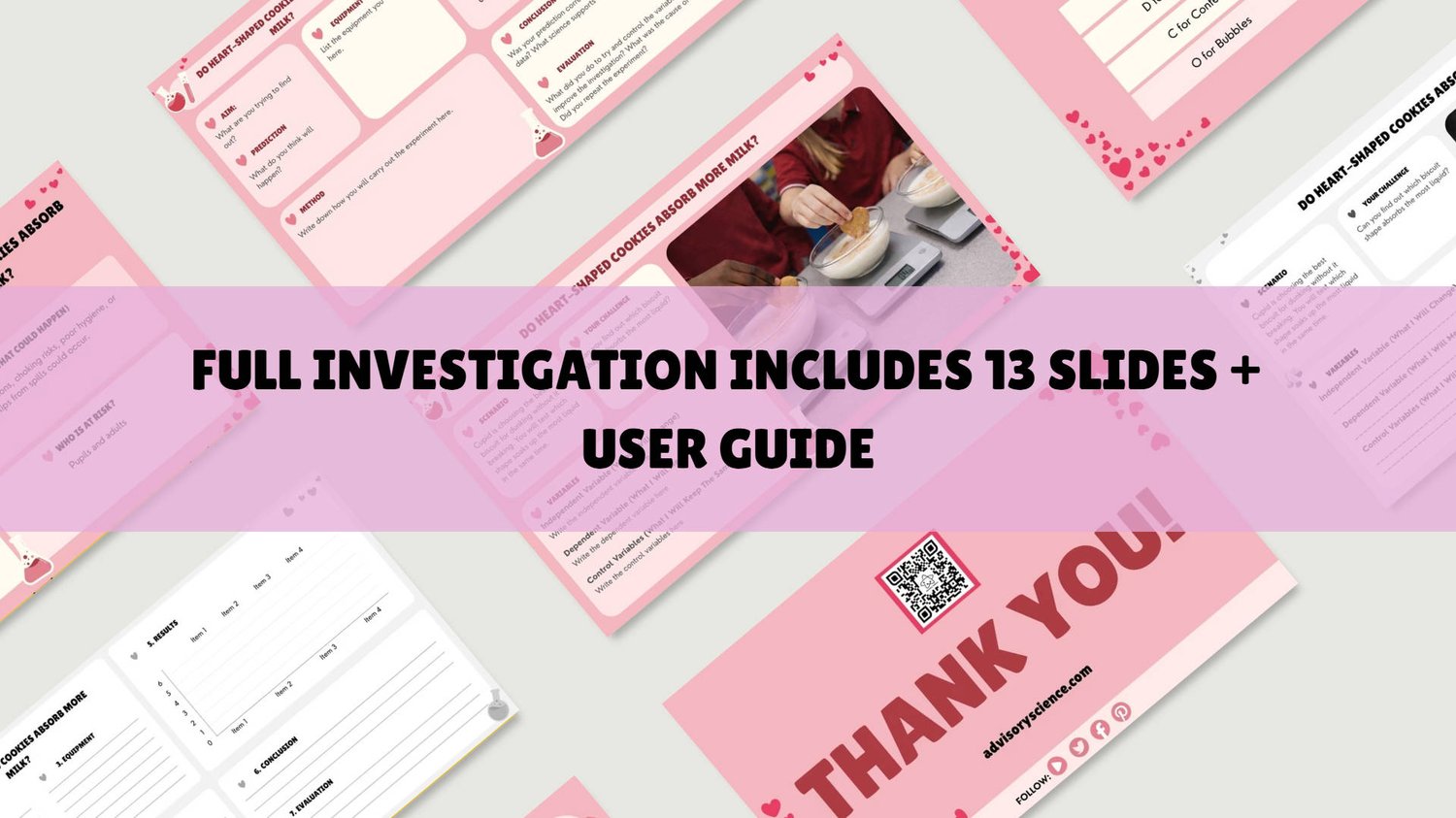
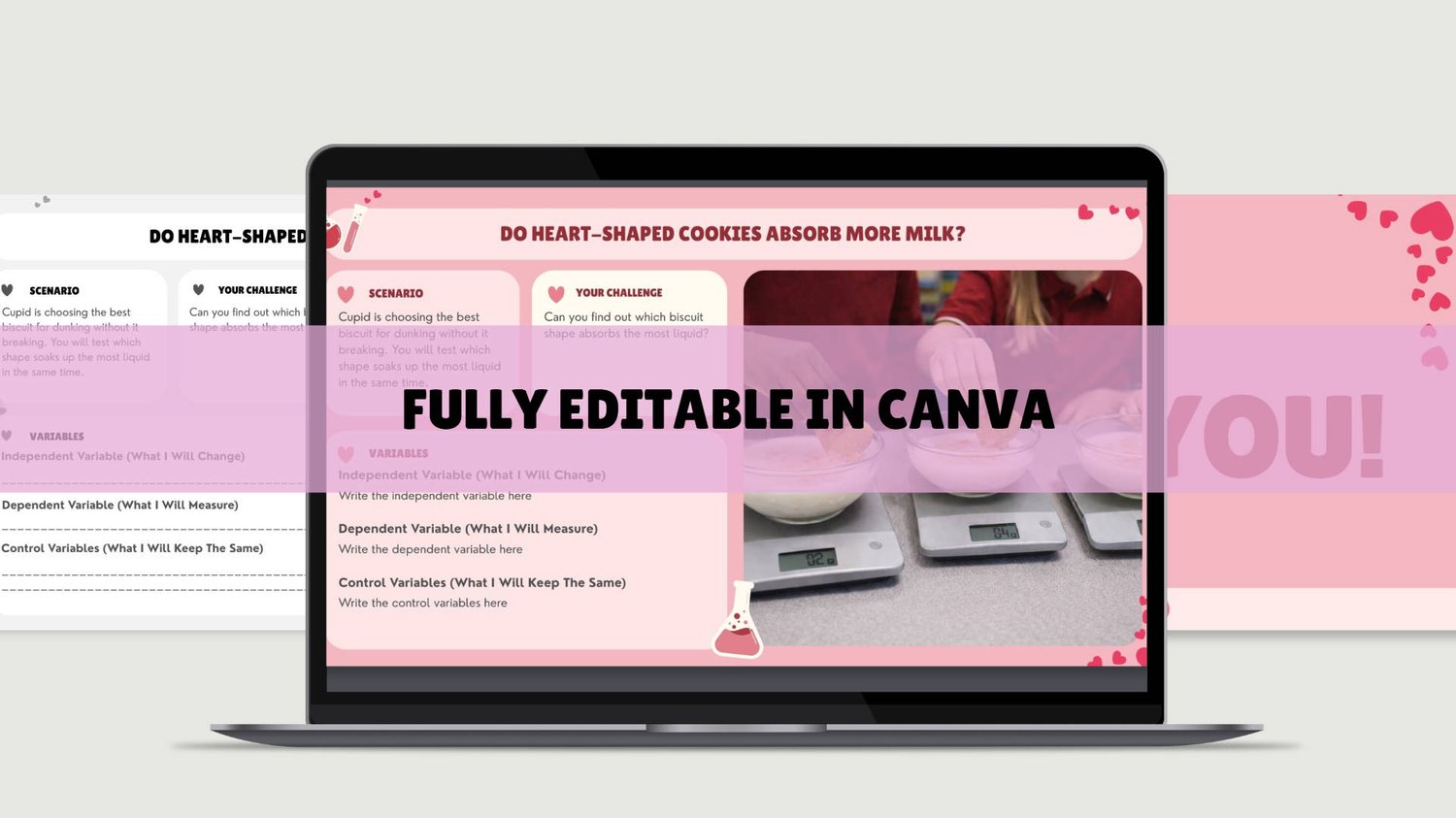
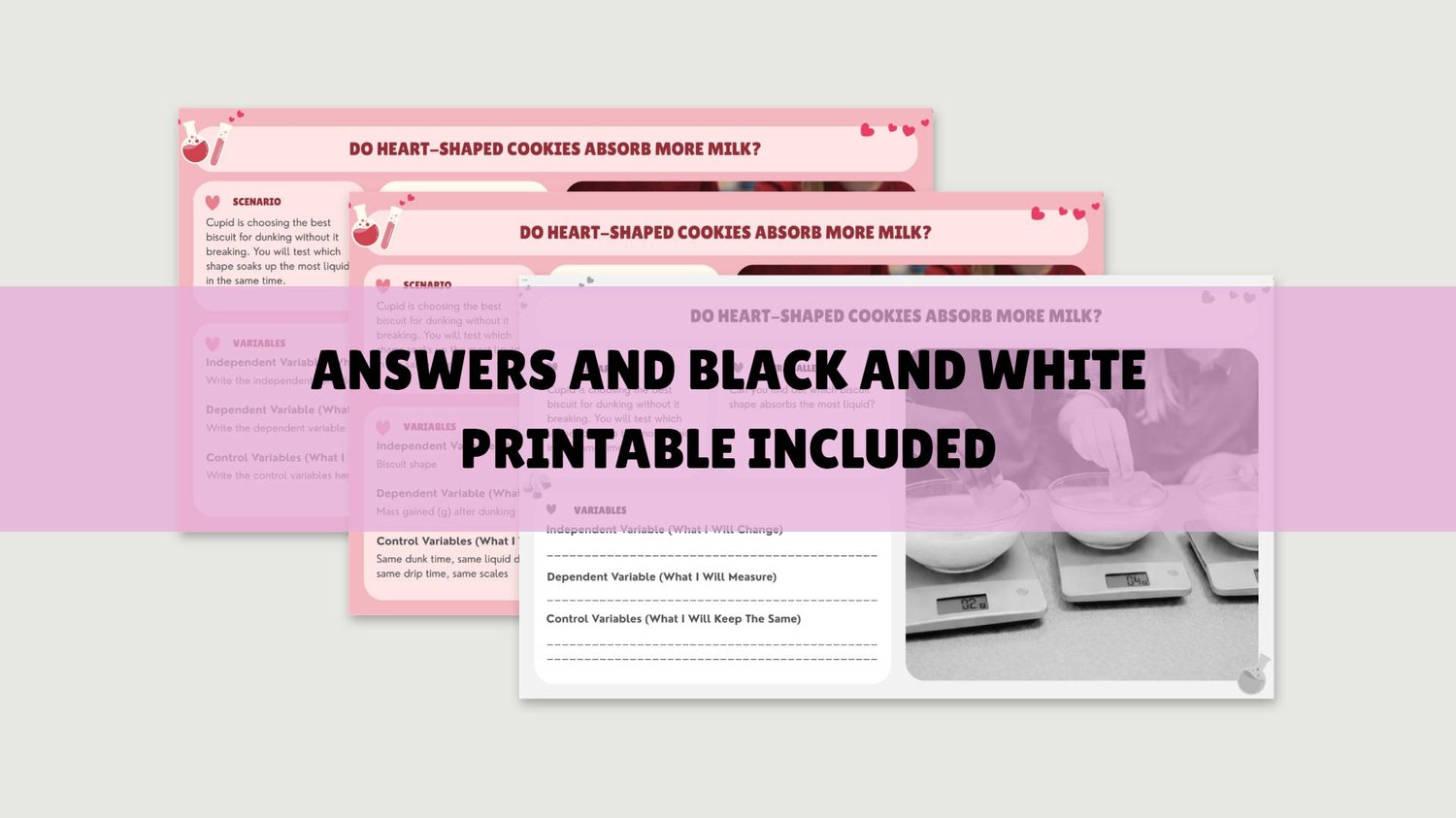
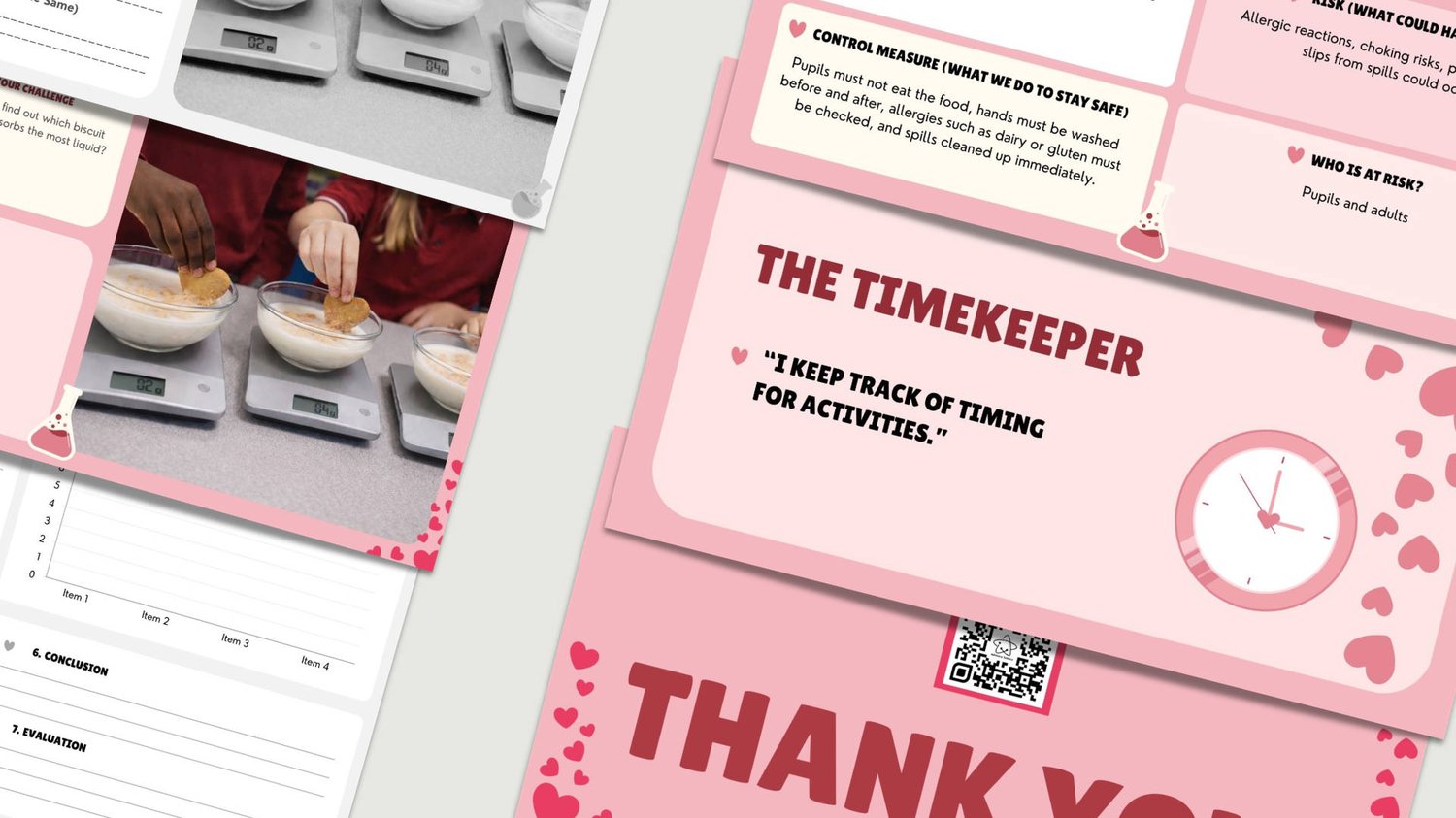
- Editable Canva template with variables worksheet, recording sheet, risk assessment and group role cards
- Comprehensive teacher guide with curriculum links, expected results, science explanation and differentiation ideas
Curriculum links:
- KS2 Properties of Materials - comparing absorbency and hardness
- KS2 Working Scientifically - fair testing, measuring, recording data
- KS3 Working Scientifically - variables, accuracy, explaining results
- Cross-curricular link to Year 3 Rocks - porosity
Why teachers love it:
- Clear results - hobnobs absorb most, ginger nuts least
- Simple equipment (biscuits, water/milk, scales, timer)
- Strong link to rocks and porosity
- Valentine's theme engages pupils
- Suitable for Year 3 to Year 11.
Curriculum focus
Key Stage 2
- Properties of materials: observing and comparing absorption
Key Stage 3
- Particle model: absorption, capillary action, surface area effects
Key Stage 4 (GCSE Biology / Chemistry / Combined Science)
- Surface area to volume ratio
- Rates of processes in biological and material contexts
US curriculum links
- Upper Elementary Science: absorbent materials
- Middle School Physical Science: particle behaviour
- High School Biology / Chemistry: surface area effects
Save 20% off the Bundle available here
Read the blog post with teaching ideas and curriculum rationale here
You will get the following files
- PDF link to Editable Canva templates, pupil recording sheets, variables support, results templates
- PDF comprehensive teacher guide.