







Valentine's Science | Do Grainy Sweets Dissolve Faster?
This Valentine’s investigation explores how texture and porosity affect dissolving, using candy hearts with different surface structures as a model system.
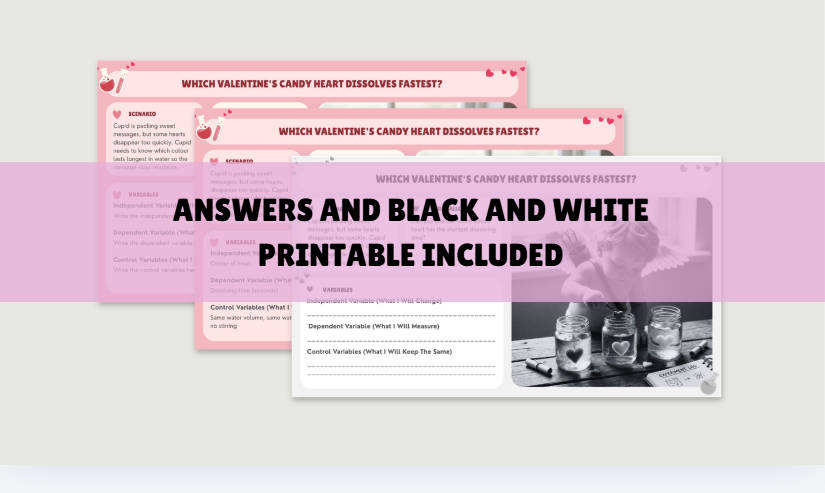
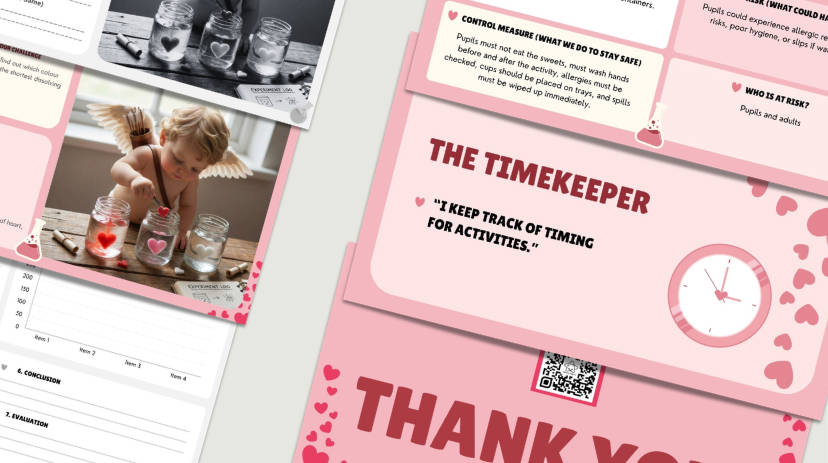
Learners compare grainy and smooth candy hearts to investigate dissolving rates, plan a fair test, record and interpret results, and explain patterns using particle ideas and surface area. The investigation is suitable for Key Stage 2 science, Key Stage 3 chemistry and Earth science, GCSE science, and cross-phase teaching focused on Working Scientifically.
Curriculum focus
Key Stage 2
Year 3 – Rocks
Compare and group rocks based on simple physical properties, including permeability and porosity.
Year 4 – States of Matter
Observe that some materials dissolve in liquid to form a solution.
Working Scientifically
Identifying variables, measuring time accurately, recording results, and drawing conclusions from evidence.
Key Stage 3
Particle model of matter
Dissolving explained using particle movement and surface area.
Earth Science
Porosity and permeability of materials, including rocks and soils.
Key Stage 4 (GCSE Chemistry / Combined Science)
Rates of reaction
Effect of surface area on rate.
Earth Science / Geology
Porosity of rocks and movement of water through aquifers.
US curriculum links
Upper Elementary Science
Properties of materials and dissolving.
Middle School Science
Particle model and physical properties of matter.
High School Chemistry / Earth Science
Surface area and rate, porosity of geological materials.
Save 20% off the Bundle available here
Read the blog post with teaching ideas and curriculum rationale here
You will get the following files
- PDF link to Editable Canva templates, pupil recording sheets, variables support, results templates
- PDF comprehensive teacher guide.