



Which Material Makes the Best Valentine Insulator
On Sale
£2.50
£2.50
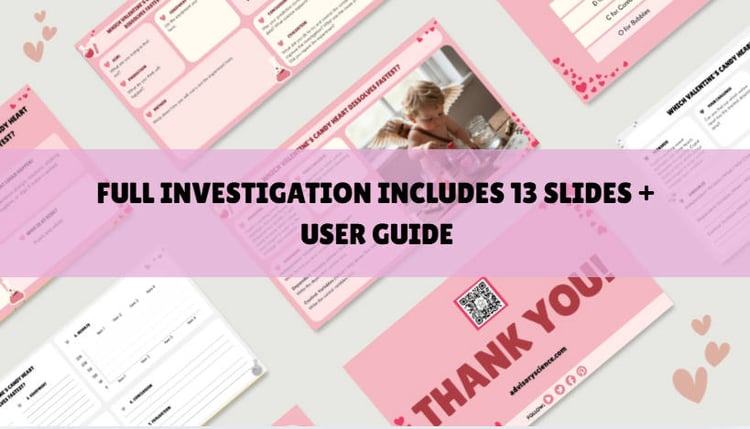
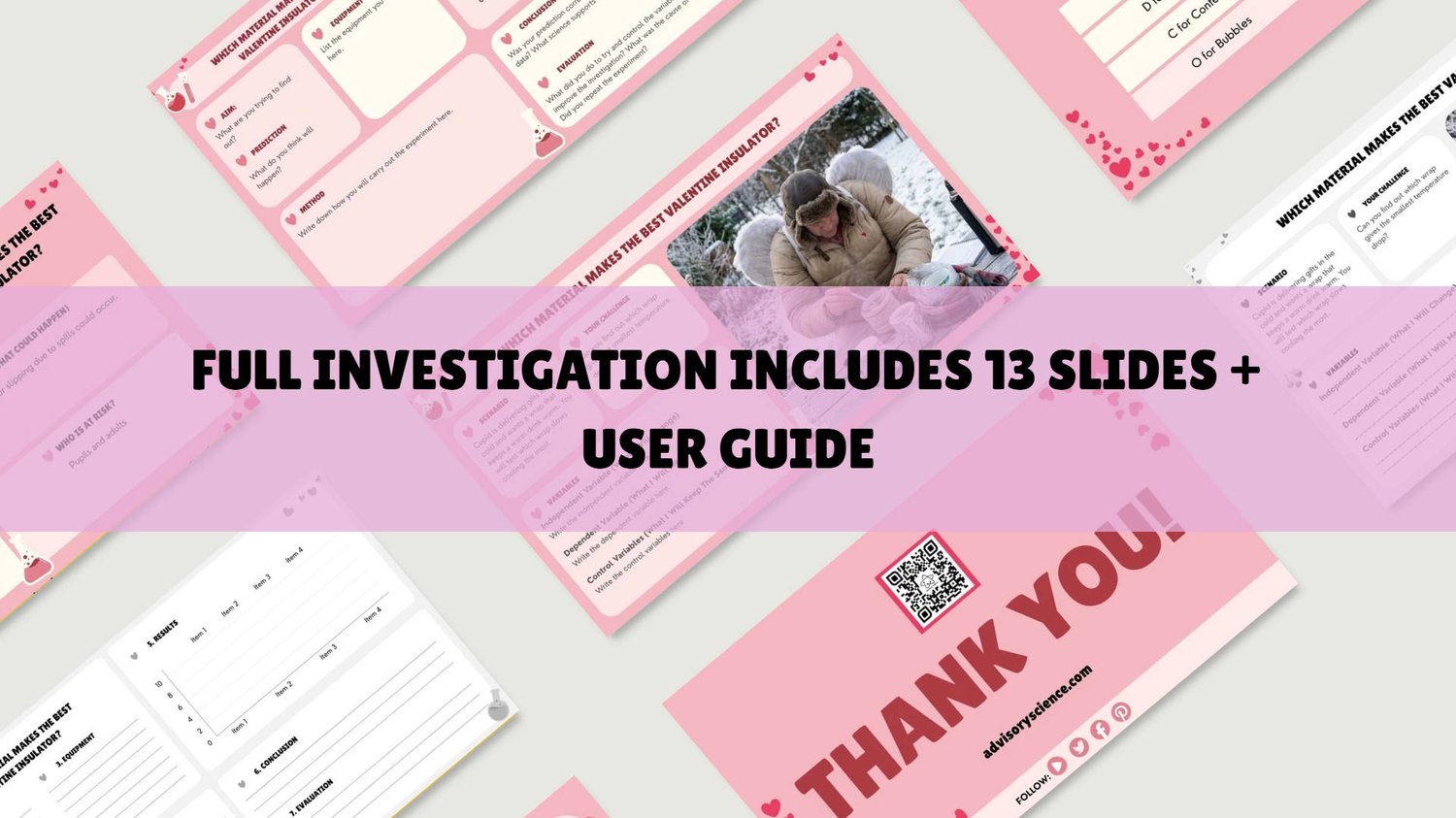
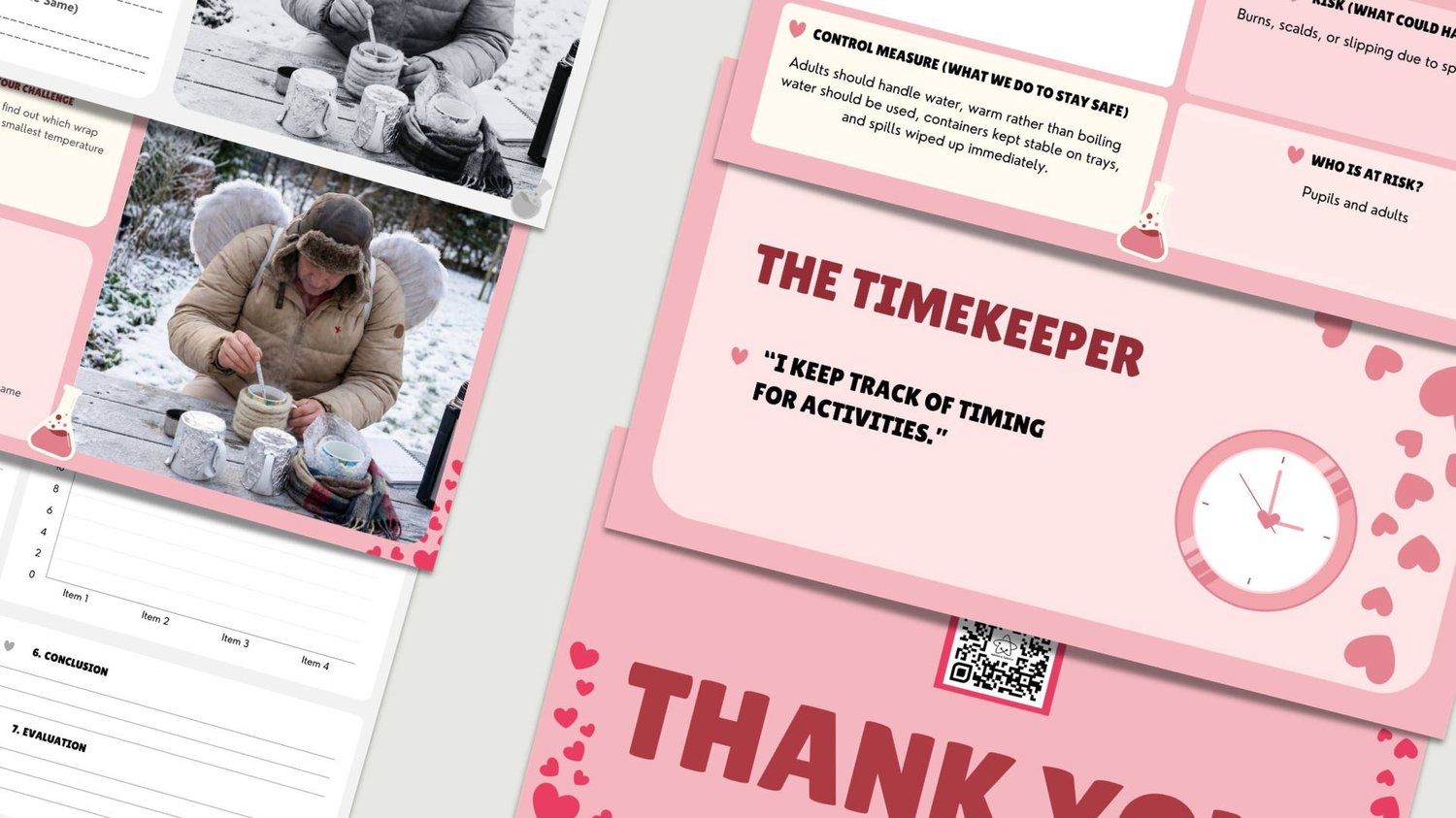
This Valentine’s-themed science investigation explores thermal insulation and heat transfer through a clear, controlled practical task suitable for Key Stage 2, Key Stage 3, Key Stage 4, and homeschool science.
Although presented with a Valentine’s context, the investigation can be used at any time of year when teaching insulation or energy transfer.
Learners test different wrapping materials to find which slows cooling the most, identify variables, record temperature change, and explain results using ideas about conduction, convection, and radiation.
What you receive
- Two PDFs
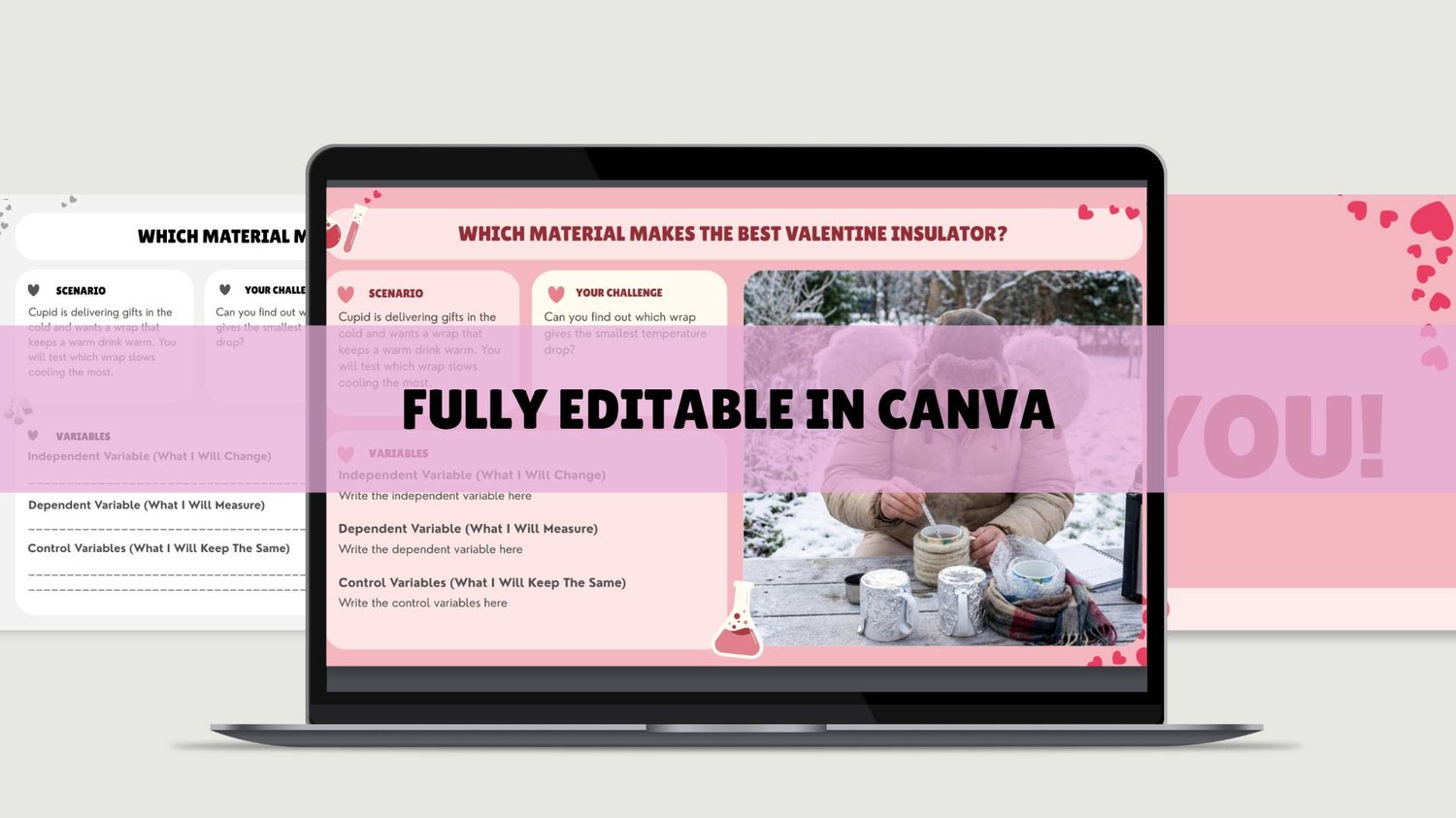
- A PDF containing the editable Canva template link
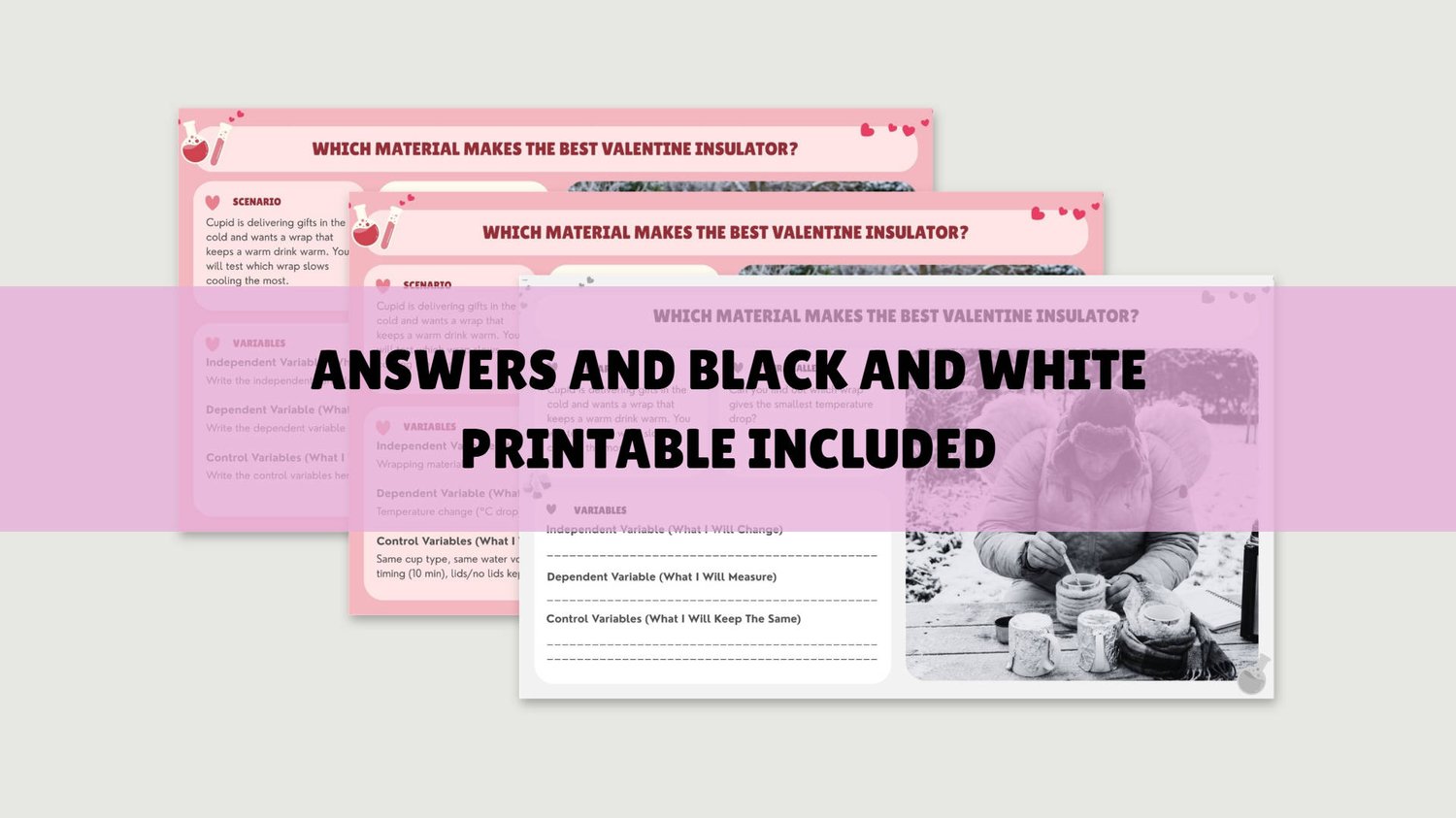
- A PDF containing a detailed teacher guide linked to curriculum standards
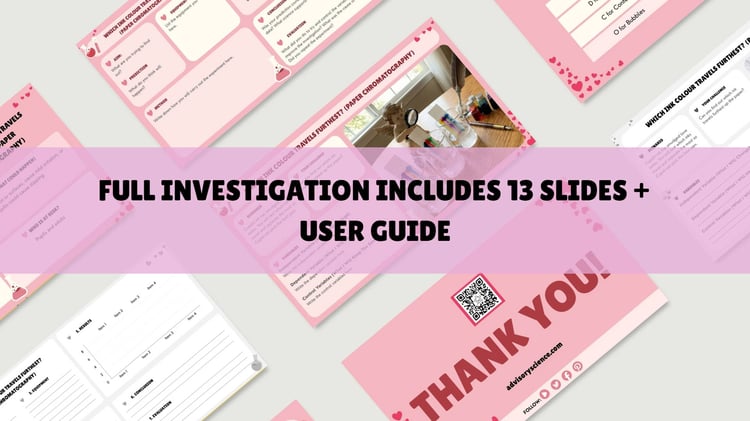
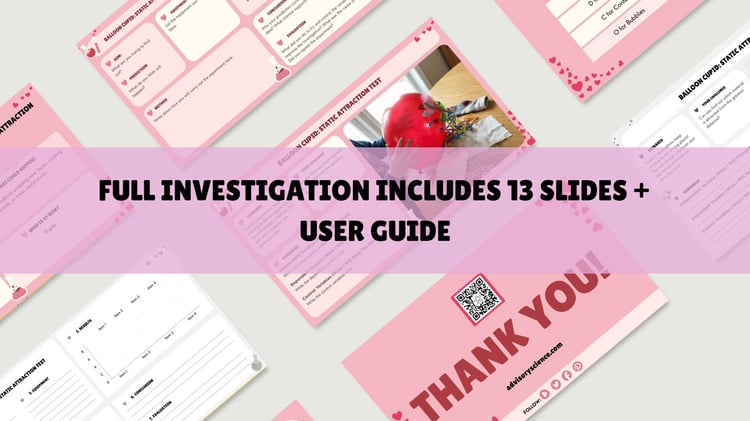
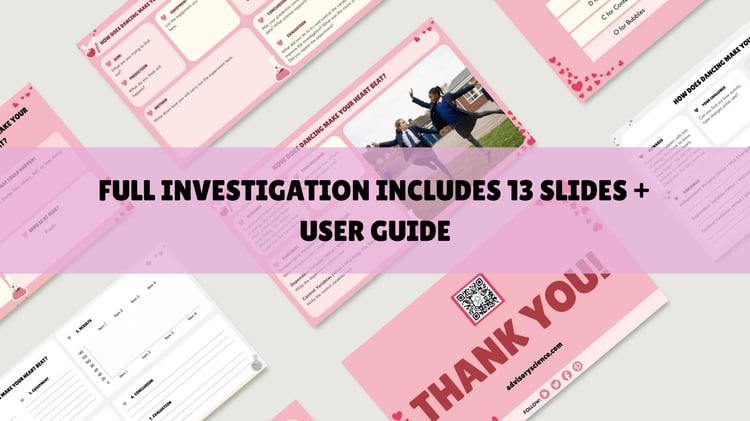
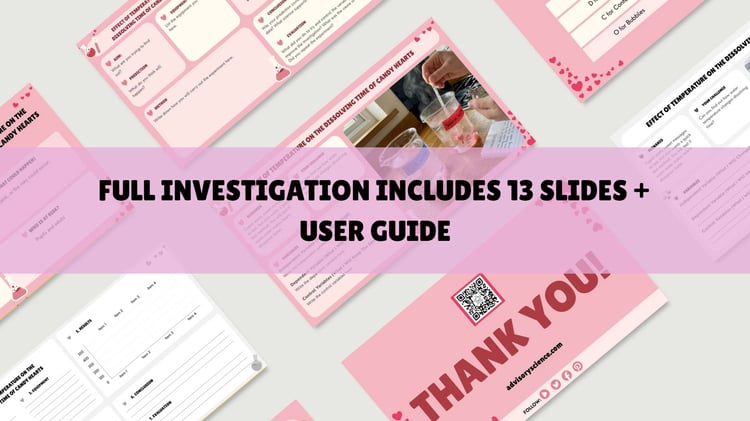
- Templates include variables pages, results tables, graph templates, written risk assessment, and group role cards.
- Group roles can be used collaboratively or rotated for individual learners to develop different scientific skills.
Curriculum focus
Key Stage 2
- Properties of materials: thermal conductors and insulators
Key Stage 3
- Energy: heating, thermal equilibrium, conduction, convection, and radiation
Key Stage 4 (GCSE Physics / Combined Science)
- Particle model and energy transfer
- Factors affecting rate of cooling and insulation in context
US curriculum links
- Upper Elementary Science: insulation and materials
- Middle School Physical Science: heat transfer
- High School Physics: thermal energy and insulation
Save 20% off the Bundle available here
Read the blog post with teaching ideas and curriculum rationale here
You will get the following files
- PDF link to Editable Canva templates, pupil recording sheets, variables support, results templates
- PDF comprehensive teacher guide.