

Organic Chemistry Lessons PowerPoint | AQA GCSE Chemistry C7 8462, 11 Lessons
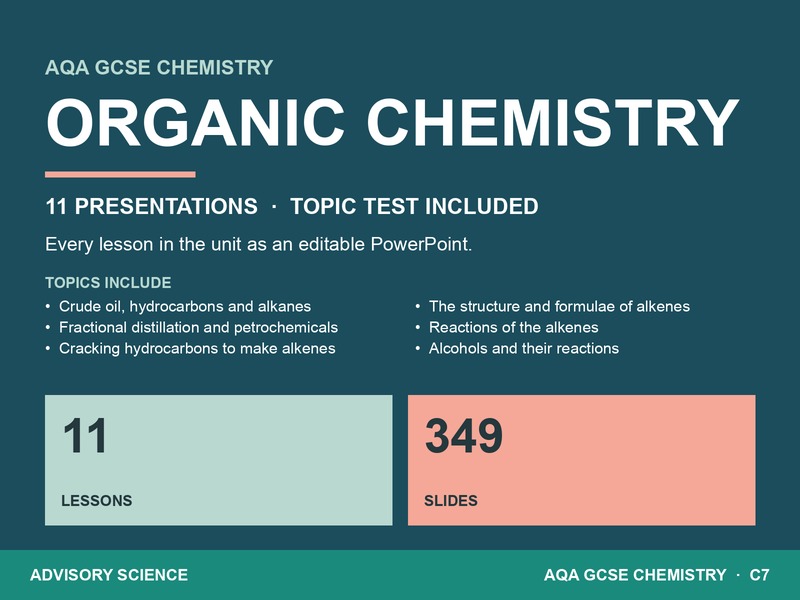
AQA GCSE Chemistry C7 Organic Chemistry: 11 lessons ready to teach, with a topic test
You get every lesson for AQA GCSE Chemistry C7 Organic Chemistry, planned and ready to teach. There are 11 teaching lessons. Each one is editable PowerPoint and matched to the AQA 8462 specification.
What your classes work through
- Crude oil, hydrocarbons and alkanes. Pupils use the alkane general formula to pick the molecular formula of an alkane with 16 hydrogen atoms from four options.
- Fractional distillation and petrochemicals. Pupils complete a passage explaining why long-chain hydrocarbons condense and are collected near the bottom of the fractionating column.
- The properties and combustion of hydrocarbons. Pupils write a levels-marked answer weighing up whether larger hydrocarbons make the best fuels for a petrol engine.
- Cracking hydrocarbons to make alkenes. Pupils calculate how many ethene molecules form when one molecule of dodecane is cracked into hexane and ethene.
- The structure and formulae of alkenes. Pupils predict and name an alkene with 8 hydrogen atoms per molecule, justifying their answer with the general formula.
- Reactions of the alkenes. Pupils read a graph of hydrogen absorbed as ethene is hydrogenated over nickel and determine the rate of uptake in the first 20 s.
- Alcohols and their reactions. Pupils explain why keeping air out of fermenting sugar solution gives a higher yield of ethanol.
- Carboxylic acids and their reactions. Pupils describe how ethanoic acid molecules behave in water and explain why it has a higher pH than hydrochloric acid of equal concentration.
- Addition Polymerisation. Pupils complete the equation for propene forming poly(propene) by writing the correct term in each blank.
- Condensation Polymerisation. Pupils count the ester links in a polyester chain made from ethanediol and hexanedioic acid to calculate how many water molecules are released.
- DNA and Natural Polymers. Pupils describe the structure of a DNA molecule and explain why it counts as a naturally occurring polymer.
Who it is for
Use it to teach AQA GCSE Chemistry Organic Chemistry lessons in Year 10 and Year 11 on crude oil, alkanes, fractional distillation, cracking, alkenes, alcohols and carboxylic acids. It also supports GCSE Chemistry revision on addition and condensation polymers and DNA.
How each lesson runs
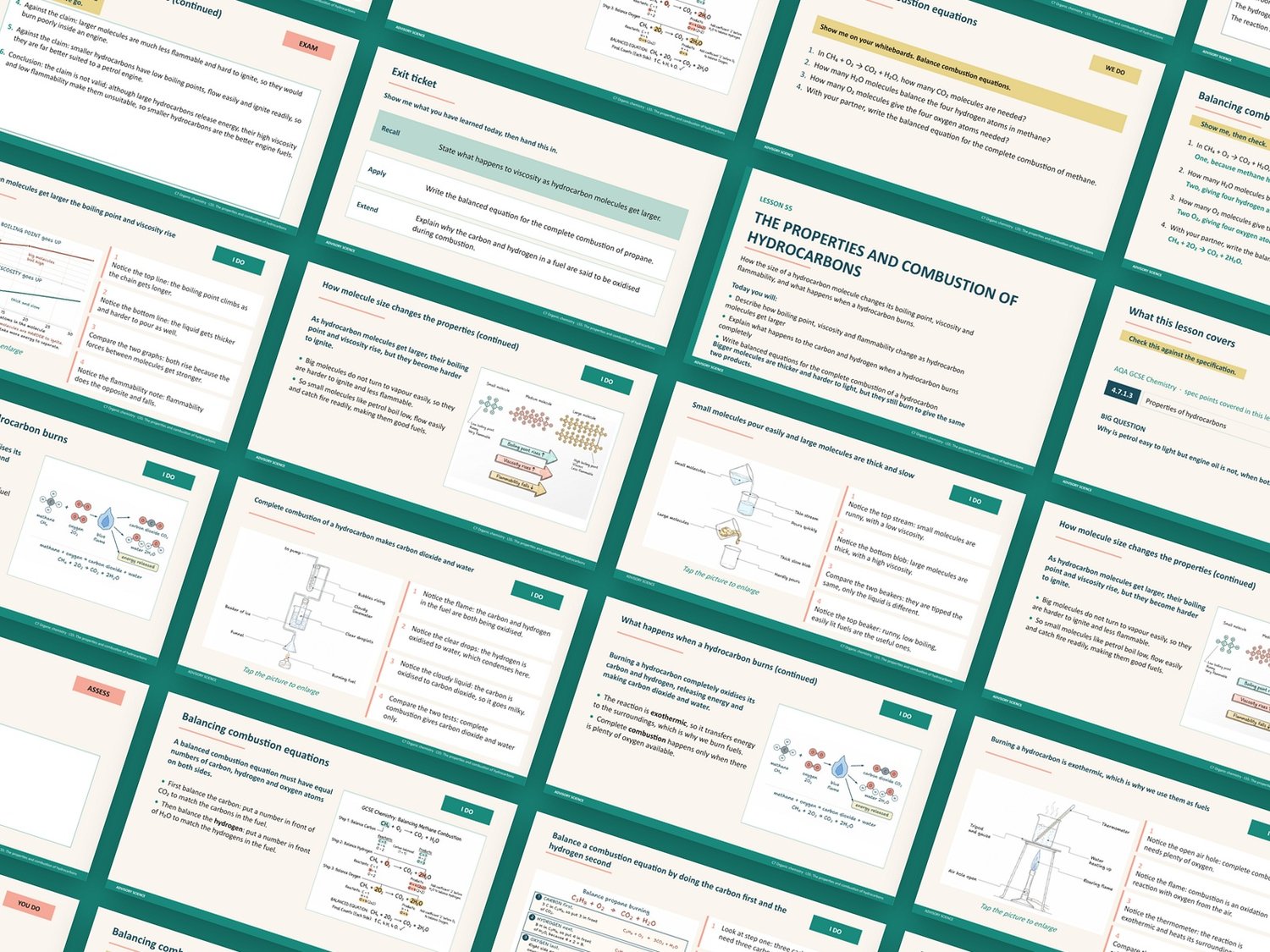
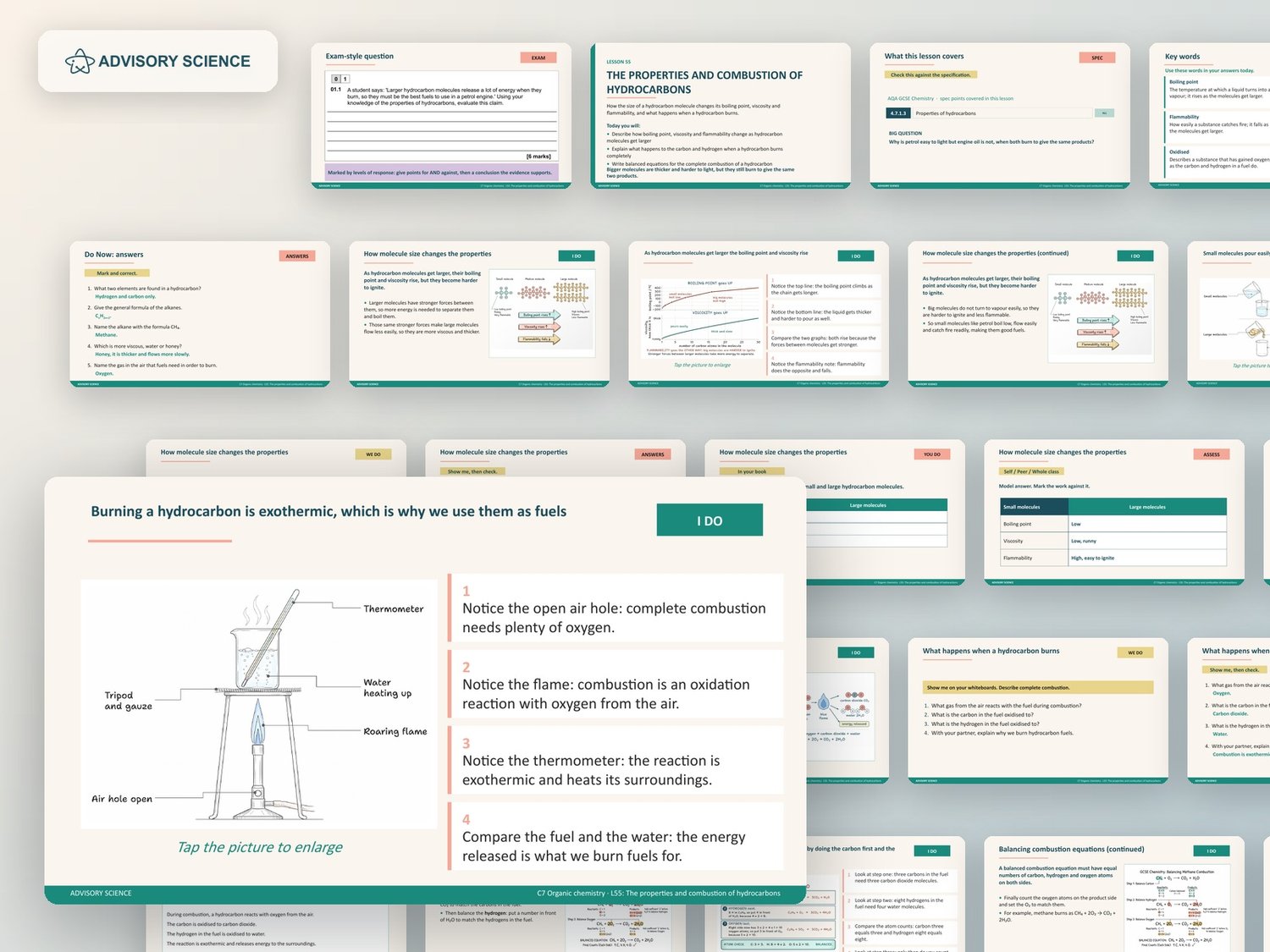
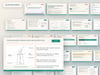
Each C7 Organic Chemistry lesson starts with a Do Now that recalls earlier learning, with the answers on the next slide. It then moves through I Do, We Do and You Do, with a model answer after each task. It finishes with the AQA-style question listed above, its mark scheme and an exit ticket. A specification slide names the AQA points the lesson covers, so you can check it against your scheme of work.
Topic test
The C7 Organic Chemistry topic test covers the whole unit with AQA-style questions and comes with its mark scheme, both in Word and PDF.
Free revision videos for this unit