

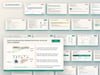
Homeostasis and Response Lessons PowerPoint | AQA GCSE Biology B5 8461, 14 Lessons
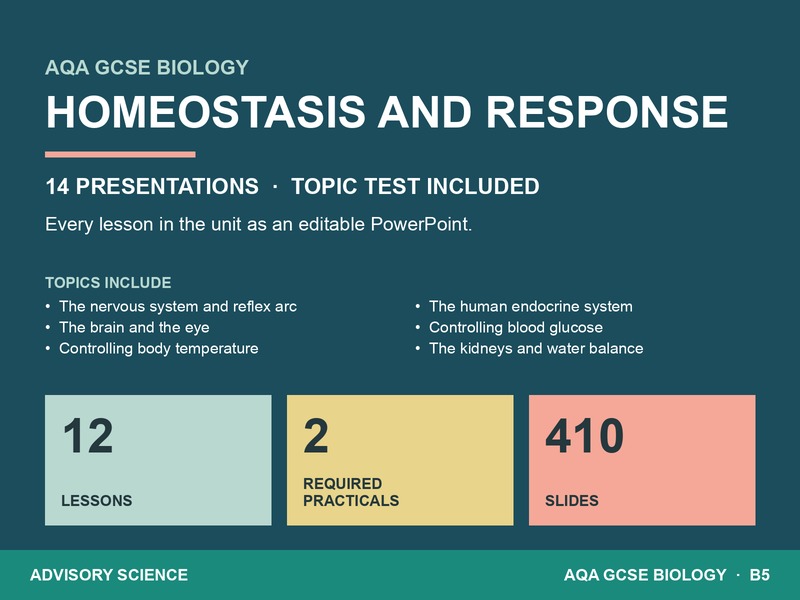
AQA GCSE Biology B5 Homeostasis and Response: 14 lessons ready to teach, with a topic test
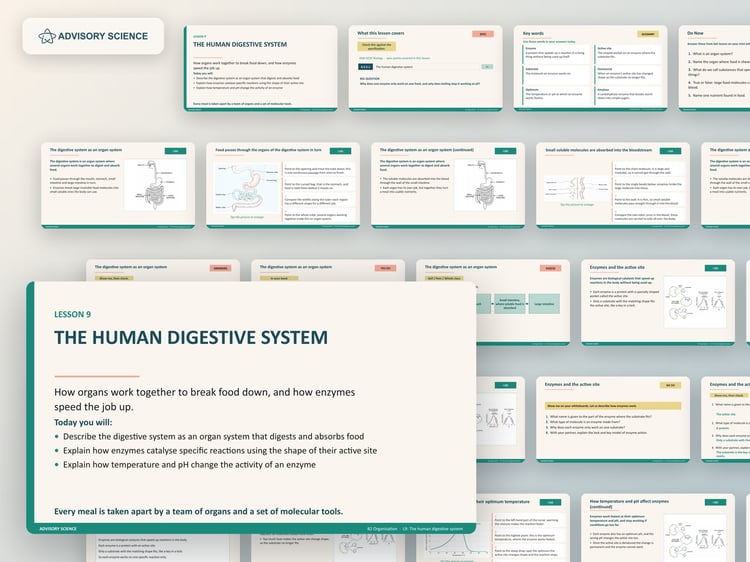
You get every lesson for AQA GCSE Biology B5 Homeostasis and Response, planned and ready to teach. There are 12 teaching lessons and the 2 required practicals as full lessons. Each one is editable PowerPoint and matched to the AQA 8461 specification.
What your classes work through
- The nervous system and reflex arc. Pupils compare a reflex action with a voluntary response to a hot pan and explain why the reflex is faster.
- The brain and the eye. Pupils predict how pupil diameter changes when someone walks from bright sunshine into a dim room and justify how this helps them see.
- Controlling body temperature. Pupils write a 6-mark evaluation of the claim that sweating alone cools the body on a hot day and vasodilation is not really needed.
- The human endocrine system. Pupils select the statement that correctly describes how a hormone secreted into the blood reaches its target organ and how quickly it acts.
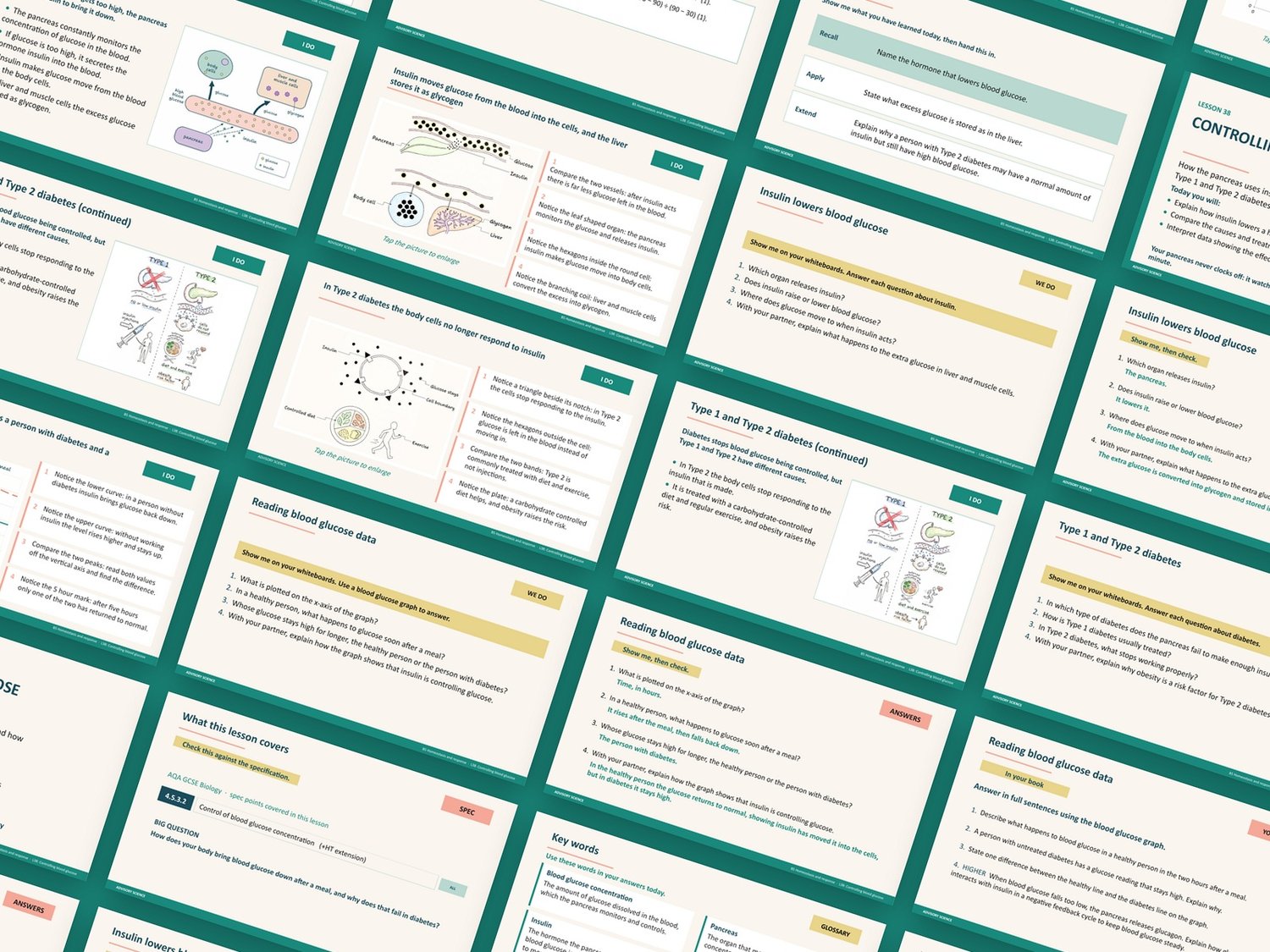
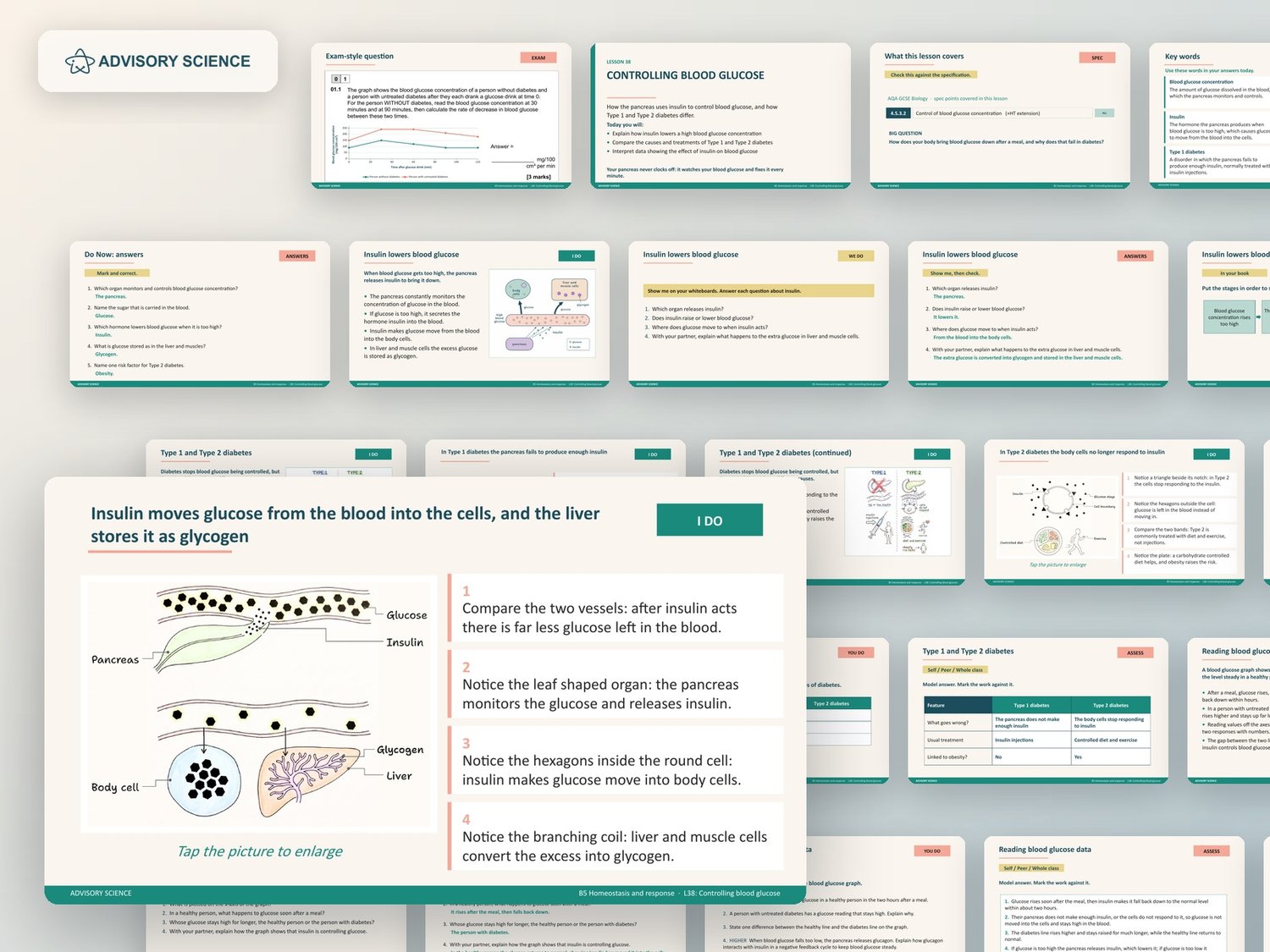
- Controlling blood glucose. Pupils read blood glucose values at 30 and 90 minutes from a graph for a person without diabetes and calculate the rate of decrease.
- The kidneys and water balance. Pupils fill gaps in a passage with full reasons explaining glucose reabsorption, why urea is not reabsorbed and how the kidney responds to heavy sweating.
- Hormones in human reproduction. Pupils describe how progesterone levels change after ovulation when the egg is not fertilised and explain the effect on the uterus lining.
- Contraception. Pupils explain how taking the combined oral contraceptive pill every day stops a woman from becoming pregnant.
- Using hormones to treat infertility. Pupils evaluate a conclusion that IVF should always be the first treatment offered, using one clinic's result of 25 babies from 100 couples.
- Adrenaline, thyroxine and negative feedback. Pupils contrast how adrenaline and thyroxine levels change and are controlled, then explain why the two hormones are regulated in different ways.
- Plant hormones: tropisms and their uses. Pupils link auxin, gibberellins and ethene to their agricultural uses, from weed killers and rooting powder to controlling fruit ripening.
- Homeostasis and negative feedback. Pupils complete a chain of reasoning showing how receptors, the coordination centre and effectors reverse a rise in body temperature by negative feedback.
The 2 required practicals
- RP7 Reaction Time. Pupils calculate the mean distance a ruler fell from five catches in a ruler drop reaction time test.
- RP8 Plant Responses. Pupils explain why the shoot of a cress seedling lit from one side only bends towards the light.
Who it is for
Use it for AQA GCSE Biology Homeostasis and Response lessons on the nervous system, the brain and eye, temperature control, blood glucose, the kidneys and reproductive hormones in Year 10 and Year 11. It also works for GCSE Biology revision or intervention, and covers the reaction time and plant responses required practicals.
How each lesson runs
Each B5 Homeostasis and Response lesson starts with a Do Now that recalls earlier learning, with the answers on the next slide. It then moves through I Do, We Do and You Do, with a model answer after each task. It finishes with the AQA-style question listed above, its mark scheme and an exit ticket. A specification slide names the AQA points the lesson covers, so you can check it against your scheme of work.
Topic test
The B5 Homeostasis and Response topic test covers the whole unit with AQA-style questions and comes with its mark scheme, both in Word and PDF.
Free revision videos for this unit
- Homeostasis and Response revision
- Triple-only Paper 2 topics (brain, eye, kidney, plant hormones)
- Paper 2 Triple whole paper walkthrough