

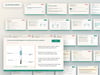
Chemical Changes Lessons PowerPoint | AQA GCSE Combined Science Chemistry C4, 11 Lessons
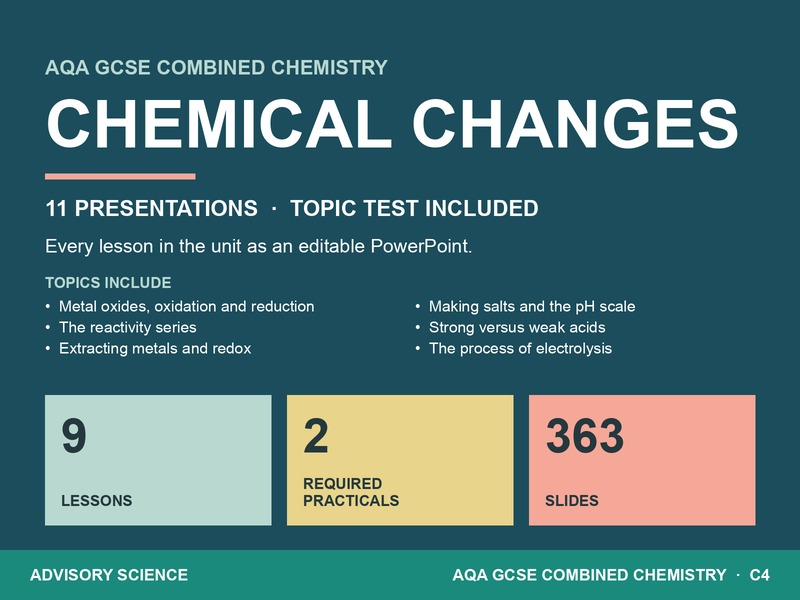
AQA GCSE Combined Science Chemistry C4 Chemical Changes: 11 lessons ready to teach, with a topic test
This is the Combined Science Trilogy version of C4 Chemical Changes, matched to the AQA 8464 specification. You get 9 teaching lessons and the 2 required practicals as full lessons, all planned and ready to teach in editable PowerPoint.
What your classes work through
- Metal oxides, oxidation and reduction. Pupils find the mass of oxygen gained by 6.4 g of copper and express it as a percentage of the starting mass.
- The reactivity series. Pupils use how readily potassium and copper atoms lose electrons to account for one metal being far more reactive than the other.
- Extracting metals and redox. Pupils split metals into those above and below carbon to test whether cheap carbon reduction can work for all of them.
- Reactions of acids: metals, salts and neutralisation. Pupils name magnesium sulfate as the salt made and link the hydrogen bubbles, then their end, to the acid running out while metal remains.
- Making salts and the pH scale. Pupils use a table of pH readings during neutralisation to predict the pH after 20 cm³ of alkali and justify it using ions.
- Strong versus weak acids. Pupils set a strong acid beside a weak one at equal concentration and link full or partial ionisation to their different pH values.
- The process of electrolysis. Pupils work out which ion each electrode attracts in molten potassium chloride and tick the matching row of products.
- Extracting metals and electrolysing solutions. Pupils use the reactivity of sodium and the presence of chloride ions to explain the products of electrolysing brine.
- Half equations at the electrodes. Pupils write a half equation at each electrode to prove ions gain electrons at one and lose them at the other.
The 2 required practicals
- RP8 Making a Soluble Salt. Pupils describe the method for making pure, dry copper sulfate crystals from copper oxide and dilute sulfuric acid.
- RP9 Electrolysis. Pupils balance the electrons when 2H+ forms H2 and explain why gaining electrons at the cathode means hydrogen ions are reduced.
Who it is for
Use it for GCSE Combined Science Trilogy C4 Chemical Changes, covering oxidation and reduction, the reactivity series, metal extraction, acids, salts, pH, strong and weak acids and electrolysis. It doubles as Combined Science Chemistry revision for Year 10 and Year 11 and includes the soluble salt and electrolysis required practicals.
How each lesson runs
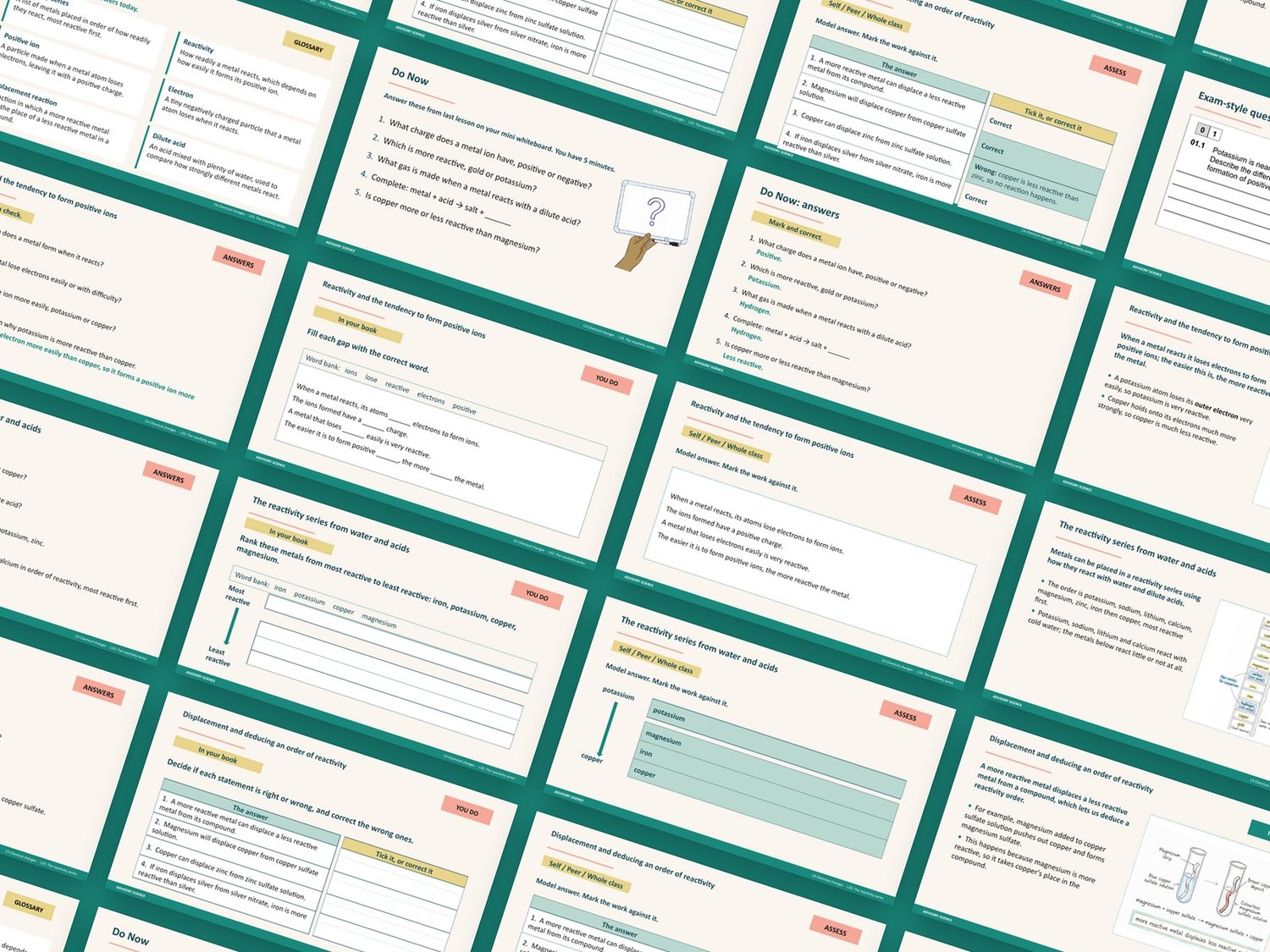
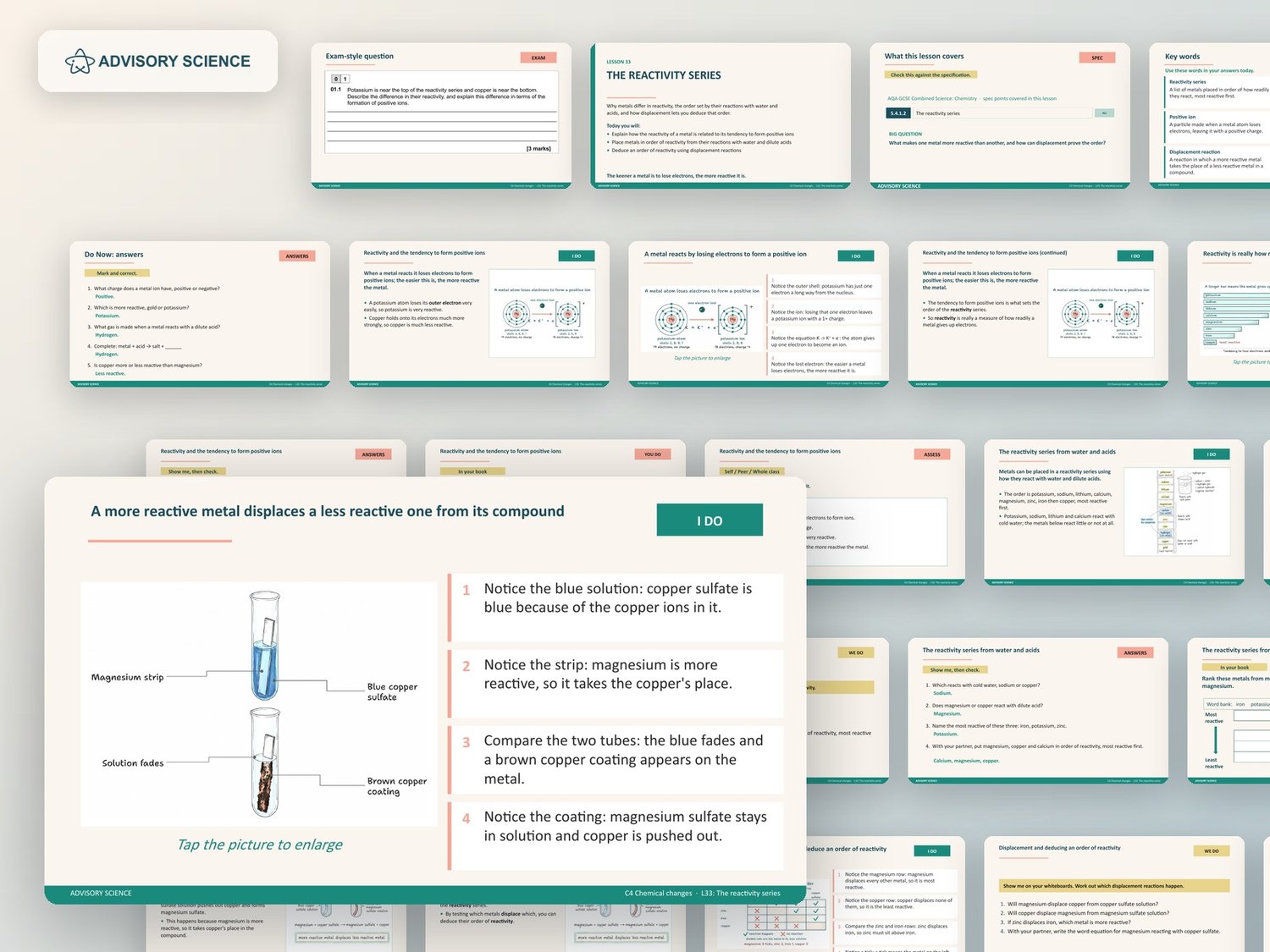
Each C4 Chemical Changes lesson starts with a Do Now that recalls earlier learning, with the answers on the next slide. It then moves through I Do, We Do and You Do, with a model answer after each task. It finishes with the AQA-style question listed above, its mark scheme and an exit ticket. A specification slide names the AQA points the lesson covers, so you can check it against your scheme of work.
Topic test
The C4 Chemical Changes topic test covers the whole unit with AQA-style questions and comes with its mark scheme, both in Word and PDF.
Free revision videos for this unit